

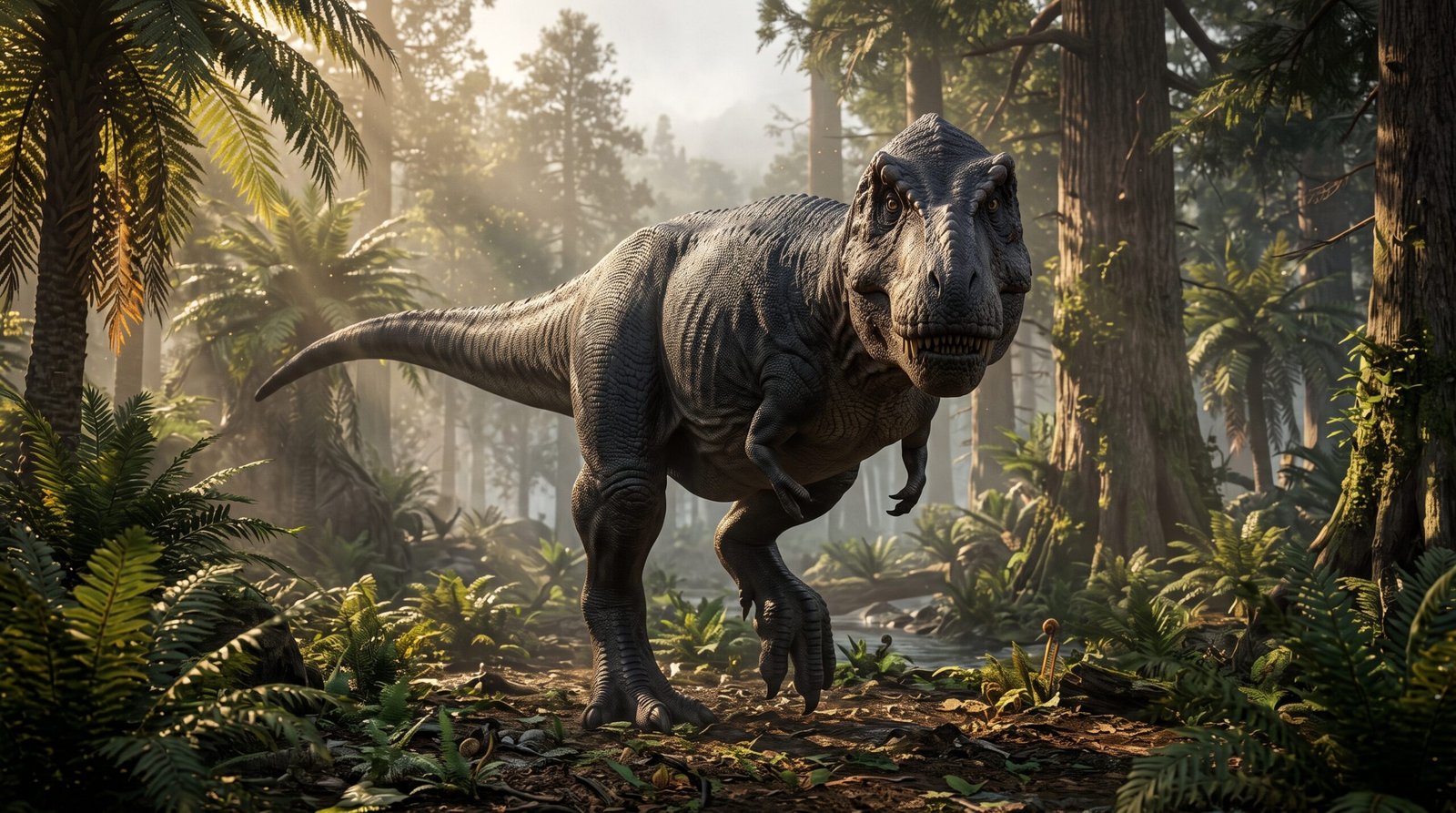
One of the largest land predators ever to walk the Earth. Discover the history, physical characteristics, hunting abilities, and scientific discoveries that continue to reveal fascinating details about Tyrannosaurus rex.
Introduction: The Predator That Became a Legend
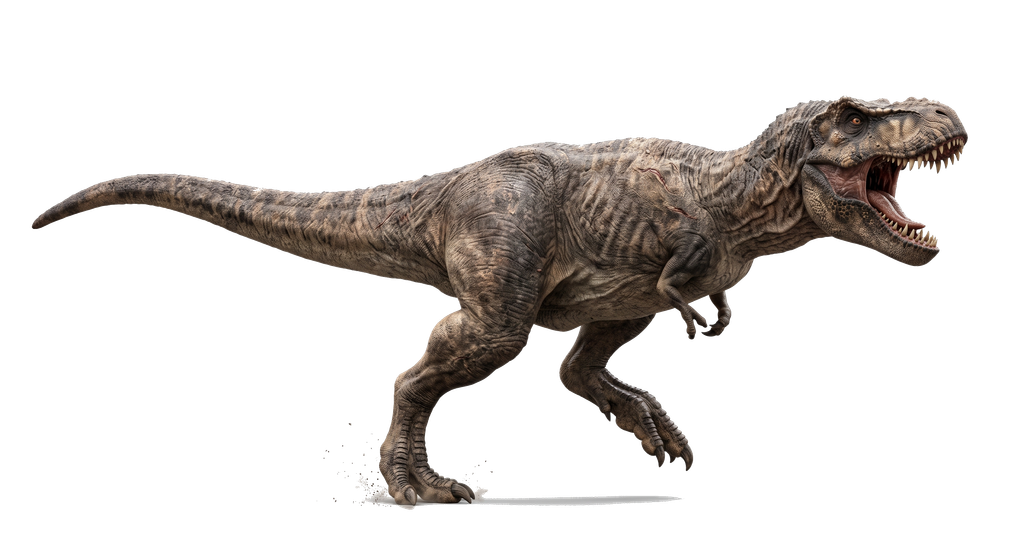
Few prehistoric animals have captured the human imagination quite like Tyrannosaurus rex, commonly known as T. rex. Its name means “tyrant lizard king,” a fitting description for a dinosaur famous for its enormous skull, powerful jaws, massive teeth, and commanding presence.
With a muscular body, strong hind legs, a long balancing tail, and one of the most formidable bite forces ever estimated for a land animal, T. rex was an extraordinary predator.
This giant carnivore lived approximately 68 to 66 million years ago, during the Late Cretaceous Period, in what is now western North America. Its reign ended during the mass extinction event that wiped out all non-avian dinosaurs.
Yet, despite more than a century of scientific research, many aspects of its life remain subjects of investigation. New fossil discoveries, advanced imaging techniques, and microscopic studies of fossilized bones continue to reshape our understanding of its growth, behavior, physical abilities, and place in prehistoric ecosystems.
Understanding Tyrannosaurus rex means looking beyond its fearsome reputation and exploring how evolution produced one of the most remarkable land predators in Earth’s history.
1. The Discovery and Scientific Recognition of Tyrannosaurus rex
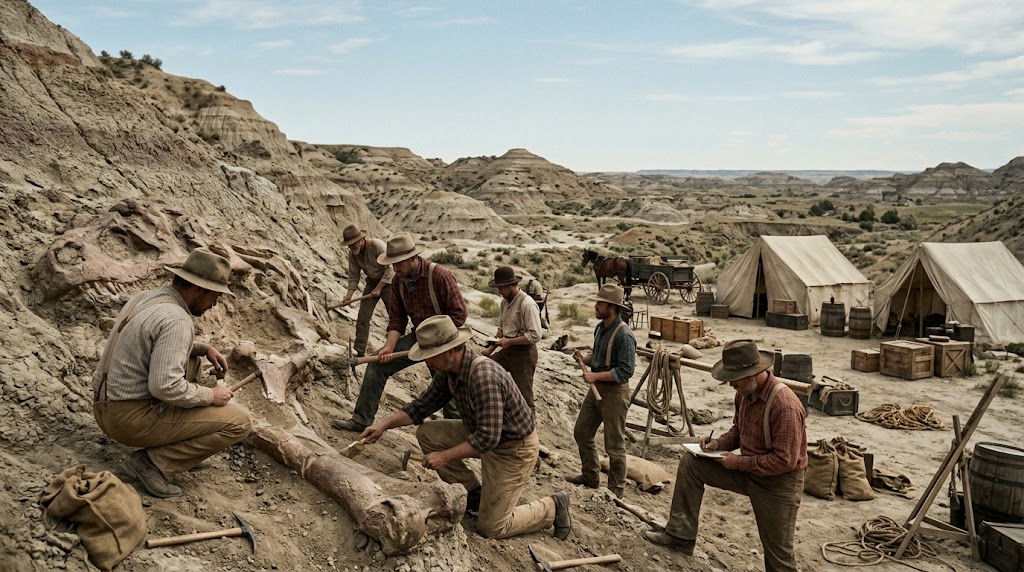
The scientific story of T. rex began long before the dinosaur became a household name.
In 1874, fossilized teeth from a large carnivorous dinosaur were discovered in the western United States. These early findings were later recognized as belonging to the broader group of tyrannosaurids.
The most important breakthrough came in 1902, when American paleontologist Barnum Brown discovered an impressive collection of fossil remains in Montana.
The bones revealed an animal unlike anything scientists had described before: a massive predator with an enormous skull, powerful jaws, and a body built for supporting tremendous weight.
In 1905, paleontologist Henry Fairfield Osborn formally described the species and introduced the scientific name Tyrannosaurus rex.
The discovery quickly attracted international attention. Its unusual combination of size, skeletal structure, and powerful teeth made it one of the most significant dinosaur discoveries of the early twentieth century.
The Famous T. rex Skeletons
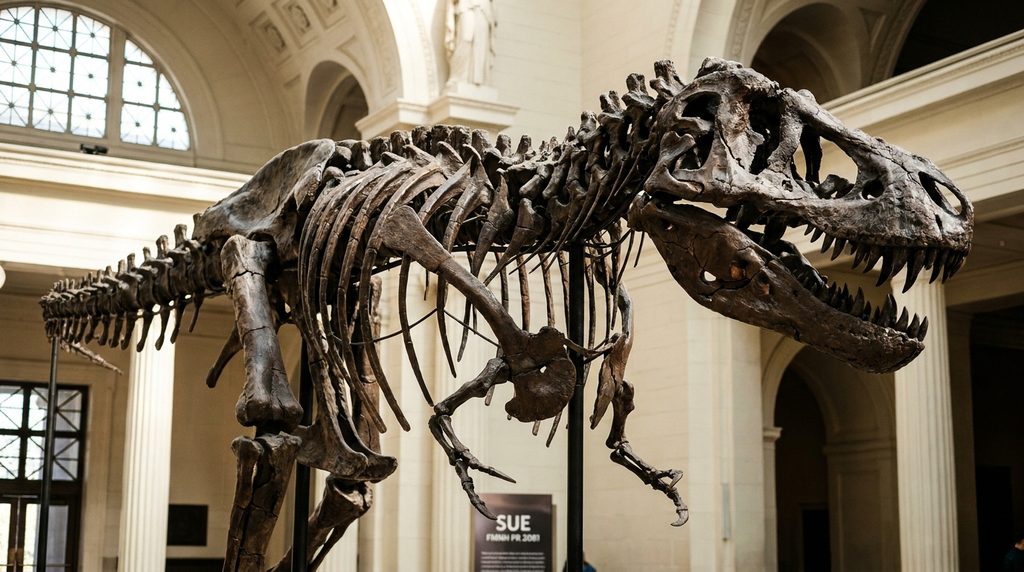
Several fossil specimens have become particularly important to paleontologists.
- Sue: Discovered in 1990 in South Dakota, Sue is one of the largest and most complete T. rex skeletons ever found. The specimen was named after fossil hunter Sue Hendrickson.
- Stan: Discovered in 1987, Stan is another exceptionally preserved specimen that has contributed significantly to scientific research.
- Scotty: Found in Saskatchewan, Canada, in 1991, Scotty is widely recognized as one of the largest known T. rex specimens based on estimated body mass.
These fossils allow researchers to compare individual animals, examine skeletal differences, and investigate how the species developed throughout its lifetime.
2. Where and When Did T. rex Live?
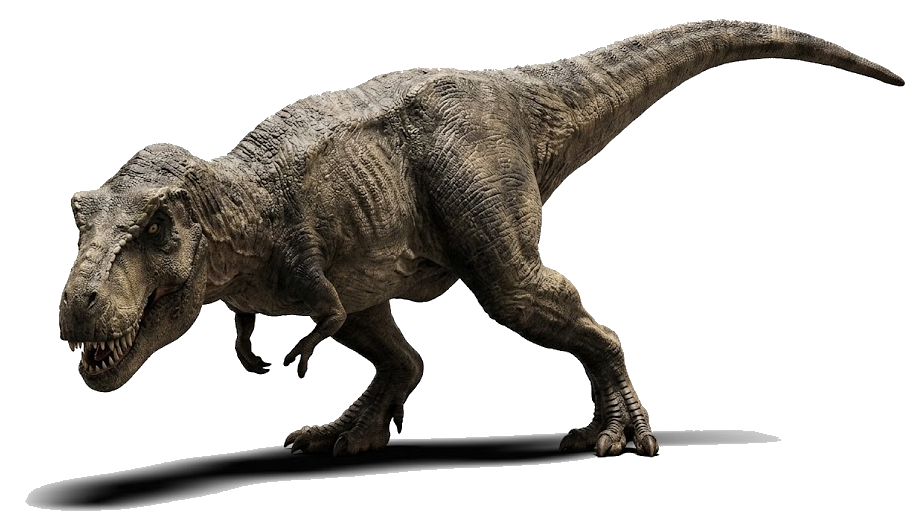
Tyrannosaurus rex lived during the Maastrichtian Age, the final stage of the Cretaceous Period, approximately 68 to 66 million years ago.
North America looked very different at the time. A vast inland sea divided the continent into eastern and western landmasses.
The western region, known as Laramidia, was home to a rich variety of dinosaurs and other prehistoric animals.
T. rex inhabited areas that are now part of the western United States and Canada.
Some of the most important fossil-producing formations associated with the species include:
- Hell Creek Formation, found in Montana, North Dakota, and South Dakota.
- Lance Formation, located in Wyoming.
- Scollard Formation, found in Alberta, Canada.
These geological formations have preserved an extraordinary collection of prehistoric life, including dinosaurs, mammals, fish, reptiles, amphibians, and ancient plants.
What Was Its Environment Like?
The world of T. rex consisted of river systems, floodplains, wetlands, and areas of abundant vegetation.
Global temperatures were generally warmer than today, and the planet did not have the extensive permanent polar ice sheets seen in the modern world.
Forests, low-growing vegetation, and diverse plant communities supported large populations of herbivorous dinosaurs.
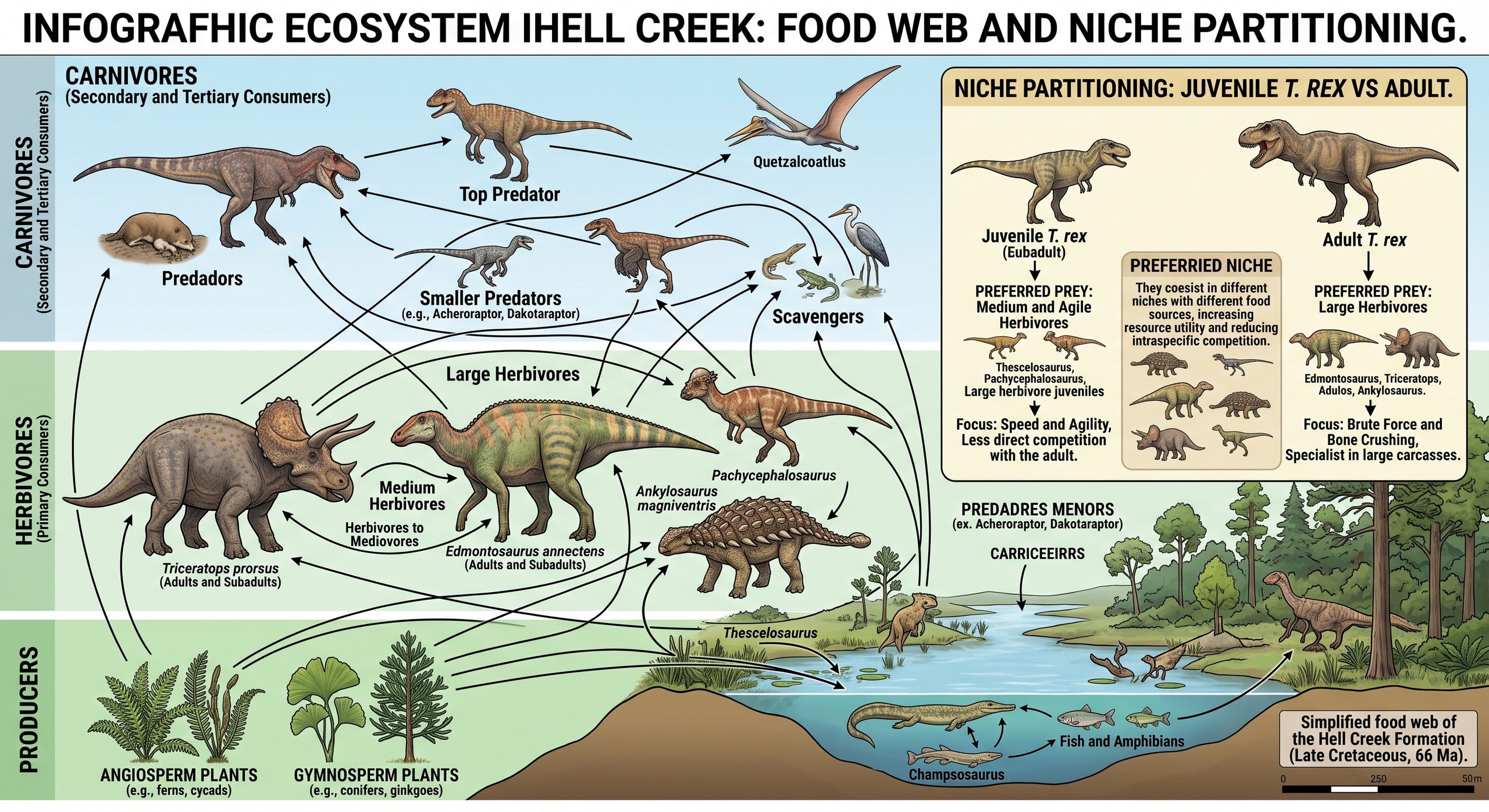
Some of the animals sharing this environment included Triceratops, Edmontosaurus, and Ankylosaurus.
This rich ecosystem provided opportunities for a large carnivore like T. rex to occupy the top of the terrestrial food chain.
3. Size and Physical Characteristics
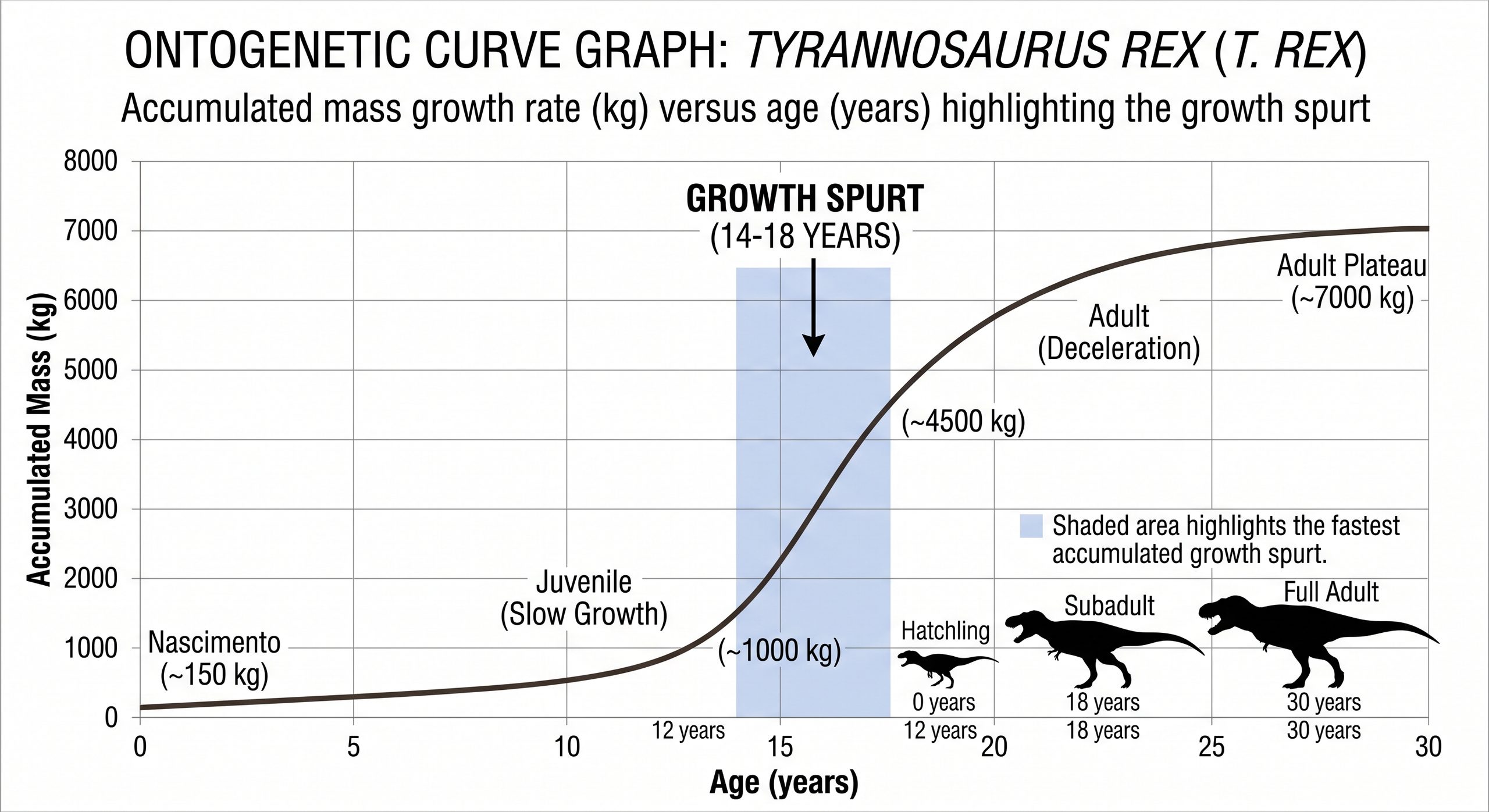
The sheer size of Tyrannosaurus rex is one of the reasons it remains so fascinating.
The largest known specimens exceeded 40 feet in length, with some modern estimates reaching approximately 43 feet. Their hip height could approach 12 to 13 feet.
Large individuals may have weighed around 8 to 9 tons, although estimates vary depending on the specimen and reconstruction method.
These dimensions placed T. rex among the largest known terrestrial carnivorous dinosaurs.
| Physical characteristic | Estimated measurement |
|---|---|
| Body length | Up to approximately 43 feet |
| Hip height | About 12–13 feet |
| Body mass | Approximately 8–9 tons in large specimens |
| Geological period | Late Cretaceous |
| Time range | Approximately 68–66 million years ago |
| Diet | Carnivorous |
These figures represent estimates rather than exact measurements. Not every individual reached the same size.
4. The Skull: A Powerful Feeding Structure
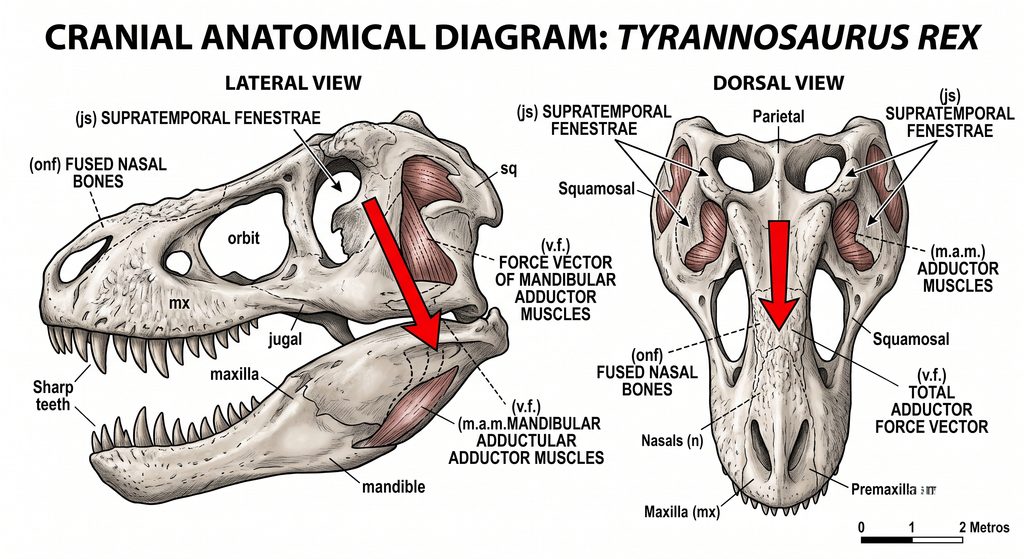
The skull of Tyrannosaurus rex was one of its most impressive anatomical features.
It could exceed five feet in length and was built to withstand enormous forces during feeding.
Despite its size, the skull was not a solid block of bone. It contained several openings, known as fenestrae, that helped reduce weight while providing space for powerful jaw muscles.
This combination of strength and structural efficiency allowed T. rex to develop an exceptionally powerful bite.
An Extraordinary Bite Force
T. rex had one of the strongest estimated bite forces of any known terrestrial animal.
Biomechanical studies suggest that an adult could generate bite forces exceeding 8,000 pounds-force in certain regions of its jaws.
That kind of power allowed the animal to do more than simply tear through flesh. It could also crush bones.
This ability provided access to nutrient-rich tissues that many other predators would have struggled to consume.
Its powerful jaw muscles, reinforced skull structure, and thick teeth worked together to make it an exceptionally effective bone-crushing carnivore.
5. The Teeth: Built for Crushing and Tearing
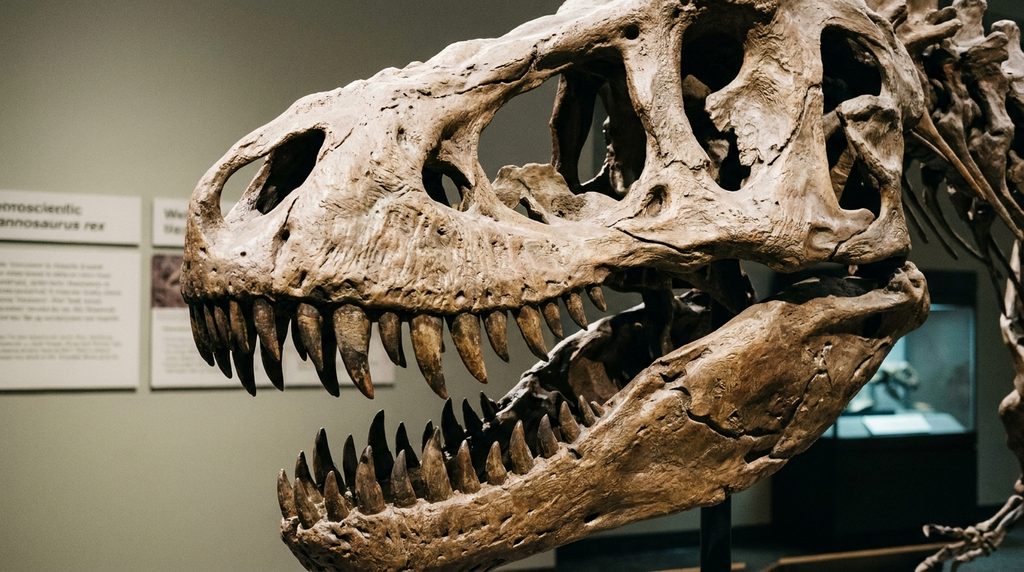
The teeth of Tyrannosaurus rex were large, thick, curved, and remarkably strong.
Unlike the relatively slender teeth found in some other carnivorous dinosaurs, T. rex had robust teeth designed to withstand significant pressure.
Some of its largest teeth could measure more than six inches from crown to root.
Their edges contained small serrations that helped cut through flesh during feeding.
These teeth were particularly effective at gripping, tearing, and crushing tissues.
Another fascinating feature was the dinosaur’s ability to replace damaged or lost teeth.
Like many reptiles, T. rex had a continuous tooth replacement system, meaning new teeth could develop as older ones wore down or were lost.
This allowed the animal to maintain an effective set of teeth throughout its life.
6. The Short Arms: Why Were They So Small?
One of the most recognizable features of Tyrannosaurus rex is its unusually short forelimbs.
Despite reaching more than 40 feet in length, its arms measured roughly three feet from shoulder to fingertip.
Each arm had two functional fingers equipped with claws.
For many years, these small limbs were treated as one of the great mysteries of dinosaur anatomy.
However, their relatively short length does not mean they were completely useless.
The arms were muscular and may have performed specific tasks, such as helping the animal manipulate food or assist with certain movements.
Their precise function remains uncertain.
One evolutionary explanation suggests that the reduction of the forelimbs occurred alongside the development of a larger skull, stronger jaws, and increasingly specialized feeding abilities.
In other words, as the head became the dominant tool for capturing and processing food, the forelimbs may have taken on a less important role.
7. Powerful Legs and a Tail Built for Balance
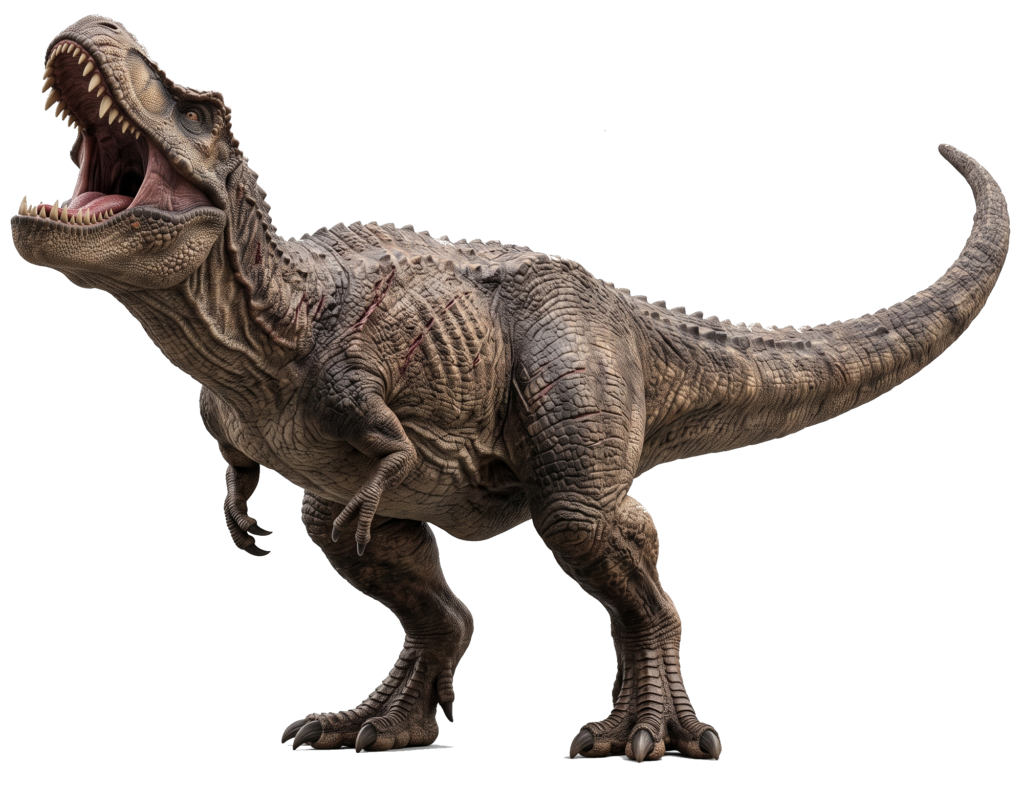
The hind legs of T. rex were strong, muscular, and capable of supporting its massive body.
Its long legs and sturdy bones provided the structural foundation needed for movement.
However, this does not necessarily mean that T. rex could run at extraordinary speeds.
An animal weighing several tons would place enormous stress on its bones and joints during high-speed movement.
Biomechanical research suggests that its maximum running speed was likely limited, although estimates remain debated.
Walking and faster bursts of movement were probably important parts of its locomotion.
Why Was Its Tail So Important?
The tail played a major role in maintaining balance.
It helped counterbalance the weight of the head and upper body, allowing the dinosaur to maintain a largely horizontal posture while moving.
Older dinosaur illustrations often showed T. rex standing upright with its tail dragging along the ground.
Modern skeletal reconstructions present a very different picture.
The animal most likely carried its body horizontally, with its tail extended behind it rather than resting on the ground.
This posture is much more consistent with the structure of its skeleton and the mechanics of its movement.
8. Did Tyrannosaurus rex Have Feathers?
This is one of the most interesting questions in modern dinosaur research.
For decades, T. rex was commonly depicted with a body completely covered in scales.
However, discoveries involving other members of the tyrannosauroid group revealed that some of these dinosaurs had feather-like structures.
One important example is Yutyrannus huali, a large tyrannosauroid discovered in China that preserved evidence of filamentous body covering.
This discovery demonstrated that feather-like structures were not limited to small dinosaurs.
But what about T. rex itself?
Fossilized skin impressions attributed to Tyrannosaurus reveal patches of scales in areas such as the neck, hips, and tail.
So far, there is no convincing direct evidence that adult T. rex had a dense covering of feathers across its body.
The possibility of filamentous structures in certain areas, particularly during earlier stages of life, remains a subject of discussion.
Based on current evidence, the most cautious reconstruction presents adult T. rex as predominantly scaly, while leaving room for further discoveries.
9. What Did T. rex Eat? Predator or Scavenger?
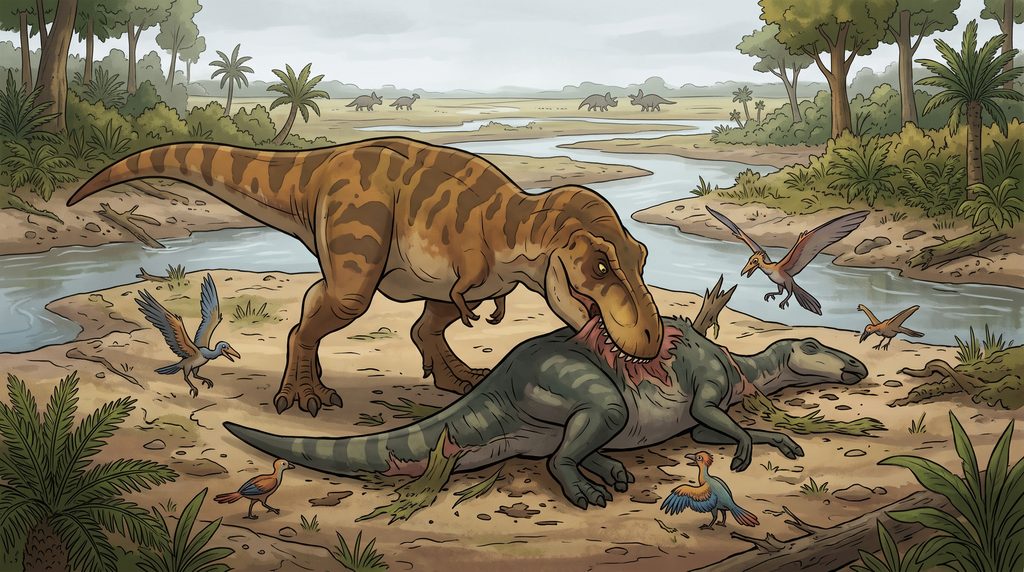
For many years, scientists debated whether Tyrannosaurus rex was primarily an active hunter or a scavenger that relied on finding dead animals.
Today, the strongest interpretation is that it was an active predator that also took advantage of available carcasses.
This combination is common among modern large carnivores.
What Animals Did T. rex Hunt?
Potential prey included several large herbivorous dinosaurs:
- Triceratops.
- Edmontosaurus.
- Ankylosaurus.
- Other large herbivorous dinosaurs of the Late Cretaceous.
Fossilized bite marks provide important evidence of interactions between these animals.
Some bones display injuries that healed during the animal’s lifetime.
These findings are especially significant because they indicate that at least some bites occurred while the victim was still alive.
Did T. rex Practice Cannibalism?
Fossil bones from tyrannosaurs have been discovered with tooth marks consistent with feeding by other members of the same group.
These findings suggest that cannibalistic feeding probably occurred under certain circumstances.
However, they do not necessarily prove that T. rex individuals actively hunted and killed members of their own species.
Feeding on animals that had already died could also explain some of the evidence.
10. Intelligence and Senses: How Did T. rex Experience the World?
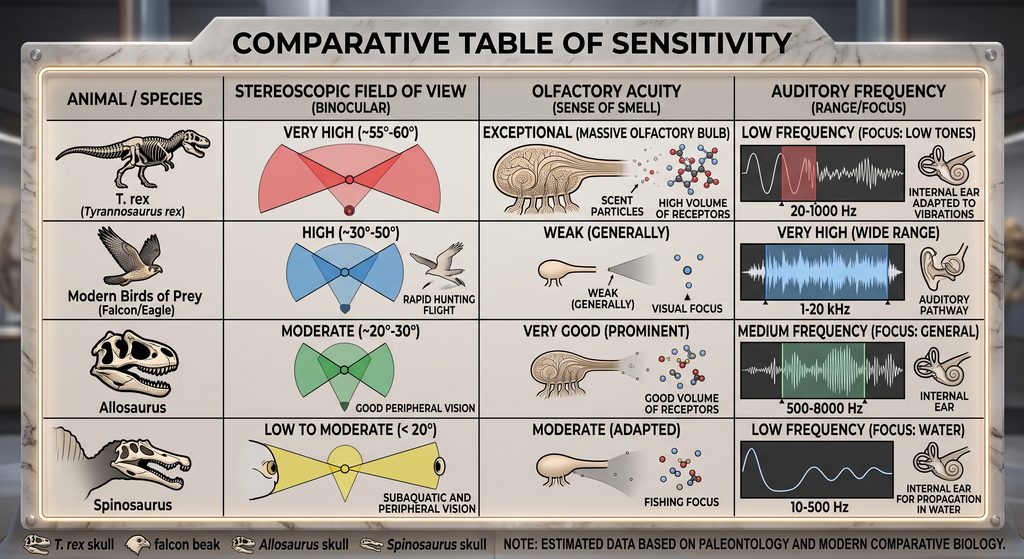
Tyrannosaurus rex possessed several sensory adaptations that likely helped it locate food and interact with its surroundings.
By examining the skull, brain cavity, and structures associated with the sensory organs, paleontologists can reconstruct aspects of its perception.
A Highly Developed Sense of Smell
T. rex had relatively large olfactory structures associated with its sense of smell.
This suggests that scent played an important role in its ability to detect food and recognize chemical signals in the environment.
Its sense of smell was likely one of its most valuable sensory tools.
Vision and Depth Perception
The forward-facing position of its eyes allowed some overlap between the visual fields of both eyes.
This arrangement would have helped the animal perceive depth and judge distances.
Its vision was probably important when tracking prey and observing movement.
Hearing and Balance
The structure of the inner ear provides clues about both hearing and balance.
Research suggests that T. rex possessed a well-developed auditory system, although the exact range of sounds it could detect remains difficult to establish.
Taken together, these features suggest that T. rex was not simply a powerful animal relying on brute strength.
Its sensory abilities were also important components of its survival strategy.
11. How Did T. rex Grow?
The growth of Tyrannosaurus rex was a gradual process involving major changes in body proportions.
Young individuals were much smaller and looked noticeably different from fully grown adults.
Their bodies were generally more slender, their legs proportionally longer, and their skulls less robust.
As they matured, their bones, muscles, and skulls underwent significant changes.
Paleontologists study these transformations through a technique known as bone histology, which involves examining the microscopic structure of fossilized bones.
Growth marks preserved within the bones can provide clues about the animal’s development and age.
Recent research has expanded our understanding of this process, suggesting that T. rex may have grown more gradually and over a longer period than earlier models indicated.
Juveniles and Adults: More Than Just a Difference in Size
A young T. rex was not simply a miniature version of an adult.
Juveniles had different body proportions and may have occupied somewhat different ecological roles.
Their lighter builds and relatively longer legs may have allowed them to pursue different prey than fully grown adults.
As they matured, their bodies became heavier and more powerful, while their skulls developed the robust structure associated with adult individuals.
These changes likely influenced their feeding strategies and interactions with other animals.
12. Did Tyrannosaurus rex Hunt in Groups?
The possibility of social behavior among tyrannosaurs has attracted considerable scientific interest.
Some fossil sites have preserved multiple individuals in the same general area, leading researchers to investigate whether these dinosaurs sometimes lived or traveled together.
However, finding several skeletons in one location does not automatically prove that the animals formed permanent social groups.
There are different possible explanations for such discoveries, including environmental events that brought multiple individuals together.
Some researchers have proposed that tyrannosaurs may have displayed complex social behaviors.
Nevertheless, organized cooperative hunting has not been conclusively demonstrated for Tyrannosaurus rex.
It is important to distinguish between animals living in the same region, gathering temporarily, and actively cooperating during a hunt.
These are different behaviors, and each requires its own evidence.
13. Other Giant Carnivorous Dinosaurs
Tyrannosaurus rex was not the only enormous carnivorous dinosaur to evolve during the Mesozoic Era.
Different theropod lineages developed impressive sizes and specialized anatomical features in different parts of the world.
Some of the best-known examples include:
Spinosaurus: This large predator lived in northern Africa during the Cretaceous. It had an elongated skull, a distinctive sail-like structure along its back, and anatomical adaptations associated with aquatic environments.
Giganotosaurus: Discovered in Argentina, Giganotosaurus was one of the largest known terrestrial carnivorous dinosaurs and lived during the middle part of the Cretaceous.
Carcharodontosaurus: Another enormous African predator, it had a large skull and blade-like serrated teeth.
These dinosaurs did not live alongside T. rex. They inhabited different regions and geological periods.
| Dinosaur | Geographic region | Approximate geological age |
|---|---|---|
| Tyrannosaurus rex | North America | 68–66 million years ago |
| Spinosaurus | North Africa | 100–94 million years ago |
| Giganotosaurus | South America | 99–97 million years ago |
| Carcharodontosaurus | North Africa | 100–94 million years ago |
Comparing these animals reveals how different evolutionary lineages developed their own strategies for becoming dominant predators.
14. Nanotyrannus: A Discovery That Changed the T. rex Debate
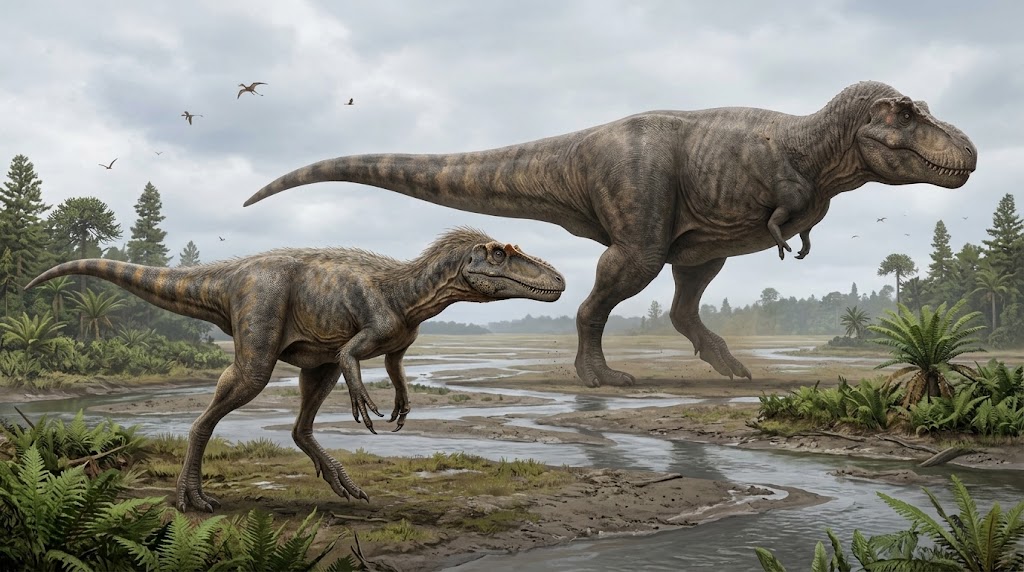
One of the most important scientific debates involving Tyrannosaurus rex concerns a smaller tyrannosaurid known as Nanotyrannus.
For many years, researchers disagreed about whether certain small tyrannosaur fossils represented young T. rex individuals or a separate dinosaur genus.
Some scientists argued that the differences in size and anatomy could be explained by growth.
Others believed the fossils belonged to a distinct animal.
In 2025, research involving the famous Dueling Dinosaurs fossil provided new evidence supporting the interpretation of Nanotyrannus as a separate genus.
This finding strengthened the possibility that more than one type of tyrannosaurid lived alongside T. rex near the end of the Cretaceous.
The discovery is significant because it changes how scientists understand the diversity of large predators in prehistoric North America.
It also demonstrates an important principle of paleontology: fossils that have been studied for decades can reveal new information when examined with improved techniques and fresh scientific questions.
15. How Did Tyrannosaurus rex Become Extinct?
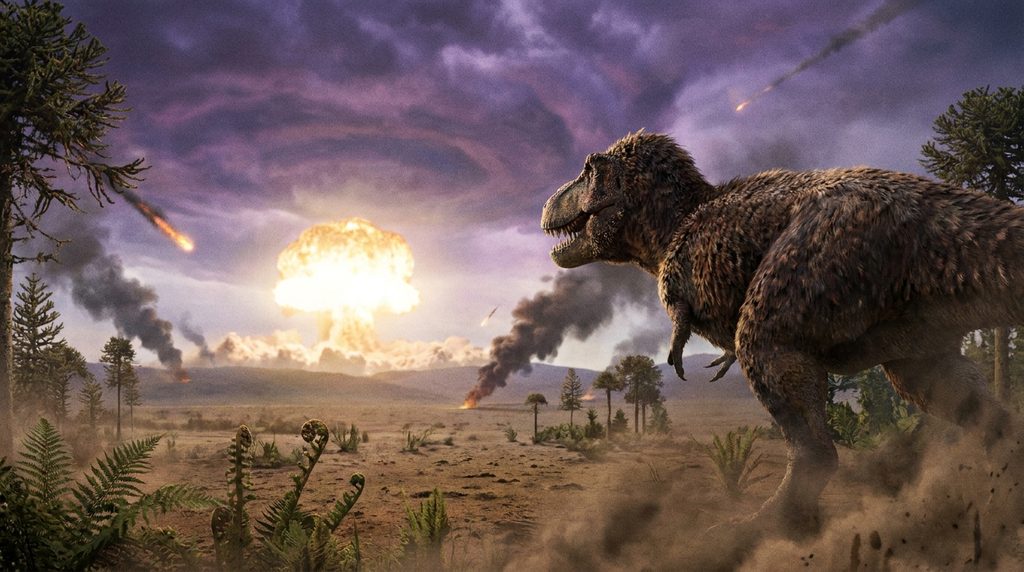
Tyrannosaurus rex disappeared approximately 66 million years ago during the mass extinction event that marked the end of the Cretaceous Period.
The event is strongly associated with the impact of a massive asteroid in the region that is now the Yucatán Peninsula in Mexico.
The collision created the Chicxulub impact crater and triggered environmental changes on a global scale.
Some of the major consequences included:
- Massive fires in different regions.
- Large quantities of dust and particles entering the atmosphere.
- Reduced sunlight reaching Earth’s surface.
- Severe climatic disruptions.
- The collapse of food chains.
The reduction in sunlight affected photosynthesis, disrupting plant growth and the ecosystems that depended on it.
As food resources declined, populations of numerous animals began to disappear.
Large non-avian dinosaurs, including Tyrannosaurus rex, did not survive these dramatic environmental changes.
However, some groups of smaller vertebrates managed to survive.
Among them were the ancestors of modern birds, the only living dinosaur lineage that remains today.
16. The Scientific and Cultural Legacy of T. rex
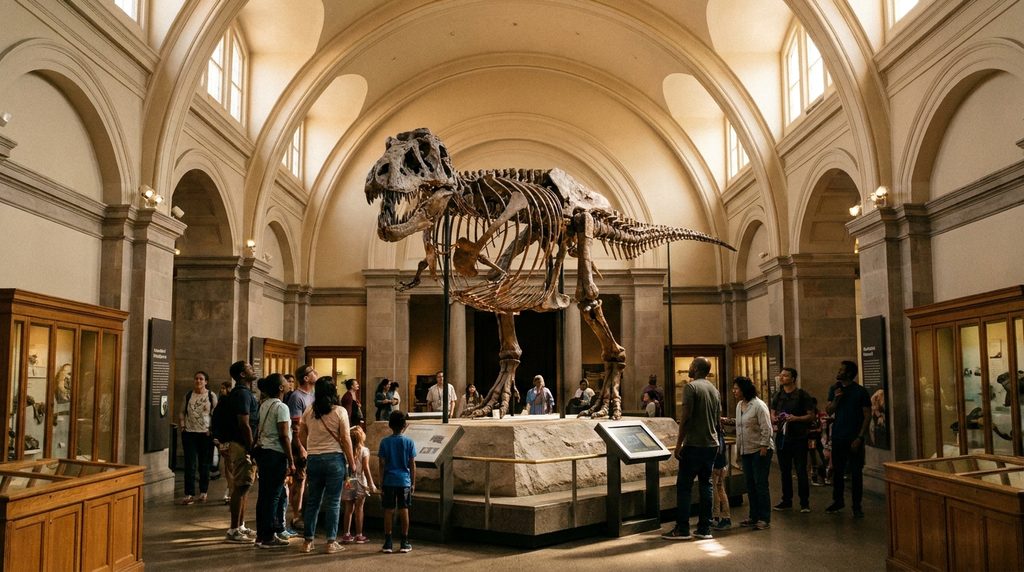
Few prehistoric animals have achieved the cultural recognition of Tyrannosaurus rex.
Its image appears in museums, documentaries, books, toys, educational programs, and blockbuster movies.
Over time, T. rex has become one of the most recognizable symbols of prehistoric life.
One of the biggest moments in its popularization came with the release of Jurassic Park in 1993.
The movie introduced the dinosaur to a new generation and helped spark worldwide interest in paleontology.
Yet its importance extends far beyond entertainment.
Studying T. rex helps scientists investigate:
- The evolution of large predators.
- The biomechanics of massive terrestrial animals.
- Dinosaur growth and development.
- Predator-prey relationships.
- Late Cretaceous ecosystems.
- Mass extinction events and evolutionary survival.
Every new fossil discovery adds another piece to this remarkable scientific story.
Conclusion: The King of Dinosaurs Still Has Secrets to Reveal
Tyrannosaurus rex was far more than an enormous carnivorous dinosaur.
Its anatomy, growth patterns, sensory abilities, and feeding adaptations reveal how evolution can produce highly specialized organisms.
For millions of years, this remarkable predator occupied an important position in the ecosystems of western North America.
Its disappearance marked the end of one of the most extraordinary chapters in the history of terrestrial animals.
But its scientific story is far from over.
Modern imaging technologies, microscopic fossil analysis, and new discoveries continue to reveal details that were once impossible to investigate.
Even after approximately 66 million years, Tyrannosaurus rex remains one of the most fascinating animals ever studied.
And perhaps that is what makes it so remarkable: long after its extinction, the king of dinosaurs continues to teach us about the history of life on Earth.
Frequently Asked Questions About Tyrannosaurus rex
1. How big was Tyrannosaurus rex?
The largest known specimens exceeded 40 feet in length, with estimates reaching approximately 43 feet. Large individuals may have weighed around 8 to 9 tons.
2. How long did T. rex live?
The exact lifespan is uncertain. Fossil growth studies suggest that some individuals may have lived for approximately three decades, although maximum lifespan estimates remain under discussion.
3. Was T. rex the largest carnivorous dinosaur?
Not necessarily. Other giant theropods, including Spinosaurus and Giganotosaurus, may have rivaled or exceeded it in certain measurements. Comparisons depend on the individual fossil and estimation methods.
4. Did Tyrannosaurus rex have feathers?
There is no convincing direct evidence of a dense feather covering on adult T. rex. Fossilized skin impressions show scales in several areas of its body.
5. How many teeth did T. rex have?
Tyrannosaurus rex generally had approximately 50 to 60 teeth, although the exact number varied between individuals.
6. How powerful was the T. rex bite?
Biomechanical estimates suggest that adult T. rex could generate bite forces exceeding 8,000 pounds-force in certain areas of its jaws, allowing it to crush bones and inflict severe injuries.
7. Did Tyrannosaurus rex hunt other dinosaurs?
Yes. Fossilized bite marks, including injuries that show signs of healing, provide evidence that T. rex attacked living animals. It also fed on available carcasses.
8. Why were the arms of T. rex so short?
The reduction of its forelimbs occurred alongside evolutionary changes that emphasized the skull and jaws. Their exact function remains a subject of scientific investigation.
9. Where have T. rex fossils been discovered?
Most known specimens have been found in western North America, particularly in areas that are now part of the United States and Canada.
10. When did Tyrannosaurus rex become extinct?
T. rex disappeared approximately 66 million years ago during the mass extinction event at the end of the Cretaceous Period, associated with the Chicxulub asteroid impact.
Scientific References and Further Reading
- Osborn, H. F. (1905). Tyrannosaurus and other Cretaceous carnivorous dinosaurs. The original scientific description of Tyrannosaurus.
- National Center for Biotechnology Information (NCBI). Research on Tyrannosaurus growth, development, anatomy, and paleobiology.
https://pmc.ncbi.nlm.nih.gov/ - University of California Museum of Paleontology. Hell Creek Formation: geological and paleontological background.
https://ucmp.berkeley.edu/science/parks/hellcreek.php - Erickson, G. M., and colleagues. Biomechanical research on the bite force of Tyrannosaurus rex.
- Zanno and colleagues (2025). Research on the distinction between Nanotyrannus and Tyrannosaurus rex, involving the Dueling Dinosaurs fossil.
https://news.ncsu.edu/2025/10/nanotyrannus-confirmed-dueling-dinosaurs-fossil-rewrites-the-story-of-t-rex/ - Longrich, N. R., and colleagues. Research on feeding traces and evidence of cannibalism among tyrannosaurids.
- Vertebrate paleontology literature. Comparative anatomy, theropod evolution, and Late Cretaceous ecosystem research.
Leave a comment