

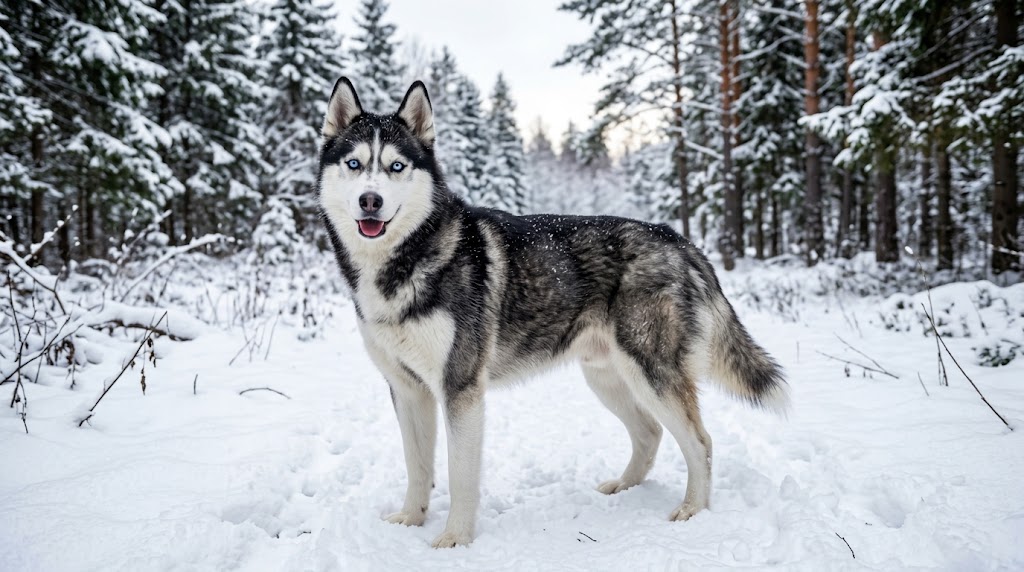
They look like wolves, have a voice of their own, and can turn an ordinary walk into an adventure. But life with a Siberian Husky is about much more than a beautiful coat and striking eyes.
1. Meet the Siberian Husky: A Dog Born to Explore
Few dogs capture people’s attention quite like the Siberian Husky. With their wolf-like appearance, thick coats, erect ears, and often piercing blue eyes, they look as though they stepped straight out of a snowy wilderness.
But don’t let that handsome face fool you. Behind those eyes is an energetic, clever, independent-minded dog with a serious love of adventure.
The Siberian Husky wasn’t bred to spend all day curled up on the couch. This is a working dog whose ancestors traveled long distances through freezing temperatures, pulling sleds and helping their human companions survive in one of the world’s harshest environments.
That history explains a lot about the modern Husky: its stamina, social nature, thick coat, and remarkable ability to keep going when other dogs would have called it a day.
It also explains why owning one can be both incredibly rewarding and surprisingly challenging.
2. From the Arctic to the Rest of the World
The Siberian Husky originated in northeastern Siberia, where the Chukchi people developed and raised these dogs for generations.
In that unforgiving landscape, dogs weren’t simply pets. They were essential partners, helping people travel across frozen terrain and transport supplies. The Chukchi needed dogs that could cover long distances efficiently, work cooperatively, and live alongside their families.
The result was a dog known for endurance rather than brute strength. Siberian Huskies are medium-sized, athletic, and remarkably economical movers. They were built to travel far, not merely to look powerful.
The journey that made the Husky famous
In 1925, an outbreak of diphtheria threatened the remote town of Nome, Alaska. With the town in urgent need of medicine, teams of sled dogs and mushers carried lifesaving serum across hundreds of miles of harsh winter conditions.
The relay became known as the 1925 serum run to Nome.
Two dogs became especially famous through the story: Togo, who led a team over an exceptionally demanding portion of the route, and Balto, who led the final team into Nome.
The event helped bring international attention to sled dogs, including Siberian Huskies.
Their legacy isn’t just a dramatic story about snow and survival. It’s a reminder of what these dogs were bred to do: work as a team, endure difficult conditions, and keep moving when the going gets tough.
3. Those Eyes, That Coat, and That Wolf-Like Look
Let’s be honest: the Husky’s appearance is a big part of its appeal.
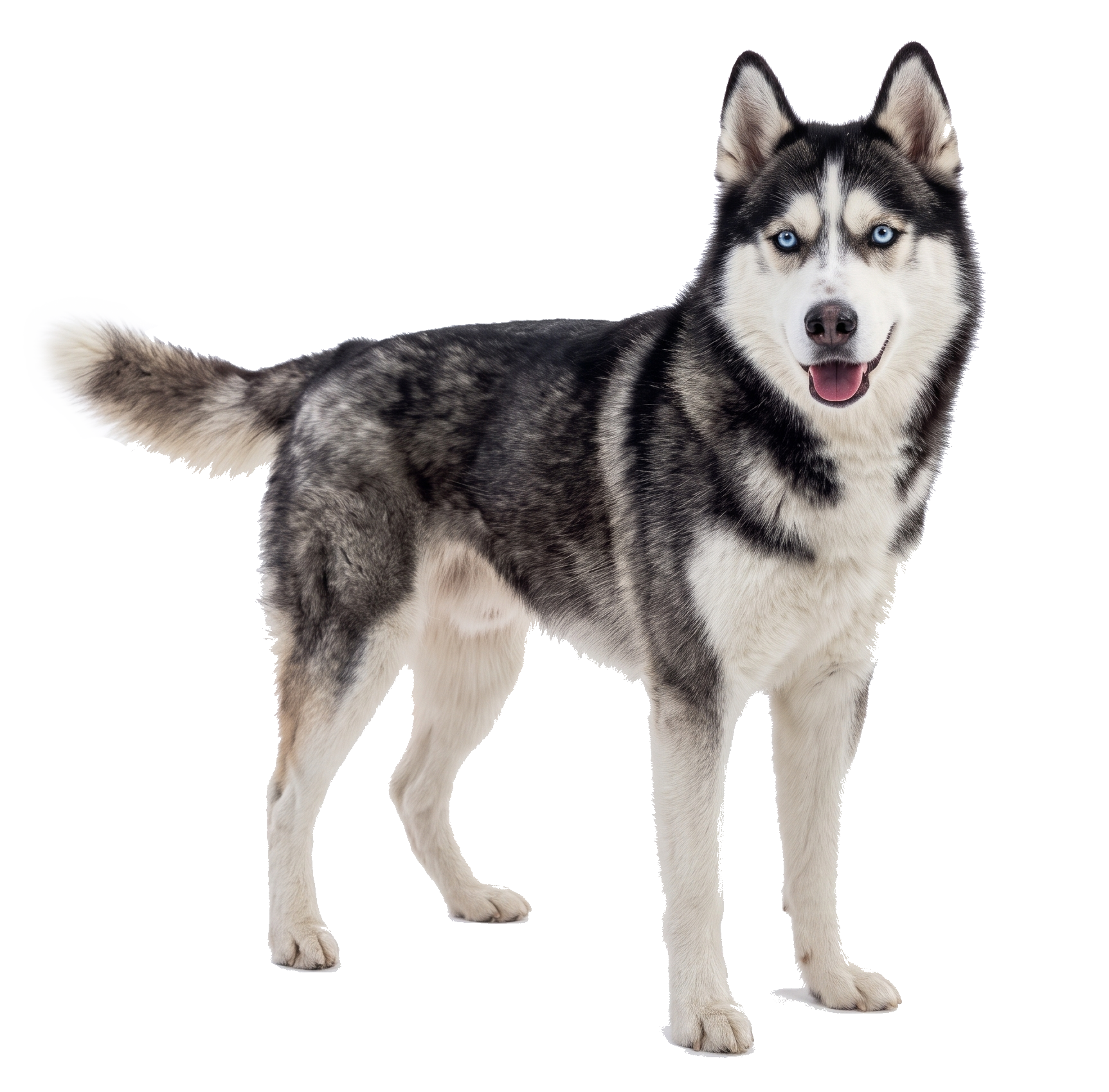
Its athletic build, pointed ears, bushy tail, and facial markings give it a wild, almost wolf-like look. Yet beneath that impressive exterior is a domestic dog with its own personality, needs, and quirks.
Are all Siberian Huskies blue-eyed?
Not at all.
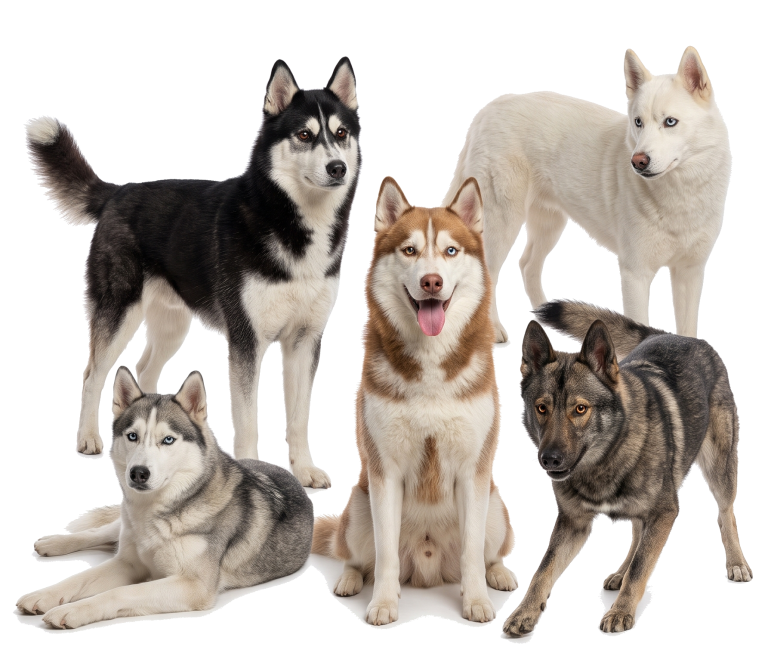
Huskies can have blue eyes, brown eyes, or one eye of each color. Some even have eyes with mixed coloration.
Blue eyes are especially striking, but they aren’t a guarantee of breed quality, health, or personality. A brown-eyed Husky can be just as healthy, beautiful, and unmistakably Husky as a blue-eyed one.
What about the coat?
Siberian Huskies have a double coat:
- A dense undercoat that helps insulate the body.
- A longer outer coat that helps protect against the elements.
Their coats come in a variety of colors and patterns, including black and white, gray and white, red and white, and other combinations.
That thick fur isn’t just decoration. It evolved to help the dog function in cold environments.
And yes, it comes with a downside: shedding.
Siberian Husky vs. Alaskan Malamute
People often confuse these two breeds because both have a northern, wolf-like appearance.
The Siberian Husky is generally lighter and more compact, built for endurance and efficient travel. The Alaskan Malamute is typically larger and more heavily built, with a history centered on hauling heavier loads.
Think of the Husky as the long-distance runner and the Malamute as the powerful weightlifter. Both are impressive athletes, but they were developed for somewhat different jobs.
4. What’s a Siberian Husky Really Like?
Here’s where things get interesting.
A Husky can be affectionate, playful, curious, and wonderfully entertaining. Many enjoy being around people and other dogs. They often have a mischievous streak that makes life with them feel less like owning a pet and more like living with a furry comedian.
But they aren’t always eager to follow orders simply because someone gave them.
Huskies are intelligent, yet intelligence doesn’t automatically mean obedience. They were bred to work in demanding conditions, sometimes making decisions over long distances. That independent nature can show up at home.
You might call your Husky, only to watch it look directly at you before deciding that whatever it was doing is much more interesting.
That’s not necessarily stubbornness in the human sense. It’s a reminder that training a Husky requires patience, consistency, and motivation.
The Husky has a lot to say
If you’re looking for a quiet dog, think carefully before choosing this breed.
Huskies are famous for howling, whining, grumbling, and making an impressive range of other sounds. Some seem to hold entire conversations with their owners.
They don’t all vocalize to the same degree, but plenty of them have strong opinions about everything from dinner time to being left alone.
And no, a Husky isn’t necessarily barking when it makes noise. Often, it’s doing something much more theatrical.
Are they good family dogs?
They can be excellent companions for the right household.
Many Huskies are sociable and playful, and some do very well with children. However, every dog is an individual, and no breed should be assumed to be automatically safe with kids.
Children need to learn how to interact respectfully with dogs, and interactions should be supervised. A Husky’s energy and size can also be overwhelming for very young children, even when the dog is simply trying to play.
With other dogs, Huskies often do well when properly socialized. Their behavior around smaller animals deserves particular attention, though, because the breed can have a strong prey drive.
Living peacefully with a cat or another small pet is possible, but it isn’t something you should take for granted.
5. A Husky Doesn’t Just Need a Walk. It Needs a Job.
This may be the most important thing to understand before bringing one home.
Siberian Huskies are energetic working dogs. A quick walk around the block and a few minutes of play may not be enough to satisfy their needs.
They benefit from regular physical activity, mental stimulation, and opportunities to explore their surroundings safely.
Depending on the individual dog, suitable activities can include:
- Long walks and hikes.
- Running alongside a suitable adult handler, once the dog is physically mature and properly conditioned.
- Interactive games and scent-based activities.
- Reward-based training sessions.
- Canine sports and pulling activities with appropriate equipment and guidance.
The goal isn’t to exhaust your dog every single day. It’s to build a healthy routine that provides enough exercise and enrichment without pushing the animal beyond its limits.
Puppies and growing dogs need special care because excessive high-impact exercise can harm developing joints. Exercise should match the dog’s age, fitness, health, and the weather.
What happens when a Husky gets bored?
Imagine a highly energetic dog with plenty of strength, a curious mind, and nothing interesting to do.
Now imagine that dog discovering your garden, your couch, or the contents of your trash can.
Boredom and unmet exercise needs can contribute to destructive behavior, excessive vocalization, escape attempts, and other problems.
Huskies are also well-known escape artists. They may dig under fences, jump over barriers, or look for gaps in a gate.
A secure yard is helpful, but it doesn’t replace exercise or supervision. A Husky should never be trusted off-leash in an unsecured area simply because it seems well trained.
The rule is simple: a Husky needs an active lifestyle, not just a pretty place to live.
6. Can a Siberian Husky Live in an Apartment?
Yes. An apartment doesn’t automatically rule out owning a Husky.
What matters more is how the dog spends its day.
A Husky living in an apartment with an owner who provides consistent exercise, training, companionship, and enrichment may be better off than one living in a large backyard with little interaction.
However, apartment life comes with real challenges.
Husky vocalizations can disturb neighbors. Limited space doesn’t remove the dog’s need for activity, and leaving a high-energy dog alone for long periods can create problems.
Before bringing one into an apartment, consider three things:
- Your daily schedule: Can you consistently make time for exercise, training, and interaction?
- Your living environment: Can you manage the noise and keep the dog secure?
- Your long-term commitment: Can you maintain this routine for years, including when work gets busy or the weather is unpleasant?
If the answer is yes, apartment living can work. If you’re hoping the dog will entertain itself while you spend most of the day away, this probably isn’t the right breed.
7. Grooming: Get Ready for the Fur
If you like a spotless home and can’t stand finding dog hair on your clothes, a Husky may test your patience.
Siberian Huskies shed throughout the year, with heavier seasonal shedding when they lose much of their undercoat. During these periods, loose fur can seem to appear everywhere.
Regular brushing helps manage the shedding and prevents loose hair from accumulating. How often you’ll need to brush depends on the individual dog’s coat and the season, but expect to do it consistently.
Other grooming essentials include:
- Checking and trimming nails when needed.
- Keeping the ears clean and checking for signs of irritation.
- Brushing the teeth regularly.
- Bathing when necessary and drying the coat thoroughly.
A healthy Husky’s coat doesn’t need constant elaborate grooming. What it does need is routine care.
And one important point: don’t shave the double coat simply to reduce shedding or make the dog more comfortable in summer.
8. Feeding Your Siberian Husky
A Husky needs a balanced diet appropriate for its age, size, activity level, and health.
One interesting characteristic of the breed is its reputation for being efficient with food. Some Huskies eat less than people expect for a dog of their size and activity level.
That doesn’t mean every Husky will eat lightly, or that you should restrict food based on breed stereotypes. Individual needs vary.
Choose a nutritionally complete dog food appropriate for your dog’s life stage, follow feeding guidance, and adjust portions based on body condition and veterinary advice.
Keep an eye on your dog’s weight. You should be able to feel the ribs without pressing hard, and the dog should have a visible waist when viewed from above.
Treats can be useful for training, but they should not make up a large part of the diet.
If your Husky suddenly loses its appetite, gains or loses weight unexpectedly, or develops digestive problems, consult a veterinarian rather than assuming it’s simply being picky.
9. Health: What Future Owners Should Know
Siberian Huskies are generally sturdy dogs, but no breed is free from health problems.
Conditions that may occur in the breed include certain eye disorders, hip dysplasia, and some inherited neurological conditions.
That doesn’t mean your Husky will develop any of these problems. It means responsible owners should understand the risks and choose appropriate preventive care.
What responsible care looks like
- Schedule regular veterinary checkups.
- Keep vaccinations and parasite prevention up to date.
- Maintain a healthy weight.
- Provide appropriate exercise and dental care.
- Ask breeders for documented health screening relevant to the breed.
- Learn the early warning signs of problems affecting the eyes, joints, and nervous system.
If you’re buying a puppy, don’t rely on appearance, popularity, or a seller’s promises alone. Ask for health records and relevant screening results for the parents, and be wary of anyone who avoids reasonable questions.
If you’re adopting an adult Husky, ask about its medical history, behavior, and any known special needs.
A good start doesn’t guarantee a lifetime without health problems, but informed decisions and preventive care make a real difference.
10. Training a Husky Without Turning Every Day into a Battle
Training a Siberian Husky is less about establishing dominance and more about building cooperation.
These dogs respond well to clear expectations, consistency, and rewards that motivate them. Short, engaging sessions are often more effective than long drills that bore the dog.
Start with the basics:
- Responding to its name.
- Sitting and waiting.
- Walking calmly on a leash.
- Coming when called in safe, controlled environments.
- Settling down when asked.
- Accepting handling, grooming, and veterinary care.
Reward the behaviors you want to see. Keep expectations realistic, and remember that learning a command in the living room is not the same as following it in a park full of distractions.
The recall problem
Huskies can have a strong urge to run and explore. Even a dog that responds reliably in familiar settings may ignore a recall when something more exciting appears.
For that reason, use a leash or a secure, enclosed area unless you can guarantee safety. A long training line can help you practice recall without giving the dog unrestricted freedom.
This isn’t a failure of training. It’s responsible management of a breed with a strong independent streak.
Don’t rely on punishment
Harsh punishment and intimidation can damage trust and create new behavior problems. Reward-based methods help the dog understand what works and give you a more constructive way to handle mistakes.
Consistency matters, too. If jumping on people is allowed one day and punished the next, the dog receives confusing signals.
A Husky doesn’t need an owner who wins every argument. It needs an owner who makes the right behavior clear, worthwhile, and repeatable.
11. Seven Myths About Siberian Huskies
Myth 1: Every Husky has blue eyes.
False. Huskies can have blue, brown, or differently colored eyes.
Myth 2: Huskies are part wolf.
The breed has a wolf-like appearance, but the Siberian Husky is a domestic dog breed. Its looks don’t make it a wolf hybrid.
Myth 3: Huskies can’t live in warm climates.
They can live in warmer regions with careful management, but heat exposure and exercise require special attention.
Myth 4: A big backyard is enough exercise.
No. Space helps, but it doesn’t replace structured activity, mental stimulation, or interaction with people.
Myth 5: Huskies are naturally obedient because they’re intelligent.
Intelligence and obedience are different things. Huskies can learn quickly while still being independent and easily distracted.
Myth 6: Their thick coat should be shaved in summer.
Shaving a healthy double coat is generally not recommended. Proper brushing, shade, hydration, and heat management are more appropriate.
Myth 7: A Husky is a good choice for every family.
No dog breed suits every household. Huskies need time, activity, secure handling, and an owner who understands their behavior.
12. How Much Does It Cost to Own a Siberian Husky?
The purchase or adoption fee is only the beginning.
The real cost of ownership includes food, veterinary care, vaccinations, parasite prevention, grooming supplies, training, equipment, and emergency expenses.
Depending on where you live and the dog’s needs, you may also need to budget for a dog walker, pet sitter, boarding, or professional training.
In Brazil, heat management may add practical considerations, such as access to a cool indoor environment and adjustments to exercise schedules.
Prices vary considerably by location and provider, so check current local costs before making a decision.
The most important financial question isn’t simply whether you can afford to bring a Husky home. It’s whether you can comfortably provide for its needs over its entire life, including unexpected veterinary bills.
13. Should You Adopt or Buy a Siberian Husky?
Both routes require care and responsibility, but the priority should always be the dog’s welfare.
Consider adoption
Huskies and Husky mixes sometimes enter shelters and rescue organizations because their previous owners underestimated their exercise needs, independence, or escape behavior.
Adopting an adult dog can also give you a clearer picture of its size, temperament, and established habits.
Ask the rescue organization about the dog’s history, behavior around children and other animals, medical needs, and experience being left alone.
If you choose a breeder
Look for someone who prioritizes health, temperament, and responsible placement—not simply appearance or fashionable eye color.
A responsible breeder should welcome questions, provide appropriate health documentation, explain the breed’s challenges, and care about the homes their puppies enter.
Avoid sellers who pressure you into a quick purchase, refuse to provide meaningful information, or treat puppies as products with no consideration for their future.
And remember: a dog doesn’t need perfect markings or blue eyes to become an extraordinary companion.
14. Is a Siberian Husky Right for You?
Before making a decision, answer these questions honestly.
- Can I provide daily exercise and mental stimulation?
- Can I handle shedding and regular grooming?
- Can I tolerate howling and other vocalizations?
- Can I keep a determined, athletic dog safely contained?
- Can I adapt walks and activities to hot weather?
- Can I invest time in consistent, reward-based training?
- Can I afford routine care and unexpected veterinary expenses?
- Can I make this commitment for many years?
If you answered yes to these questions, you may be well prepared for life with a Husky.
If several answers were no, it’s better to recognize that now than to bring a dog home and discover that its needs don’t fit your lifestyle.
Choosing a dog should be about more than falling in love with a photograph. It’s about finding a companion whose needs you can meet in real life.
Conclusion: More Than a Beautiful Dog
The Siberian Husky is striking, athletic, intelligent, and full of personality. Its history is rooted in endurance and cooperation, while its modern reputation is built on those unforgettable eyes, expressive sounds, and mischievous charm.
But the same qualities that make a Husky fascinating can also make it demanding. This is a dog that needs activity, companionship, training, secure surroundings, and thoughtful care—especially in hot climates.
For the right person, the reward is an extraordinary companion: a dog that brings movement, humor, affection, and a sense of adventure into everyday life.
Just don’t choose a Husky because it looks like a wolf or has blue eyes.
Choose one because you’re ready for the dog behind the looks.
A Siberian Husky isn’t simply a pet to admire. It’s a partner whose world becomes richer when you give it the time, care, and adventure it was born to love.
Frequently Asked Questions
Are Siberian Huskies good for first-time dog owners?
They can be, but they’re not the easiest choice. Their exercise needs, independent nature, vocal behavior, and tendency to escape require preparation and consistency.
Do all Siberian Huskies have blue eyes?
No. They can have blue or brown eyes, or one of each color.
Can a Siberian Husky live in Brazil?
Yes, but owners must take heat seriously. Exercise should be scheduled for cooler hours, fresh water and shade must be available, and the dog needs a cool place to rest.
Do Siberian Huskies shed a lot?
Yes. They shed year-round, with heavier seasonal shedding. Regular brushing helps manage loose fur.
Are Siberian Huskies aggressive?
Aggression is not an inevitable characteristic of the breed. Behavior depends on the individual dog, genetics, socialization, health, and environment. Proper training and responsible supervision are essential.
Can a Siberian Husky live with cats?
Some can, but the breed may have a strong prey drive. Introductions should be gradual and carefully supervised, and some dogs may never be safe around small animals.
Can I let my Husky off-leash?
Only in a secure, enclosed area unless you have a setting where off-leash activity is genuinely safe and legal. A Husky’s urge to explore can make recall unreliable.
How long do Siberian Huskies live?
Many live around 12–14 years, although individual lifespans vary with genetics, health, and care.
Sources and Further Reading
For readers who want to learn more about the breed’s history, characteristics, and care:
- American Kennel Club (AKC) — Siberian Husky Breed Information
- American Kennel Club (AKC) — The History of the Siberian Husky
- Siberian Husky Club of America — Siberian Husky History
- Siberian Husky Club of America — Siberian Husky Breed Standard
- VCA Animal Hospitals — Siberian Husky: Breed Overview
- Blue Cross — How to Keep Dogs Cool in Hot Weather
This article is intended for general educational purposes. For advice tailored to a specific dog, consult a qualified veterinarian or animal behavior professional.
Leave a comment