

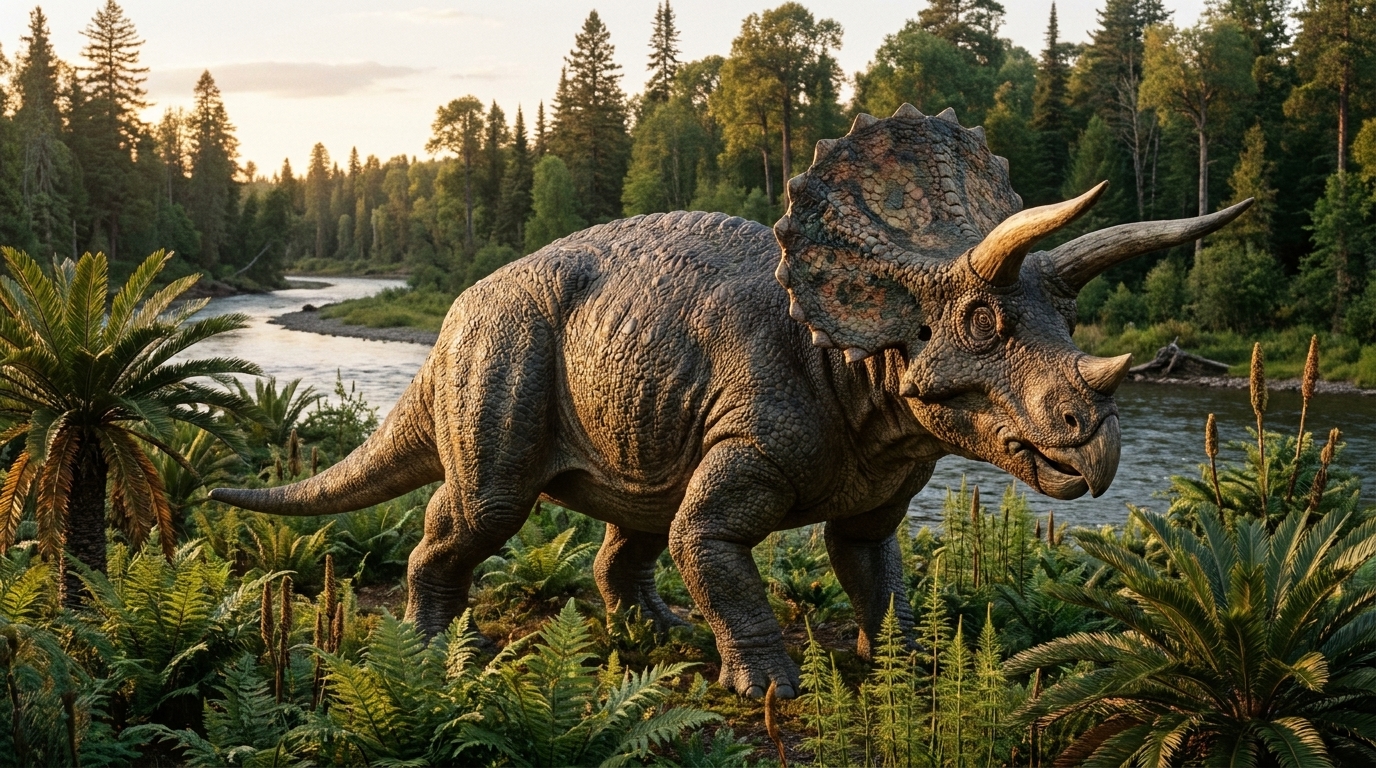
An in-depth paleontological investigation into the anatomy, evolution, biomechanics, behavior, and ecological history of one of the most extraordinary herbivorous dinosaurs ever to walk the Earth.
At a Glance
- Triceratops horridus was one of the largest herbivorous dinosaurs of the Late Cretaceous, living in North America approximately 68–66 million years ago.
- Its enormous skull, equipped with three prominent horns and a broad bony frill, was among the most remarkable anatomical structures in the dinosaur world.
- Its teeth formed highly specialized cutting surfaces capable of processing tough plant material, revealing a surprisingly sophisticated feeding system.
- Healed skull injuries provide evidence of physical encounters between individuals, while other fossils preserve clues about interactions with large predators.
- Its evolutionary history, particularly its relationship with Triceratops prorsus, offers an exceptional opportunity to investigate how dinosaur populations changed over geological time.
1. An Encounter with One of the Last Giants of the Cretaceous
Imagine a landscape dominated by lush vegetation, winding rivers, and extensive floodplains. The climate is relatively warm, humans do not exist, and the largest terrestrial animals belong to a group of reptiles that has dominated ecosystems for millions of years.
Among the vegetation, an enormous animal moves through the landscape.
Its massive body is supported by four powerful limbs. Its head, disproportionately large compared with the rest of its body, carries two enormous horns above the eyes, a third horn on the nose, and a broad bony structure extending backward from the skull like a protective shield.
This is Triceratops horridus.
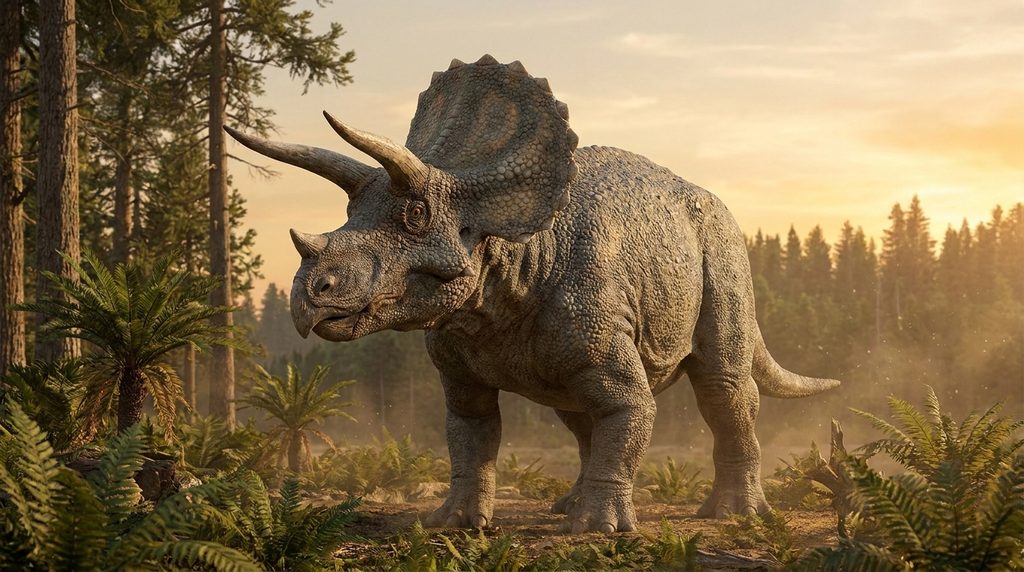
Few dinosaurs convey such an immediate impression of strength and anatomical specialization. Its elaborate headgear was not simply decorative. It was part of a complex biological system potentially involved in defense, visual communication, and physical competition.
Triceratops also occupied a remarkable position in dinosaur history. It lived during the Maastrichtian, the final stage of the Cretaceous Period, when some of the most recognizable prehistoric animals shared the same North American ecosystems.
Among its contemporaries were the gigantic predator Tyrannosaurus rex, the herbivorous Edmontosaurus, the smaller Thescelosaurus, and numerous other members of an extraordinarily diverse fauna.
But Triceratops was more than a survivor in a dangerous world. It was one of the major components of its ecosystem, a large-bodied herbivore that had evolved a distinctive combination of anatomical adaptations to exploit available food resources and cope with the challenges of its environment.
2. Scientific Discovery: How Triceratops Entered the Fossil Record
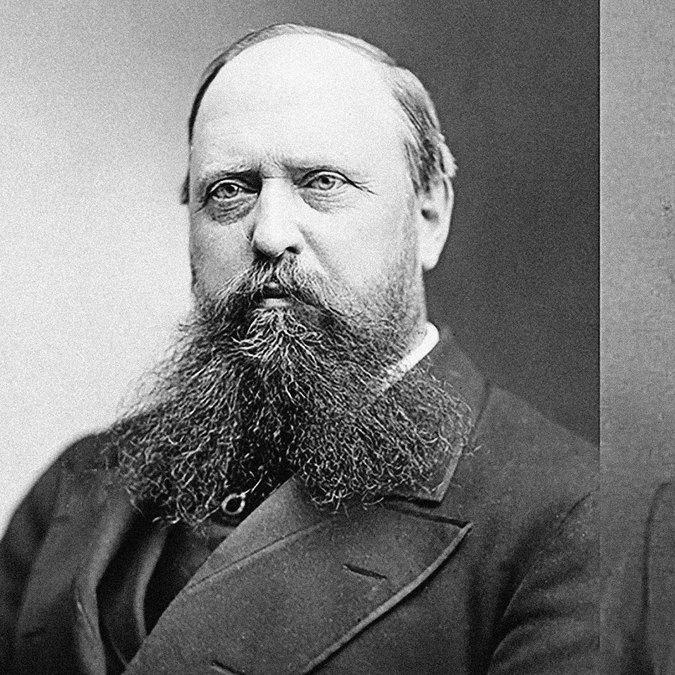
The scientific history of Triceratops is closely connected to the great paleontological expeditions conducted across North America during the nineteenth century.
One of the central figures in this period was Othniel Charles Marsh, a Yale professor and one of the leading participants in the famous Bone Wars, an intense scientific rivalry with fellow paleontologist Edward Drinker Cope.
The story began with fossil discoveries made in the American West during the late 1880s.
Early material was incomplete, and the true identity of the animal was not immediately understood. The scientific recognition of horned dinosaurs was still developing, and paleontologists had little experience with the enormous skulls that would eventually become characteristic of the group.
In 1889, Marsh formally described the genus Triceratops and established Triceratops horridus as its type species.
The name comes from Greek roots:
- Tri: three.
- Keras: horn.
- Ops: face or appearance.
The result is commonly translated as “three-horned face.”
The specific name horridus refers to its rough or formidable appearance.
Further discoveries soon transformed the scientific understanding of the animal.
The work of paleontologist John Bell Hatcher was especially important. Hatcher collected and studied numerous specimens, helping establish a much more complete anatomical picture of Triceratops.
Over subsequent decades, additional skulls and skeletal remains revealed an animal far more specialized than the earliest discoveries had suggested.
Today, Triceratops specimens are preserved in major institutions, including the Smithsonian National Museum of Natural History, the Yale Peabody Museum, and the Museum of the Rockies.
The American Museum of Natural History also displays a remarkable specimen with a partially healed skull injury, possibly resulting from an encounter with another Triceratops. AMNH+1
3. Classification and Evolutionary History
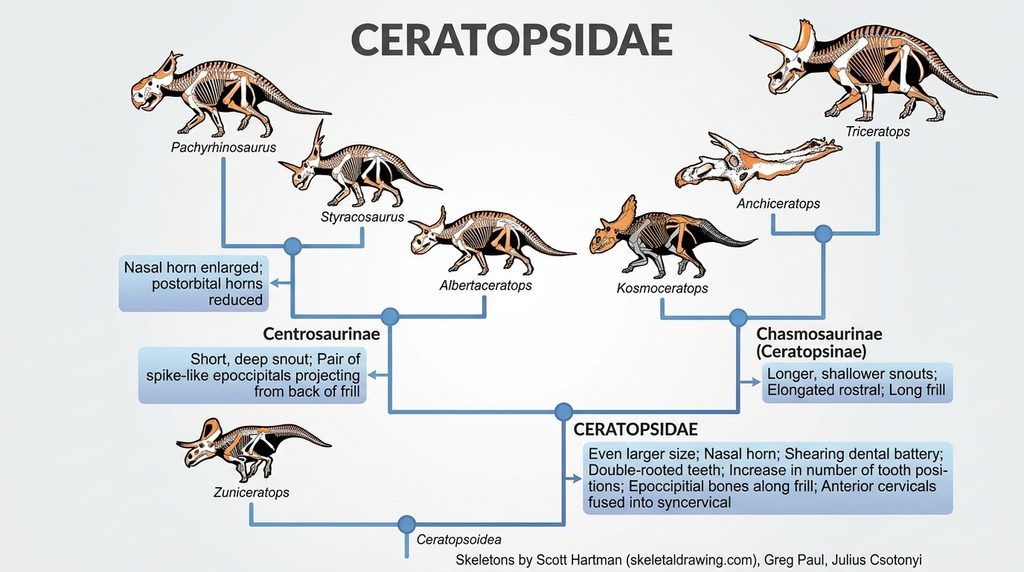
Triceratops belongs to the ornithischian dinosaurs, one of the two major evolutionary branches traditionally used in dinosaur classification.
Its taxonomic position can be summarized as follows:
| Classification | Scientific group |
|---|---|
| Kingdom | Animalia |
| Phylum | Chordata |
| Class | Reptilia |
| Clade | Dinosauria |
| Order | Ornithischia |
| Clade | Ceratopsia |
| Family | Ceratopsidae |
| Subfamily | Chasmosaurinae |
| Genus | Triceratops |
| Species | Triceratops horridus |
Ceratopsids were a family of herbivorous dinosaurs characterized by powerful skulls, keratin-covered beaks, and different combinations of horns and bony frills.
TorosaurusEnormous skull with exceptionally large frill openings.
One particularly interesting question concerns the actual number of Triceratops species.
During the early decades of research, paleontologists proposed several species based on differences in skull shape and proportions.
In 1996, researcher Catherine Forster published a cladistic and morphometric analysis that helped reduce the number of recognized species.
A particularly influential study followed in 2014.
Published in the Proceedings of the National Academy of Sciences (PNAS), the research examined more than 50 Triceratops skulls from Montana’s Hell Creek Formation.
The researchers found that the two recognized species, Triceratops horridus and Triceratops prorsus, were separated stratigraphically. T. horridus occurred in lower portions of the formation, while T. prorsus was more common in the upper sections.
Intermediate skull morphologies suggested that the genus may have undergone gradual evolutionary transformation through time, a process known as anagenesis. PMC+1
This finding offers something particularly valuable: instead of viewing the two species simply as separate anatomical forms, researchers can investigate how a dinosaur lineage changed across successive geological intervals.
The distinction between T. horridus and T. prorsus therefore cannot be reduced to differences in age or sex alone. Geological context is essential to understanding their evolutionary relationship.
4. Anatomy: A Biological Machine Built Around Its Skull
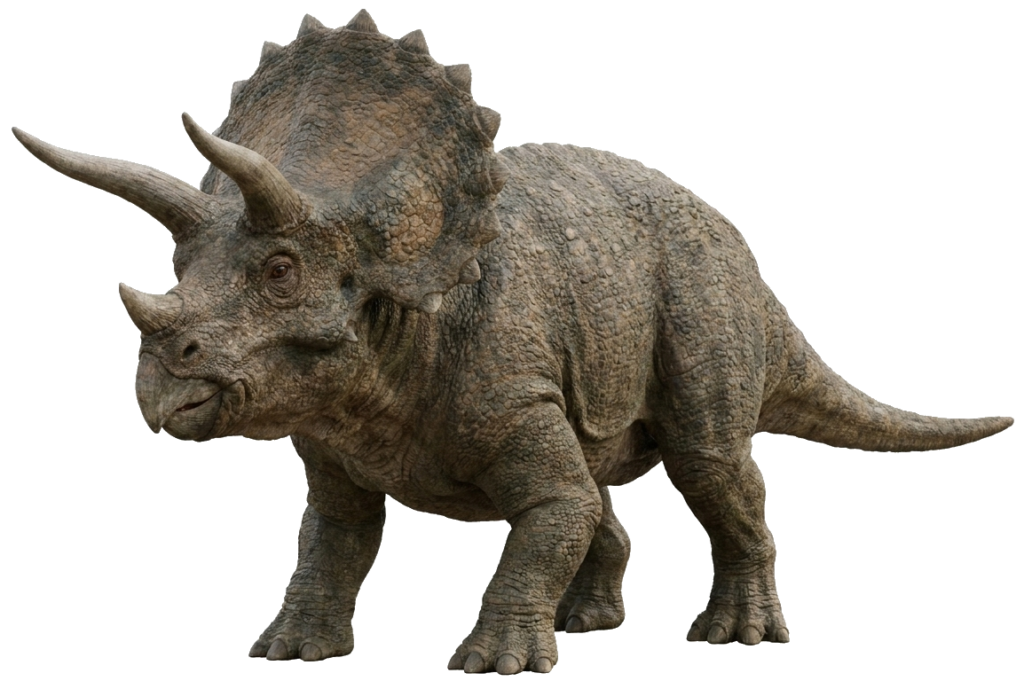
Although estimates vary depending on the specimen and reconstruction method, adults generally reached approximately 9 meters (30 feet) in length. Some estimates place their body mass near 10 metric tons.
Its anatomy displayed the characteristics of a massive quadrupedal herbivore:
- A large, muscular torso.
- A powerful vertebral column.
- Strong forelimbs and hindlimbs adapted to support substantial body weight.
- A relatively long tail.
- A short, heavily muscled neck.
- An exceptionally large skull.
The skull was undoubtedly its most extraordinary feature.
In large adults, it could approach or exceed 2 meters (6.5 feet) in length, making it one of the largest skulls known among terrestrial animals.
Its impressive dimensions were not simply the result of a massive jaw. Much of its length came from the facial region and the extensive bony frill extending behind the skull.
Three principal structures defined its unmistakable appearance:
- Two supraorbital horns positioned above the eyes.
- A nasal horn located over the front of the snout.
- A broad frill formed primarily by the parietal and squamosal bones.
The skull was supported by an integrated arrangement of bones and powerful neck musculature, allowing the animal to carry and move this enormous structure.
4.1. The Two Massive Brow Horns
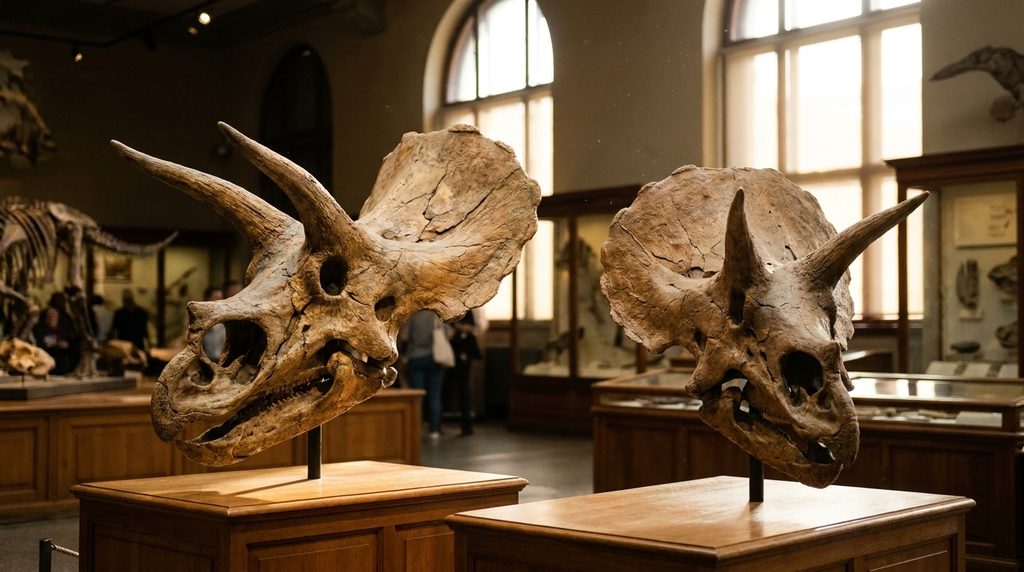
The supraorbital horns projected forward from the upper region of the skull.
They were among the most recognizable features of the animal and underwent substantial changes during growth.
Their orientation was not necessarily constant throughout an individual’s life.
A landmark study by John Horner and Mark Goodwin, published in 2006 in Proceedings of the Royal Society B, documented major changes in horn shape during development.
The researchers identified a sequence of transformations:
- In very young individuals, the horns were short and relatively straight.
- In juveniles, they curved backward.
- In subadults, they became straighter.
- In adults, they curved forward.
These changes demonstrate that the horns were dynamic anatomical structures rather than fixed ornaments. PMC+1
4.2. The Nasal Horn
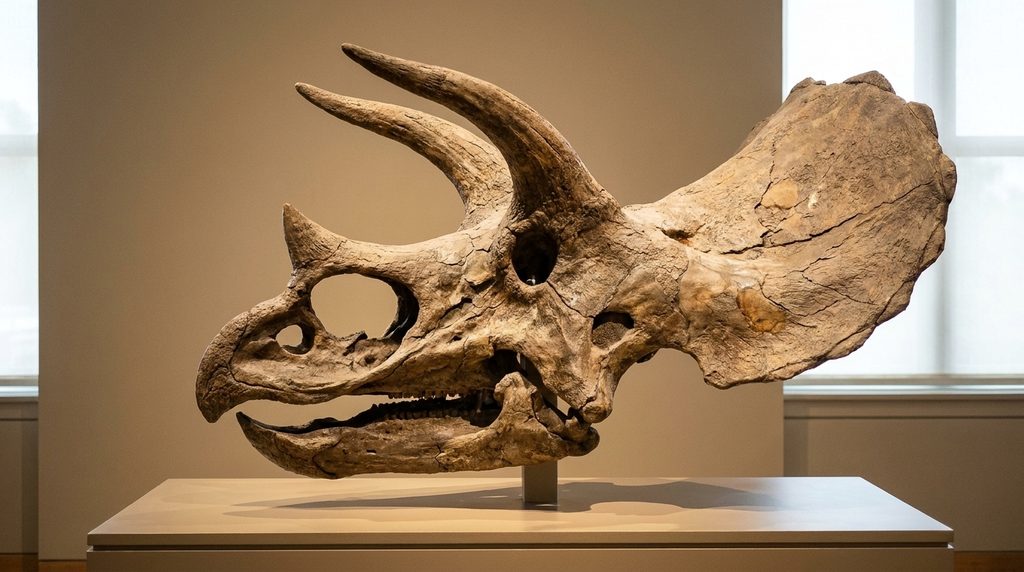
The third horn was located above the nasal region, near the front of the skull.
Although generally smaller than the two brow horns, it was a substantial structure integrated into the animal’s facial anatomy.
Its function was probably associated with defense and interactions between individuals, although the relative importance of different possible uses remains uncertain.
The nasal horn also changed shape during growth, contributing to the complex developmental transformations seen throughout the Triceratops skull.
4.3. The Bony Frill: A Shield That Changed the Entire Silhouette
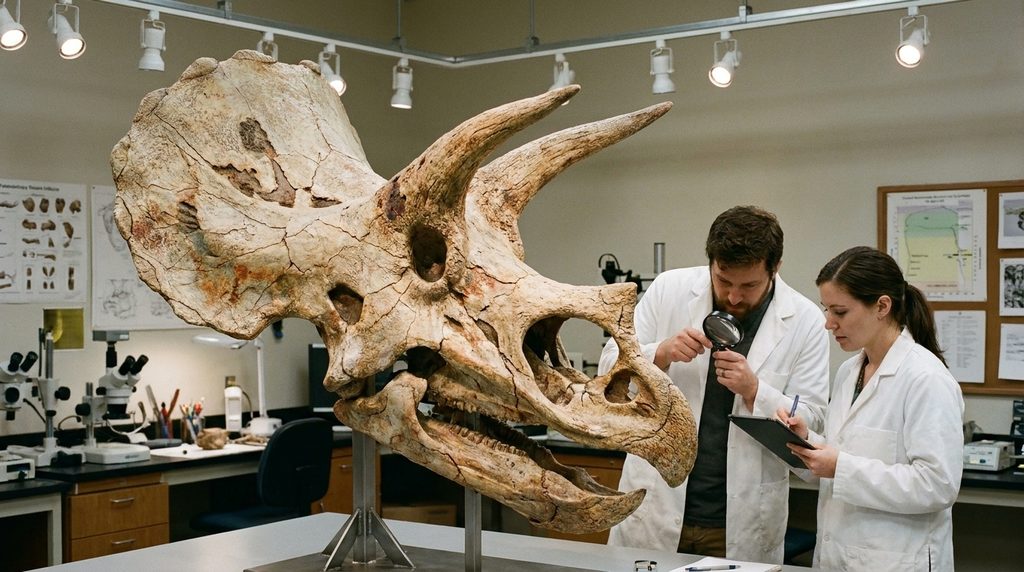
The bony frill, commonly called the frill, was one of the most distinctive structures among ceratopsid dinosaurs.
In Triceratops, it extended backward from the skull, forming a broad bony surface around the upper neck region.
It was composed primarily of the parietal and squamosal bones.
Unlike some related ceratopsids, Triceratops did not have the enormous central openings seen in certain other members of the family. Its frill was comparatively solid, although its margins and internal structure changed during development.
Several functions have been proposed.
Physical protection is one possibility, particularly given the evidence of injuries preserved in fossil skulls.
Visual display, individual recognition, and sexual selection have also received considerable attention.
Another hypothesis concerns thermoregulation. A 1998 study investigated the possible role of the frill and horn cores in heat exchange through isotopic evidence. However, this interpretation should not be treated as an established primary function. Taylor & Francis Online
The important point is that the frill was not merely a decorative plate. It was a living, growing, and continually remodeled anatomical structure.
4.4. Jaws, Beak, and Teeth: The Engineering Behind Its Feeding System
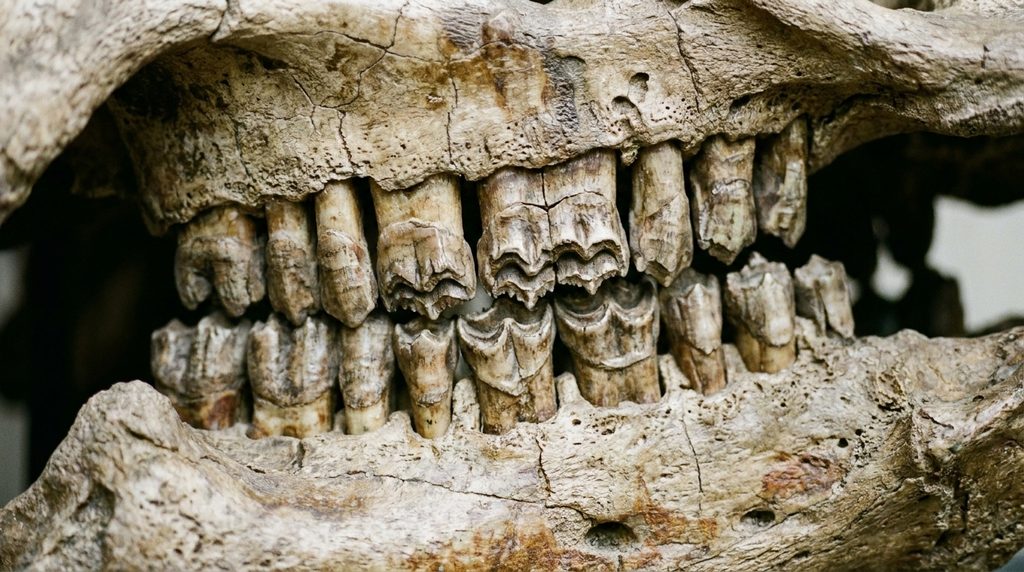
Triceratops possessed an exceptionally specialized feeding system.
At the front of its mouth was a keratin-covered beak, broadly comparable in principle to the beaks of modern birds.
This structure helped the animal crop and remove vegetation.
But the real sophistication appeared farther back in the jaws.
Its teeth were organized into dental batteries containing multiple rows of replacement teeth. This arrangement allowed the animal to maintain effective food processing despite continuous wear.
The opposing tooth surfaces developed sharp cutting edges, enabling Triceratops to process relatively tough plant material.
A particularly important study appeared in 2015 in Science Advances.
Led by Gregory Erickson and colleagues, the research investigated the biomechanics of dental wear in Triceratops.
The researchers demonstrated that its dental tissues possessed complementary wear properties, producing specialized cutting surfaces while reducing friction during feeding.
The resulting dental architecture was remarkably complex, comparable in certain respects to the sophisticated tooth systems of herbivorous mammals. PubMed+1
This discovery changes how we should imagine herbivorous dinosaurs.
Triceratops did not simply tear off plants and swallow them whole. Its jaws contained an efficient mechanical system for cutting and processing substantial quantities of vegetation.
This dental specialization was among the adaptations that helped ceratopsids become successful herbivores during the Late Cretaceous.
5. Growth and Development: From a Small Dinosaur to a Giant
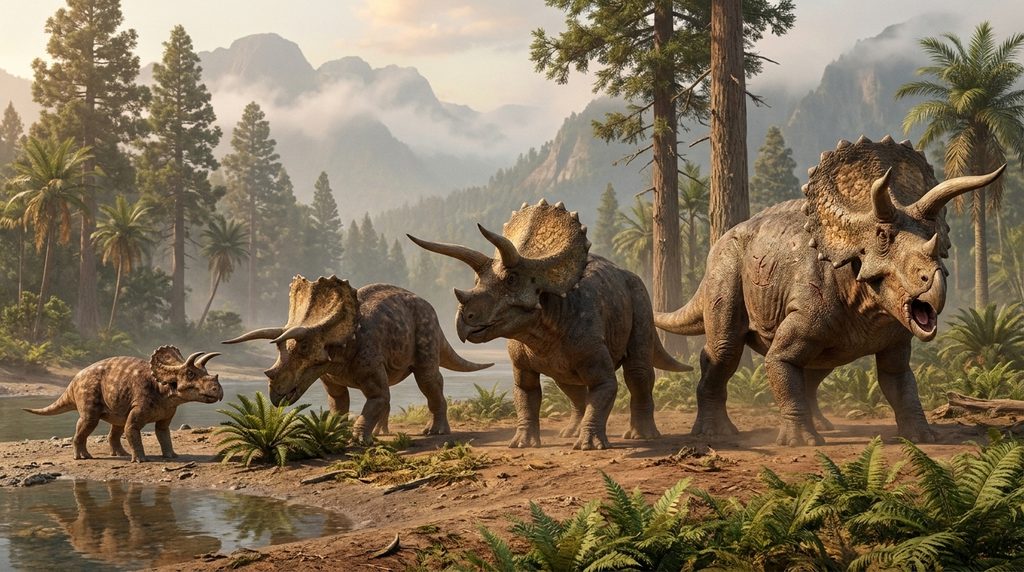
One of the most revealing discoveries about Triceratops came when paleontologists began comparing skulls from individuals of different sizes.
For many years, research focused primarily on the enormous skulls of fully grown animals. Smaller specimens were often treated as incomplete or less informative fossils.
That perspective changed through research conducted by John Horner and Mark Goodwin.
In 2006, the researchers published an analysis of ten Triceratops skulls, ranging from a juvenile specimen approximately 38 centimeters (15 inches) long to adult skulls measuring about 2 meters (6.5 feet).
Their work identified four major developmental stages:
- Baby.
- Juvenile.
- Subadult.
- Adult.
The most remarkable discovery was that development involved far more than an increase in body size.
The very structures that defined Triceratops changed dramatically throughout its life.
The horns changed orientation, the margins of the frill were remodeled, and different cranial elements gradually fused together. PMC+1
A juvenile Triceratops, therefore, was not simply a smaller version of an adult.
It possessed a distinctive anatomical configuration of its own.
5.1. What Do These Cranial Transformations Mean?
The changing shapes of the horns and frill raise an interesting question: why would an animal undergo such dramatic changes in appearance as it matured?
Horner and Goodwin suggested that these transformations may have played a role in visual identification and in signaling sexual maturity.
The hypothesis is biologically interesting.
Among many living animals, physical characteristics change during development and eventually become important in communication, competition, and reproduction.
In Triceratops, however, we cannot establish the precise behavioral function of every transformation. What the fossils directly demonstrate is that its cranial anatomy underwent substantial developmental changes.
5.2. What the Bones Reveal About Age
Growth research does not depend exclusively on the external appearance of fossils.
Paleontologists also investigate the microscopic structure of bones through a technique known as osteohistology.
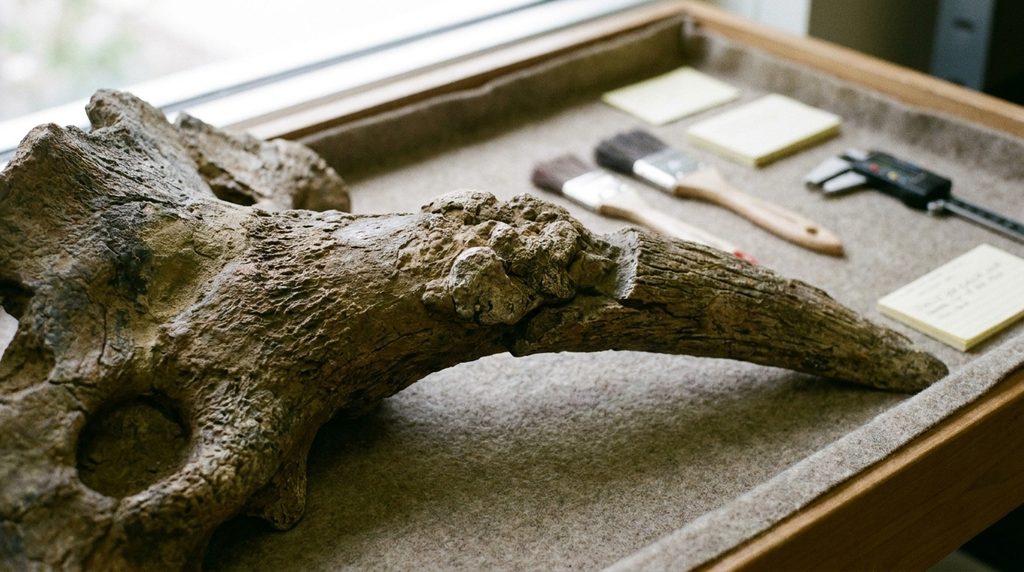
By preparing thin sections of fossilized bones and examining them under a microscope, researchers can identify patterns of bone deposition, vascularization, and growth.
These features provide clues about an animal’s biological history.
A comprehensive study published in Cretaceous Research in 2024, led by Jimmy de Rooij and colleagues, investigated the growth record of Triceratops through osteohistological analysis.
The research identified seven histological growth stages and highlighted important differences between individuals at different points in development.
The researchers also found irregularities in the bone growth record, emphasizing the need for caution when estimating an animal’s age solely by counting growth marks. ScienceDirect
In December 2025, another study published in The Anatomical Record examined the microscopic composition of Triceratops cranial ornamentation.
The researchers investigated the horns and squamosal bone of a subadult T. horridus specimen, finding considerable variation in vascularization across different regions of the horns.
They also identified growth marks near the outer surface of the frill bone, suggesting a transition from rapid growth to slower, more organized bone deposition as the animal approached skeletal maturity. PubMed+1
Together, these studies reveal that Triceratops development was considerably more complex than a simple increase in body size.
6. Diet and Ecology: What Did Triceratops Actually Eat?
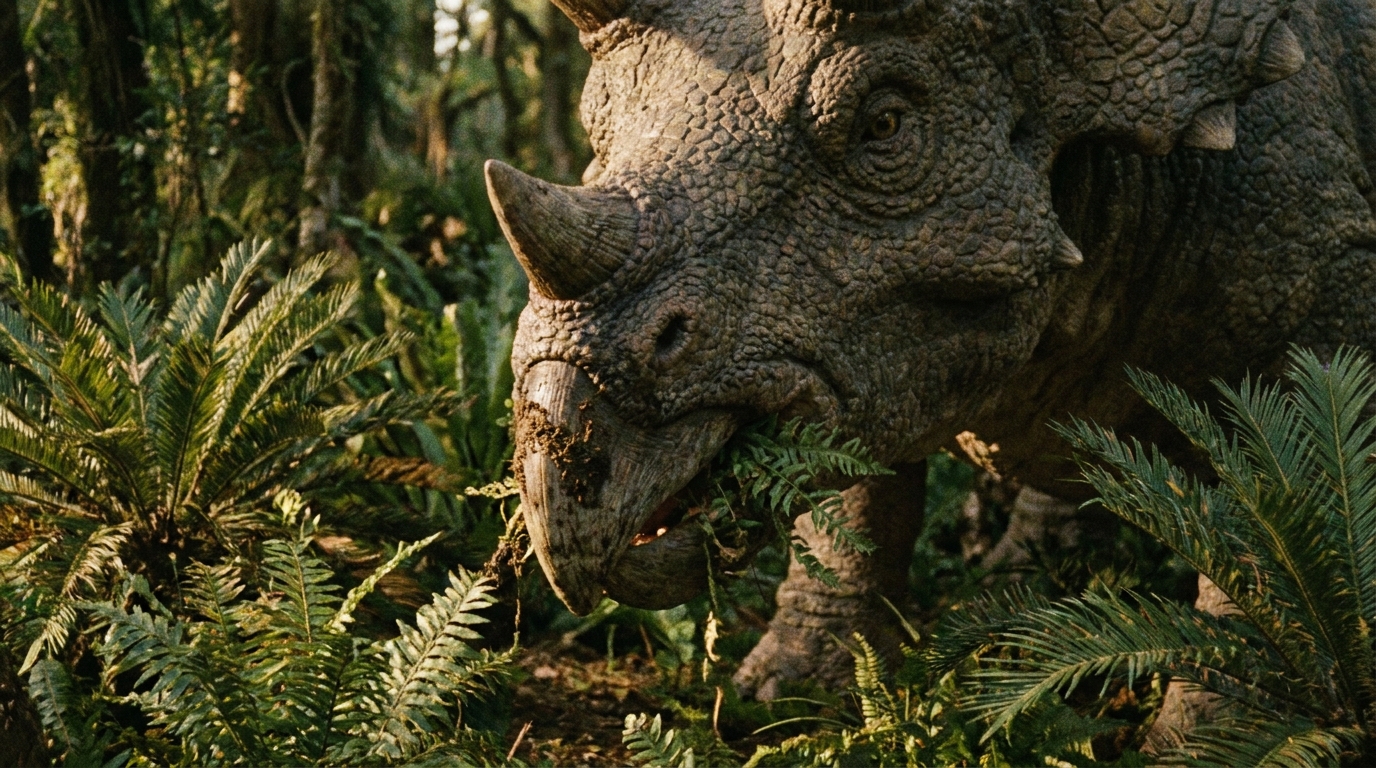
Triceratops lived during a period when North American landscapes supported plant communities very different from those found today.
Flowering plants, or angiosperms, had already diversified extensively. Conifers, ferns, and other plant groups also occupied important ecological niches.
This environment provided a substantial variety of potential food resources.
Triceratops was an herbivore, but identifying the exact plants it consumed requires caution. Direct evidence of its stomach contents is extremely limited.
Researchers therefore rely on several complementary lines of evidence:
- The shape and arrangement of its teeth.
- The structure of its beak.
- Wear patterns on its dental surfaces.
- Jaw anatomy.
- The vegetation preserved in the geological deposits where its fossils are found.
- Comparisons with living and extinct herbivores.
Together, these findings indicate that Triceratops could cut and process relatively tough vegetation.
6.1. A Feeding System Adapted to Cretaceous Vegetation
Its keratin-covered beak probably played an important role in selecting and cropping plants.
Once vegetation entered the mouth, the dental batteries processed it mechanically.
The complexity of this system suggests a considerable capacity to exploit different plant resources.
However, we should not assume that Triceratops maintained a perfectly uniform diet.
As with large herbivores today, its food intake probably varied according to vegetation availability, environmental conditions, and physiological requirements.
It is reasonable to consider that different plant parts were consumed, but the available evidence does not support a definitive list of plant species in its diet.
6.2. The Ecological Importance of a Giant Herbivore
Large herbivores play essential roles in ecosystems.
They influence vegetation distribution, transport nutrients, modify plant communities, and provide important food resources for predators and decomposers.
Triceratops likely performed comparable ecological functions.
Its abundance in the fossil record of the Hell Creek Formation demonstrates that it was a particularly important component of that ancient ecosystem.
It was not simply an extraordinary animal because of its appearance. It was also one of the major consumers of plant material in its environment.
7. The Horns: Defensive Weapons, Fighting Tools, or Signals of Recognition?
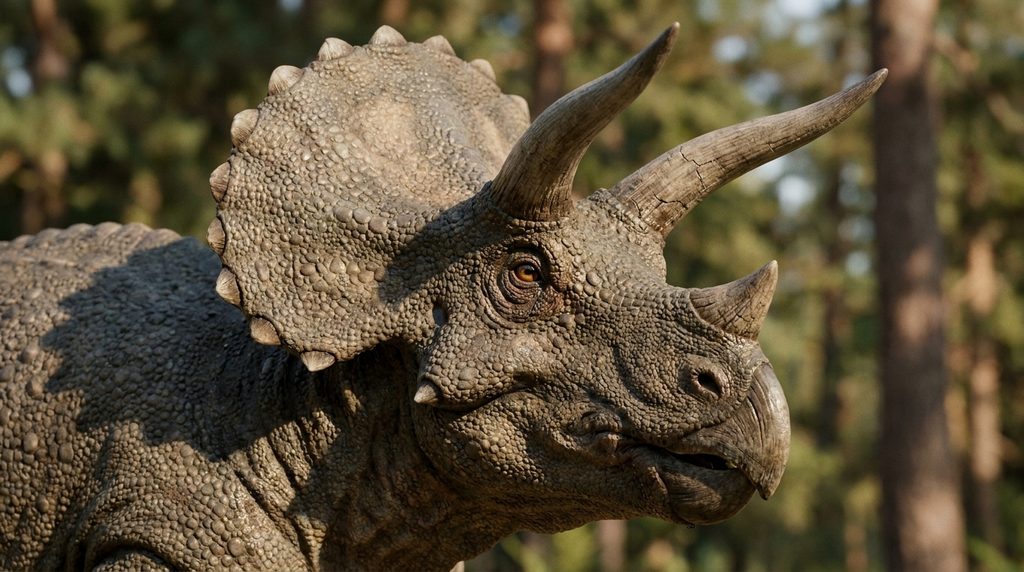
Perhaps no feature of Triceratops has attracted more curiosity than its three horns.
For many years, the most intuitive explanation was that these structures served primarily to keep predators away.
That is a plausible interpretation.
However, paleontological research has revealed that the horns probably had more than one potential function.
7.1. Defense Against Predators
Imagine an animal weighing several tons, equipped with two enormous forward-pointing horns and a powerful skull capable of withstanding substantial forces.
For a predator, approaching an adult Triceratops could be extremely dangerous.
Its horns provided the animal with a means of active defense.
Rather than relying exclusively on body size and strength, Triceratops possessed anatomical weapons capable of inflicting potentially severe injuries.
This likely influenced predator behavior. Attacking a healthy adult would have involved considerable risk.
7.2. Fighting Between Members of the Same Species
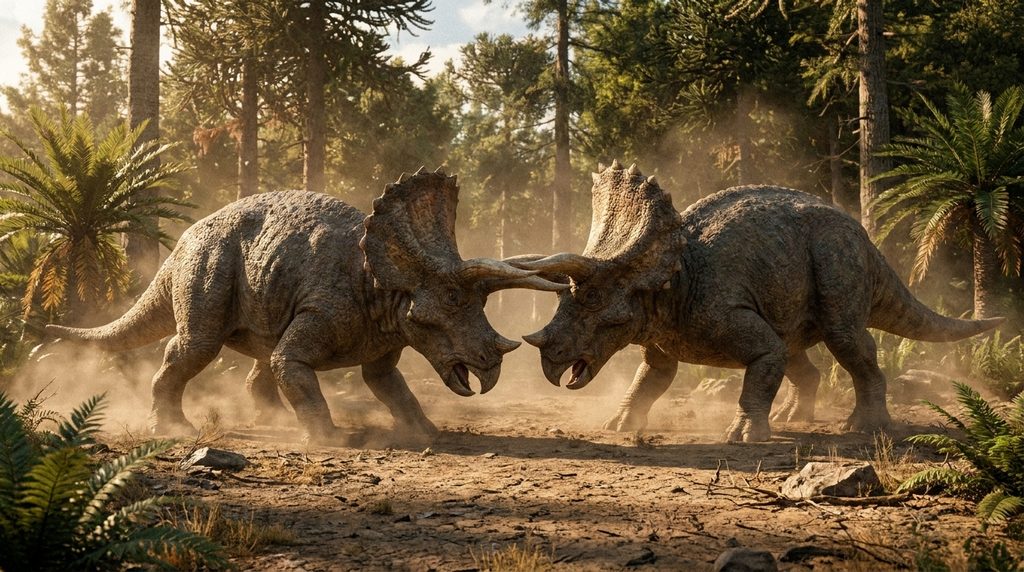
Some of the most interesting evidence about Triceratops behavior comes from injuries preserved in fossil skulls.
In 2009, Andrew Farke and colleagues published a study titled Evidence of Combat in Triceratops in the journal PLOS ONE.
The researchers compared skull injuries in Triceratops with those found in another ceratopsid, Centrosaurus.
Their analysis revealed significant differences in the frequency and distribution of injuries across particular cranial bones.
The pattern of damage in Triceratops was consistent with the possibility of physical encounters involving its cranial structures.
The authors interpreted the findings as evidence supporting intraspecific combat, with the frill potentially providing protection during such encounters. PubMed+1
This was important because it transformed a behavioral hypothesis into an interpretation supported by measurable anatomical evidence.
Naturally, this does not mean every skull injury resulted from fighting. The research investigated patterns of damage rather than documenting the behavior of individual animals.
7.3. The Sexual Selection Hypothesis
Another possibility involves reproductive competition.
Among numerous living species, exaggerated physical characteristics play important roles in mate selection and competition between individuals.
Horns, antlers, crests, and other display structures can communicate size, maturity, and physical condition.
In Triceratops, the dramatic transformation of the horns during growth offers interesting evidence for this interpretation.
Adults possessed a cranial configuration substantially different from that of juveniles.
These changes may have played a role in social and reproductive interactions.
However, there is no direct way to establish mate preferences, courtship rituals, or the exact organization of reproductive competition from the available fossils.
Sexual selection remains an important hypothesis, but it should not be confused with directly observed behavior.
7.4. A New Biomechanical Study of Ceratopsian Combat
In September 2026, a study published in PeerJ, titled Let them fight: using finite element analysis to determine combative evolutionary drivers of ceratopsian horns, introduced a new dimension to this discussion.
The researchers used finite element analysis to investigate how the skulls of different ceratopsian dinosaurs responded to forces associated with possible combat behaviors.
Triceratops was among the animals examined.
The results indicated that its supraorbital horns displayed relatively low to moderate stress levels across most simulated scenarios, suggesting that their structure was mechanically compatible with several forms of physical interaction.
The study strengthened the hypothesis that combat between members of the same species may have contributed to the evolutionary development of ceratopsian cranial weaponry. PubMed+1
It is important to understand what these simulations actually demonstrate.
A biomechanical model can reveal whether a structure is capable of withstanding certain forces. It cannot independently prove that a particular behavior regularly occurred.
Nevertheless, when combined with fossil injuries and comparative anatomy, these findings provide a compelling scientific argument.
8. Locomotion and Biomechanics: How Did Such a Heavy Animal Move?
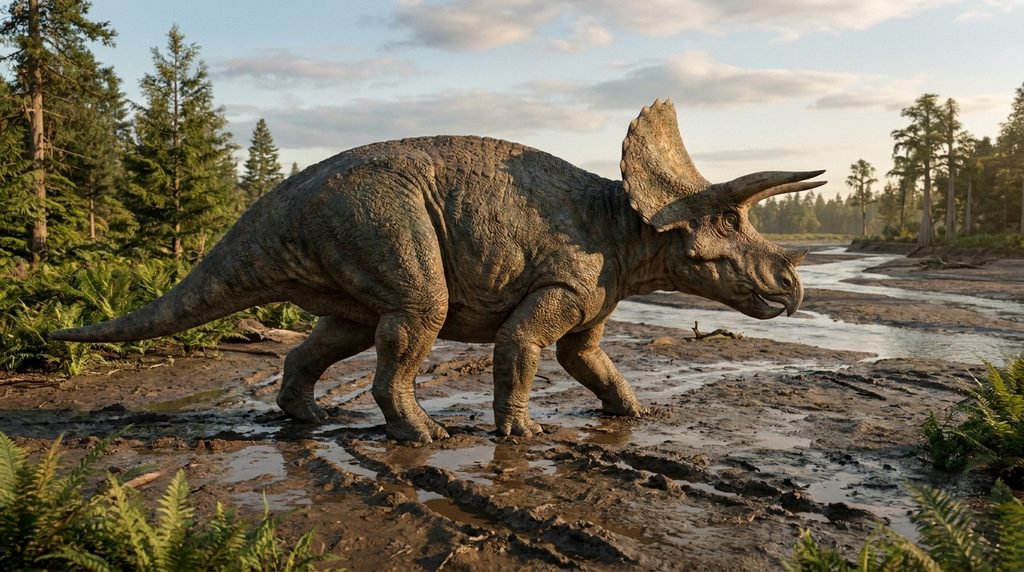
Triceratops was a quadrupedal dinosaur.
Its four limbs supported an enormous body, requiring an anatomical arrangement different from that of predominantly bipedal dinosaurs.
The forelimbs and hindlimbs contributed to weight support and locomotion, while the muscles of the torso and pelvic region helped stabilize the body.
However, one important biomechanical question concerns the positioning and movement of its limbs.
Quadrupedal dinosaurs developed complex adaptations involving their joints, bones, and muscles.
A 2013 study by Collin VanBuren and Matthew Bonnan, published in PLOS ONE, investigated forearm posture and mobility in quadrupedal dinosaurs.
The researchers examined anatomical constraints affecting forearm rotation and found that ceratopsids had limitations in their ability to pronate and supinate their forearms. PubMed+1
This helps explain why we should not imagine Triceratops moving its front legs exactly like a modern horse or rhinoceros.
Its locomotion followed a distinct anatomical arrangement shaped by its evolutionary history.
8.1. Speed and Movement
Determining the maximum speed of an extinct dinosaur is difficult.
Researchers can estimate locomotor capabilities using limb proportions, body mass, trackways, and biomechanical models.
In Triceratops, its enormous mass and robust build suggest an animal adapted primarily for weight support and quadrupedal locomotion.
That does not necessarily mean it was slow in every situation.
A large animal can still accelerate and move considerable distances over short periods, particularly when supported by powerful muscles.
However, there is no universally accepted maximum running speed for T. horridus.
Any highly precise figure should be treated cautiously because estimates depend heavily on the assumptions built into the models.
8.2. The Head as a Challenge of Balance and Support
The enormous skull also placed considerable demands on the neck.
Supporting such a large structure required specialized vertebrae, ligaments, and musculature.
The animal also needed to control head movements while feeding, moving, and interacting with other animals.
Triceratops was therefore not simply a dinosaur with an impressive head.
Its entire body had to be adapted to support and move that extraordinary anatomical structure.
9. Social Behavior: Did Triceratops Live in Herds?
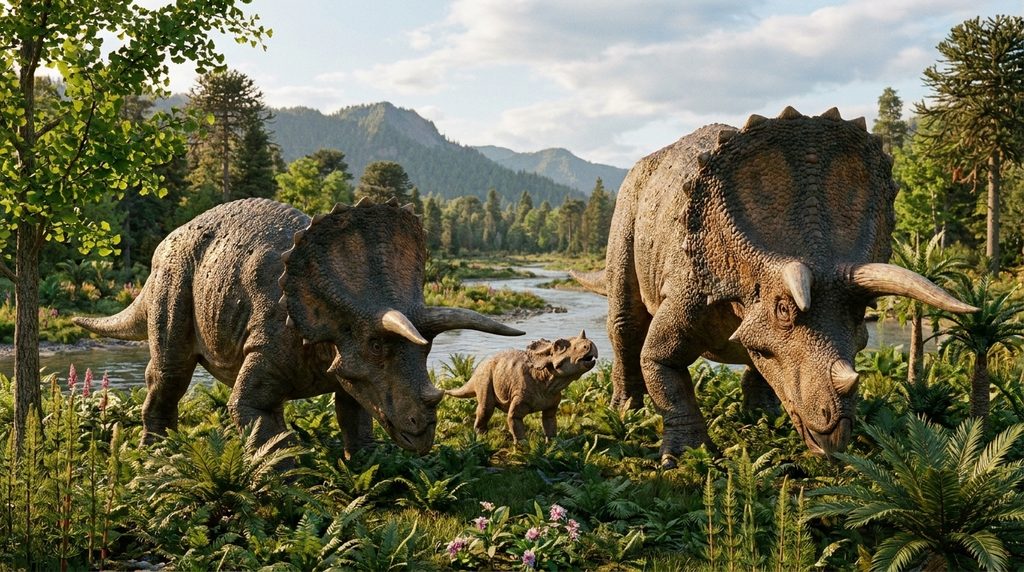
One of the most interesting questions about Triceratops concerns its social organization.
Did it live alone? Did it form small groups? Did it move across the landscape in large herds?
The fossil record provides clues, but it does not offer a definitive answer.
The presence of several individuals in the same fossil deposit can represent different situations:
- Groups that died at approximately the same time.
- Carcasses transported and deposited by water.
- Concentrations of animals in favorable environments.
- Fossil accumulations formed over extended periods.
Distinguishing between these possibilities is essential.
Finding several skeletons in the same location does not automatically mean that a herd has been discovered.
9.1. The Darnell Triceratops Bonebed
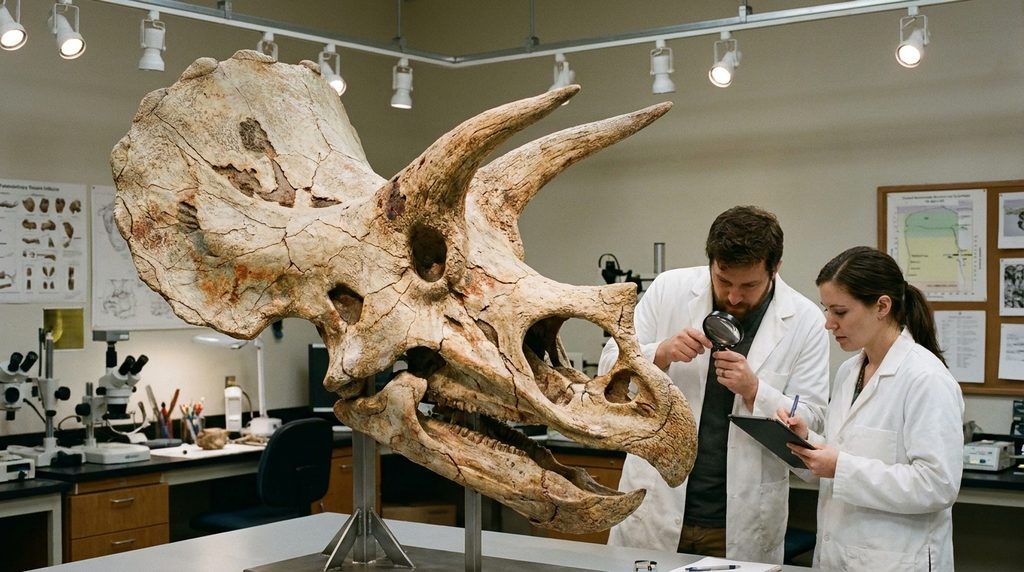
An important contribution to this field comes from research on Triceratops bonebeds in Wyoming.
A multidisciplinary investigation associated with Jimmy de Rooij’s doctoral work at Utrecht University examined fossil concentrations and the processes responsible for their formation.
The research incorporated several methods:
- Sedimentological analysis.
- Microscopic examination of fossil bones.
- Stable isotope geochemistry.
- Investigation of depositional conditions.
- Evaluation of possible behavioral patterns.
The central challenge was distinguishing a genuine group of animals that died together from a fossil deposit accumulated over an extended period.
This distinction is essential when evaluating possible evidence of herd behavior. Utrecht University+1
The most responsible conclusion is that Triceratops social behavior remains an active area of investigation.
Group living cannot be ruled out, but fossil concentrations should not automatically be interpreted as evidence of large, organized herds.
9.2. Relationships Between Adults and Young
The anatomical differences between juveniles and adults also raise questions about family organization.
Could young individuals have accompanied adults during certain stages of development?
The idea is biologically plausible, but the available evidence is insufficient to reconstruct the species’ family structure with confidence.
What we do know is that juveniles possessed distinctive cranial characteristics and that their ornamental structures continued changing throughout development.
This provides important insight into the physical transformations Triceratops experienced during its lifetime.
10. Tyrannosaurus rex and Triceratops: Predator and Prey in the Same Ecosystem
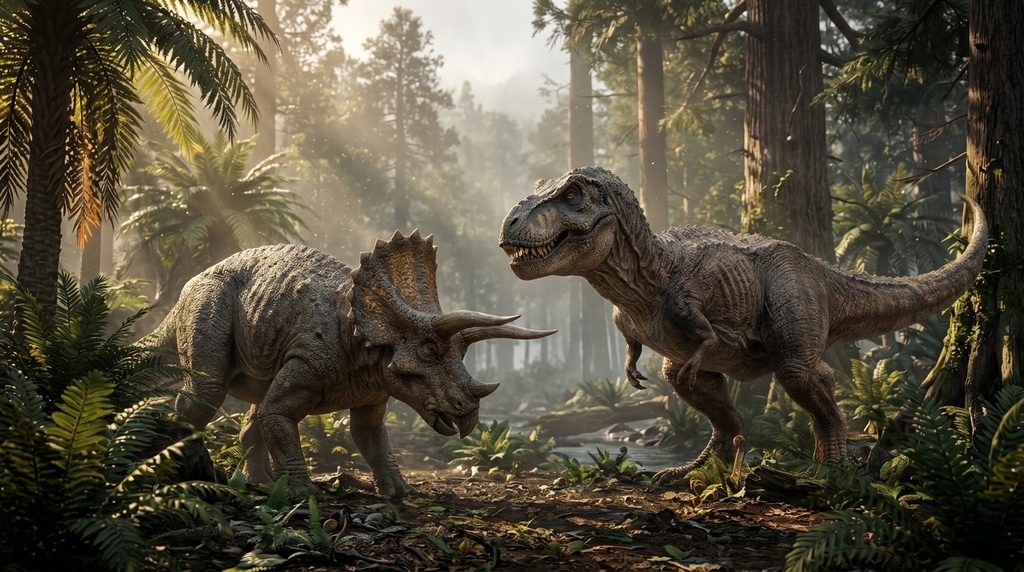
Few dinosaur relationships attract as much attention as the possible interactions between Triceratops and Tyrannosaurus rex.
Both animals inhabited North American ecosystems during the final part of the Cretaceous.
On one side was one of the largest terrestrial predators ever known.
On the other was an enormous herbivore equipped with cranial structures capable of inflicting potentially fatal injuries.
This combination creates an extraordinary ecological scenario.
But what do we actually know about their encounters?
10.1. A Predator Facing a Dangerous Prey Animal
Tyrannosaurus possessed an enormous skull, powerful jaws, and teeth specialized for inflicting severe injuries.
Triceratops, in contrast, had a set of horns that could make a frontal attack extremely dangerous.
A predator attempting to bring down an adult would have faced considerable risks.
It is possible that attacks were directed toward less protected areas of the body, particularly when the predator could surprise its target or gain a favorable position.
Juveniles and weakened individuals probably faced greater risks.
However, we must avoid turning these reconstructions into established behavioral facts. Fossils rarely preserve the complete sequence of an interaction between predator and prey.
10.2. Evidence Left Behind by Encounters
Some Triceratops fossils preserve skull injuries that healed while the animal was still alive.
These specimens are particularly interesting because they demonstrate that certain individuals survived significant physical trauma.
The Natural History Museum in London documents a partial Triceratops specimen with a horn injury displaying evidence of healing and marks consistent with a Tyrannosaurus bite. Natural History Museum
This does not mean that every cranial injury was caused by a predator.
As discussed earlier, there is also evidence of physical encounters between members of the same species.
Interpreting an injury requires examining its location, shape, and distribution.
10.3. Predation or Scavenging?
There is another important difficulty in paleontology: distinguishing injuries caused during an attack from marks left while an animal was being consumed after death.
A predator may attack a living animal or feed on a carcass encountered later.
In many fossils, tooth marks alone cannot distinguish between these possibilities.
A 2013 study published in Proceedings of the National Academy of Sciences demonstrated direct evidence of predatory behavior in Tyrannosaurus.
The researchers identified a T. rex tooth embedded in the vertebra of a hadrosaur, accompanied by bone growth around the injury.
In this case, the healing demonstrated that the prey animal survived the attack. PMC
Although the study did not involve Triceratops, it illustrates how paleontologists identify predator-prey interactions in the fossil record.
For Triceratops specifically, the combination of cranial injuries, biomechanical evidence, and ecological coexistence makes its relationship with Tyrannosaurus particularly important.
10.4. Who Would Win in a Fight?
This is an extremely popular question, but it deserves a scientific answer.
There is no universal winner.
A healthy adult Triceratops was a dangerous opponent, particularly if it could position its horns toward the predator.
Tyrannosaurus, on the other hand, possessed advantages associated with predatory anatomy, powerful jaws, and the ability to exploit vulnerable prey.
The outcome of an encounter would have depended on several factors, including body size, age, physical condition, initial position, environmental conditions, and the possibility of surprise.
The most interesting question is not which animal would win a cinematic battle.
It is how these two dinosaurs participated in a complex ecological relationship shaped by feeding, defense, and survival.
11. The World of Triceratops: The Hell Creek Formation
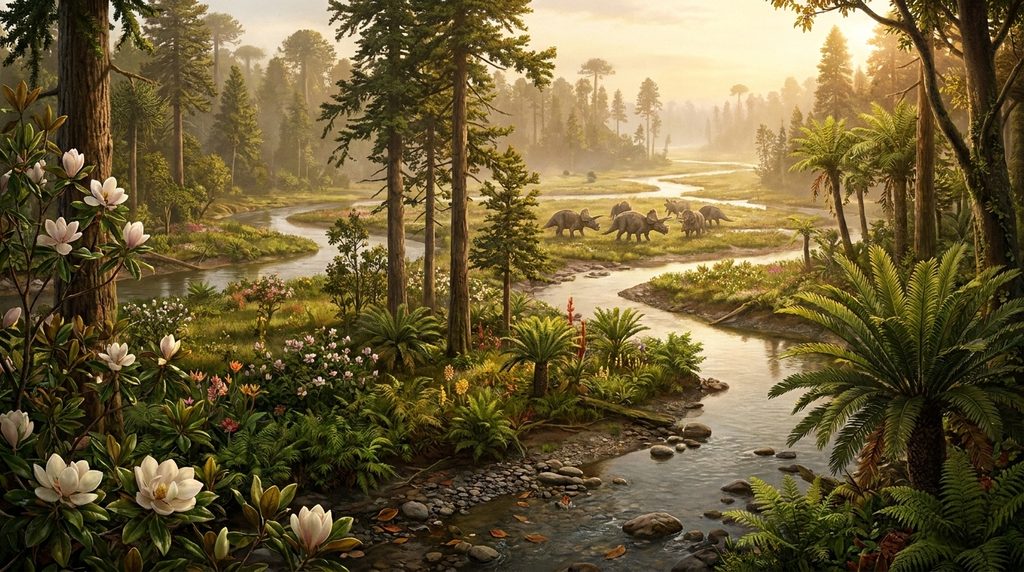
To truly understand Triceratops, we need to reconstruct the environment in which it lived.
One of the most important regions for this investigation is the Hell Creek Formation, a geological formation extending across parts of present-day Montana, North Dakota, and South Dakota, as well as neighboring areas.
Its deposits preserve an extraordinary diversity of fossils from the final stages of the Cretaceous.
The landscape included river systems, floodplains, and diverse plant communities.
Rivers transported sediments, reshaped the terrain, and created environments favorable for the preservation of organic remains.
The climate was generally warm, although environmental and seasonal variations existed.
This was not a uniform forest. It was a mosaic of landscapes with different ecological conditions.
11.1. The Dinosaurs That Shared Its World
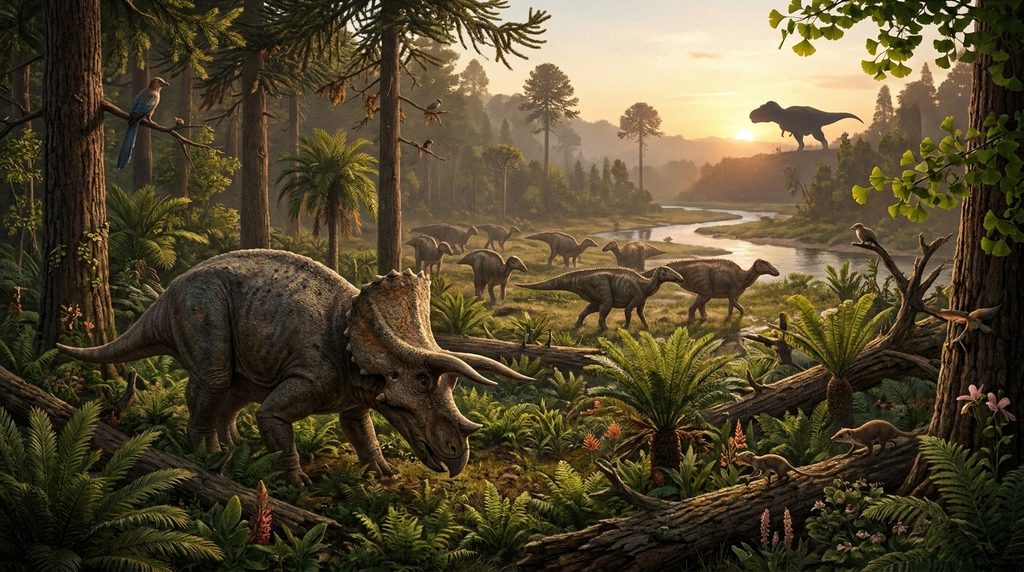
The Hell Creek fauna included numerous dinosaurs, among them:
- Tyrannosaurus rex: a major terrestrial predator.
- Edmontosaurus: a large hadrosaurid herbivore.
- Ankylosaurus: an armored herbivore protected by extensive bony structures.
- Pachycephalosaurus: a dinosaur characterized by its thickened skull.
- Thescelosaurus: a smaller-bodied herbivore.
Beyond dinosaurs, the environment supported crocodilians, turtles, fish, amphibians, small mammals, and numerous invertebrates.
This diversity demonstrates that Triceratops did not inhabit an isolated world dominated exclusively by giant dinosaurs.
It belonged to a complex ecological community with multiple feeding levels and interactions among different organisms.
11.2. Its Place in the Food Web
Triceratops occupied an important position among the large terrestrial herbivores.
Its enormous body required access to substantial quantities of vegetation, while its presence represented a potential food resource for large predators.
The relationship between plant availability, herbivore populations, and carnivore activity helped shape the ecological dynamics of the region.
The Hell Creek Formation is especially valuable because it allows researchers to investigate these relationships within a relatively well-documented geological setting.
12. Extraordinary Fossils: What the Greatest Specimens Reveal
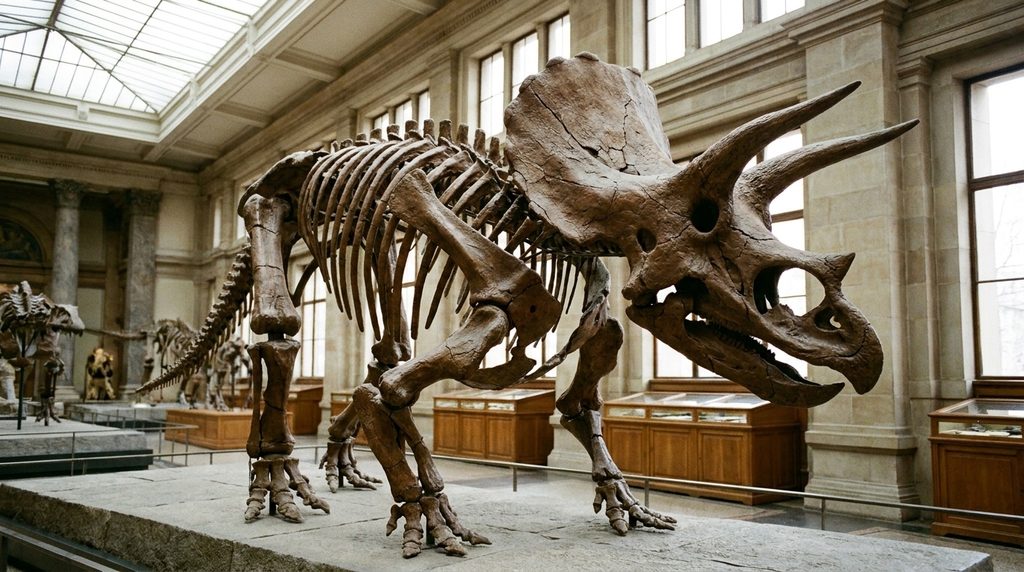
Among the most recognizable Triceratops fossils is the specimen popularly known as Big John.
Discovered in 2014 in Montana’s Hell Creek Formation, this individual attracted considerable attention because of its enormous skull and the preservation of numerous skeletal elements.
Its frill contains an unusual injury that has attracted scientific and public interest.
The interpretation of this abnormality involves examining possible trauma and subsequent bone remodeling.
Big John became particularly famous following its preparation and public exhibition, helping bring renewed attention to ceratopsid paleontology.
However, museum popularity should not be confused with scientific certainty. Each injury requires its own anatomical investigation before a definitive interpretation can be established.
12.1. Why More Complete Fossils Matter
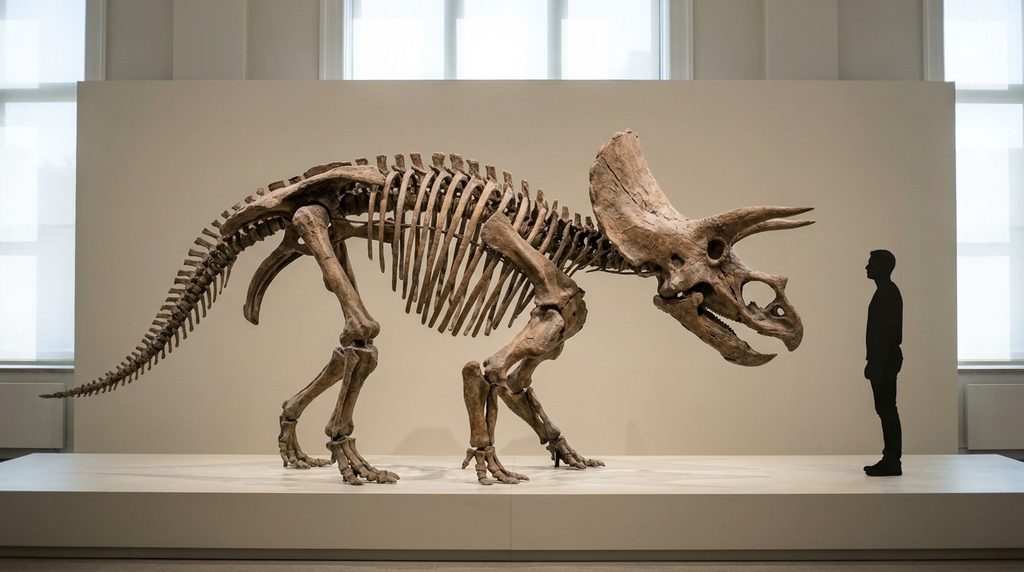
An isolated skull can reveal important information about anatomy, feeding, and cranial ornamentation.
But a more complete skeleton provides opportunities to answer additional questions.
Researchers can investigate:
- Overall body proportions.
- Relationships between the limbs.
- Vertebral structure.
- Muscular anatomy through skeletal reconstruction.
- Joint organization.
- Patterns of bone growth.
- Possible pathological conditions.
The preservation of associated skeletal elements also reduces the risk of reconstruction errors.
This is particularly important for Triceratops because its enormous skull can dominate the interpretation of an otherwise incomplete specimen.
13. The Disappearance of Triceratops: The End of an Extraordinary Lineage
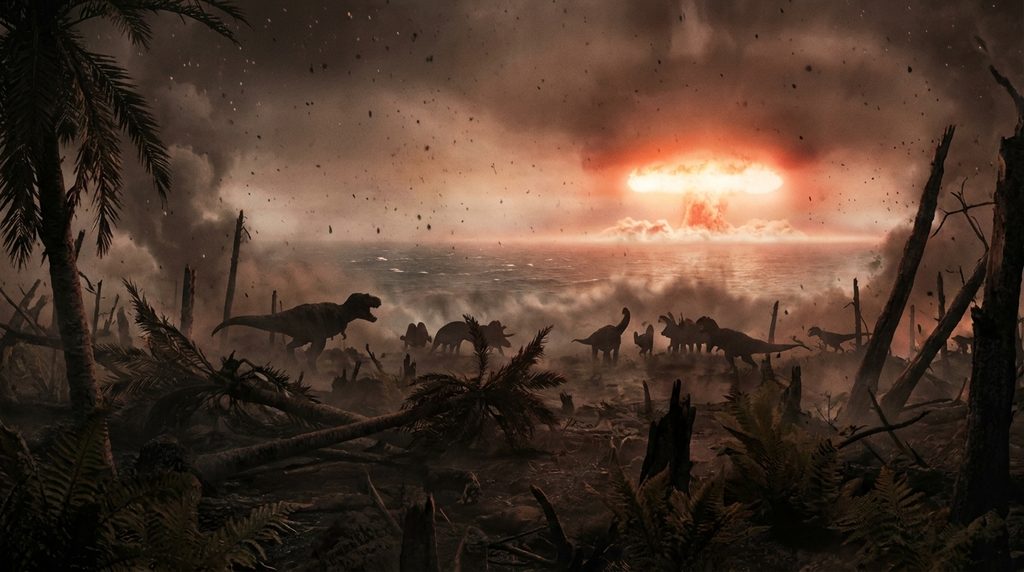
Triceratops lived during the final millions of years of the Cretaceous Period.
Its existence ended during one of the most consequential events in the history of life on Earth: the mass extinction approximately 66 million years ago.
The principal event associated with this extinction was the impact of a large asteroid in the region of the present-day Yucatán Peninsula in Mexico.
The collision produced the Chicxulub crater and triggered a sequence of environmental disturbances on a global scale.
Among the consequences were:
- The release of enormous amounts of energy.
- Widespread fires in different regions.
- The injection of dust and aerosols into the atmosphere.
- A substantial reduction in incoming sunlight.
- Disruption of photosynthetic processes.
- The collapse of food webs.
The ecological consequences were devastating.
Many plant and animal species disappeared, including all non-avian dinosaurs.
Triceratops was among the representatives of a lineage that vanished during this event.
13.1. The Impact on Large Herbivores
The survival of a large herbivore depends on abundant and relatively stable food resources.
An animal weighing several metric tons cannot maintain its physiological requirements without continuous access to substantial quantities of vegetation.
When plant ecosystems undergo profound environmental disruption, large consumers can become particularly vulnerable.
The collapse of plant productivity and the disruption of food webs almost certainly had severe consequences for the giant herbivores of the Cretaceous.
Triceratops, despite its physical strength and extraordinary anatomical adaptations, had no way to withstand an environmental transformation of that magnitude.
Its horns could protect it from predators.
They could not protect it from the collapse of its ecosystem.
13.2. The End of the Non-Avian Dinosaurs
The extinction of Triceratops did not mean the disappearance of every dinosaur lineage.
Birds represent the surviving lineage of theropod dinosaurs.
While the great ceratopsids disappeared, one branch of dinosaur evolutionary history continued into the present day.
The post-extinction world underwent a profound ecological reorganization, creating opportunities for the diversification of mammals and other surviving groups.
Triceratops, however, remained permanently confined to the fossil record as one of the last great representatives of its lineage.
14. What We Still Don’t Know About Triceratops
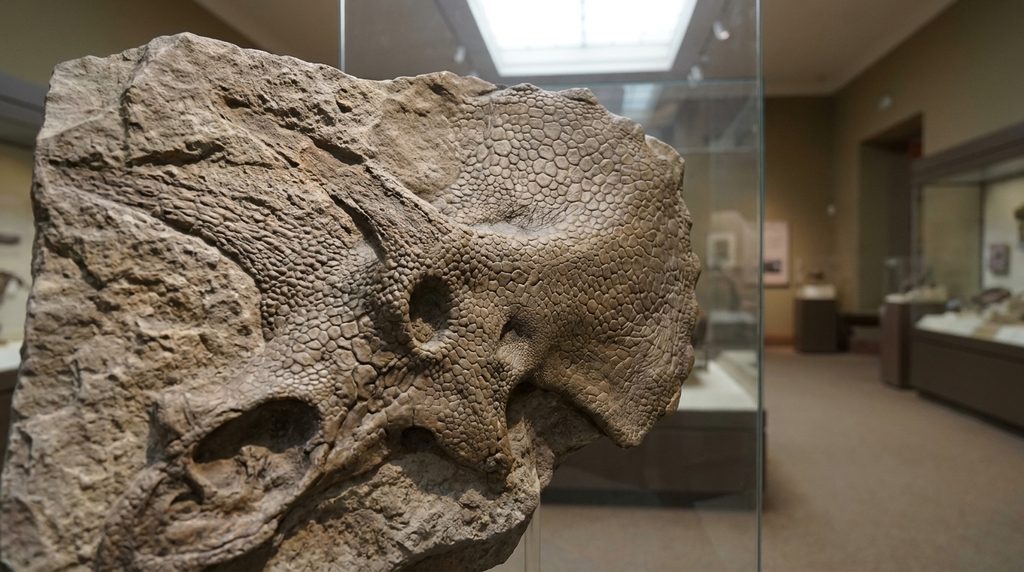
Despite more than a century of research, Triceratops continues to present unanswered scientific questions.
This is particularly fascinating: the more researchers discover, the more they recognize the complexity of its biology.
Some of the most important unresolved questions include:
1. How exactly did its horns work?
There is evidence of combat between individuals, but researchers still do not know all the movements and strategies involved in these encounters.
2. What was the primary function of the frill?
Physical protection has support from pathological evidence. Visual signaling and sexual selection are also important hypotheses. It is possible that the structure performed several functions simultaneously.
3. How were its social groups organized?
Fossil concentrations provide clues, but distinguishing genuine social groups from occasional accumulations remains challenging.
4. How long did Triceratops live?
Osteohistology provides information about growth, but establishing precise ages and determining the maximum lifespan requires careful interpretation and additional specimens.
5. How did it respond to predators?
We know of injuries and possible confrontations, but its defensive strategies cannot be reconstructed completely.
6. How much individual variation existed?
Differences between individuals, developmental stages, and populations must be carefully separated from evolutionary differences between species.
7. How did its cranial structures evolve?
The relationship between individual development, evolutionary changes, and behavioral functions remains one of the most interesting areas of research.
These questions demonstrate that Triceratops is far from being a completely understood animal.
15. Triceratops and Modern Paleontology: How New Technologies Are Changing Our Understanding
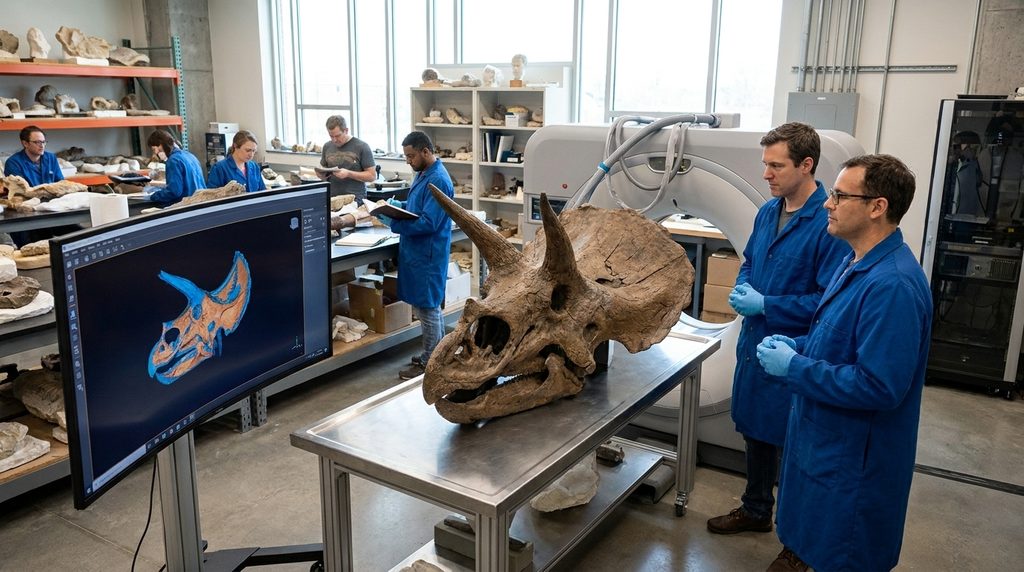
Modern paleontology has undergone profound changes.
For many years, knowledge about dinosaurs depended primarily on direct fossil observation, anatomical comparisons, and the manual reconstruction of skeletal structures.
These methods remain fundamental, but they are now complemented by technologies that allow researchers to investigate details previously inaccessible.
15.1. Computed Tomography and Three-Dimensional Reconstruction
Computed tomography allows scientists to investigate internal structures without destroying fossils.
Using these techniques, researchers can examine:
- Cranial cavities.
- Internal bone structures.
- Vascular channels.
- Fracture regions.
- Hidden anatomical elements.
- Relationships between different parts of the skull.
Three-dimensional models also allow researchers to simulate movements and investigate the distribution of mechanical forces.
15.2. Microscopy and Tissue Analysis
Osteohistology has become particularly important in research on Triceratops development.
The microscopic examination of bone tissue helps investigate growth patterns and remodeling.
Studies published in 2024 and 2025 demonstrate how this approach is expanding our understanding of skeletal maturity and the development of cranial structures. ScienceDirect+1
15.3. Biomechanical Simulations
Finite element analysis allows researchers to build digital models and investigate how different anatomical regions respond to applied forces.
In ceratopsids, this technology helps test hypotheses concerning horn strength, skull structure, and possible combat behavior.
The 2026 study published in PeerJ demonstrates how these tools are being used to investigate the relationship between horn morphology and biomechanical performance. PubMed+1
15.4. Paleontology Is Becoming Increasingly Interdisciplinary
Studying a dinosaur such as Triceratops does not belong exclusively to anatomy or geology.
It requires knowledge from multiple disciplines:
- Evolutionary biology.
- Comparative anatomy.
- Sedimentary geology.
- Histology.
- Mechanical engineering.
- Geochemistry.
- Ecology.
- Statistics.
- Computational modeling.
This integration is one of the defining characteristics of contemporary paleontology.
The result is an increasingly sophisticated understanding of organisms that lived millions of years ago.
16. The Legacy of One of the Most Extraordinary Dinosaurs in History
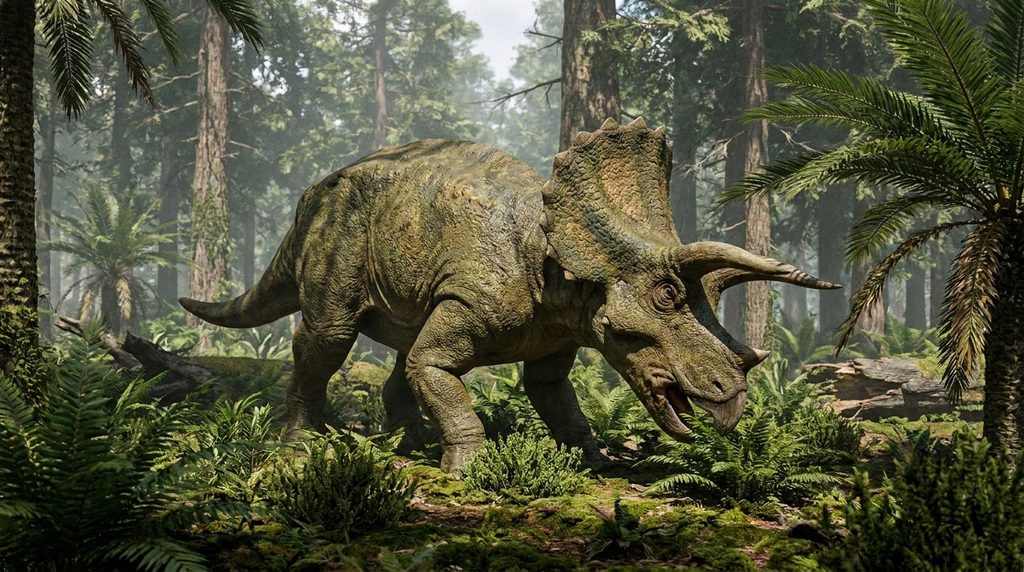
Triceratops has become one of the most recognizable symbols of paleontology.
Its image appears in museums, documentaries, books, films, toys, and educational materials.
Yet its scientific importance extends far beyond its popularity.
It offers an exceptional opportunity to investigate the evolution of cranial structures, individual development, biomechanics, and ecological relationships among large animals.
Few dinosaurs combine such an extensive fossil record with such remarkable anatomical diversity and ecological importance.
Its skull reveals a history of evolutionary specialization.
Its teeth demonstrate that herbivorous dinosaurs developed extraordinarily sophisticated feeding systems.
Its preserved injuries provide clues about behaviors that cannot be observed directly.
And its relationship with Tyrannosaurus helps us better understand predator-prey interactions during the final stages of the Cretaceous.
There is another particularly important dimension to this story.
Triceratops developed characteristics that helped it face some of the greatest challenges in its environment. It was enormous, robust, equipped with an efficient feeding system, and protected by impressive cranial structures.
Yet it disappeared when environmental conditions changed on a catastrophic scale.
Its history demonstrates that evolutionary success does not guarantee permanent survival.
A species can achieve a remarkable degree of specialization and still disappear when the environment on which it depends undergoes profound transformation.
Triceratops was not simply a dinosaur with three horns.
It was one of the most extraordinary products of millions of years of evolution, a giant herbivore whose anatomy, behavior, and ecological history continue to provide valuable insights into life on Earth.
And even after approximately 66 million years, its fossils are still revealing new chapters in a story that science has not yet finished telling.
17. What Does the Scientific Evidence Actually Tell Us?
| Research question | Evidence-based conclusion |
|---|---|
| Existence and classification | Triceratops horridus is an established scientific species. |
| Body size | A large quadrupedal herbivore, with specimens approaching 9 meters in length. |
| Diet | Possessed a keratinous beak and specialized teeth for processing vegetation. |
| Growth | Cranial structures changed significantly during development. |
| Combat | Fossil injuries provide evidence consistent with encounters between individuals. |
| Defense | Horns and frill probably contributed to physical protection. |
| Sexual selection | An important hypothesis, but not fully demonstrated. |
| Social behavior | Important fossil concentrations exist, but social organization remains under investigation. |
| Relationship with T. rex | Their coexistence and evidence of interactions make this relationship ecologically significant. |
| Extinction | Disappeared during the end-Cretaceous mass extinction. |
The central conclusion: Triceratops was a highly specialized herbivore whose cranial anatomy served several potential biological functions. Studying this dinosaur helps us understand not only the evolution of a remarkable species, but also the complexity of ecosystems that existed immediately before the end-Cretaceous extinction.
18. Frequently Asked Questions About Triceratops horridus
1. How big was Triceratops horridus?
The largest known specimens indicate animals approximately 9 meters (30 feet) long. Some body mass estimates approach 10 metric tons, although values vary according to the specimen and reconstruction method.
2. Could Triceratops defeat a Tyrannosaurus rex?
It was physically capable of putting up an extremely dangerous defense. Its horns could potentially inflict serious injuries. However, there is no universal outcome for encounters between the two species.
3. Was Triceratops a carnivore or an herbivore?
It was an herbivore. Its keratinous beak and specialized dental batteries were adapted to cutting and processing vegetation.
4. What were its three horns used for?
They probably played roles in defense and interactions between individuals. There is evidence of combat, while other possible functions, including visual signaling and sexual selection, remain under investigation.
5. Did Triceratops live in herds?
We do not know with certainty. Important fossil concentrations have been discovered, but they do not automatically demonstrate that the animals lived in large, organized herds.
6. When did Triceratops become extinct?
It disappeared approximately 66 million years ago during the end-Cretaceous mass extinction, primarily associated with the Chicxulub asteroid impact.
19. SEO Strategy
SEO Title:
Triceratops Horridus: Anatomy, Evolution and Life in the Cretaceous
Meta Description:
Discover Triceratops horridus, the three-horned dinosaur of the Late Cretaceous. Explore its anatomy, evolution, diet, behavior and encounters with T. rex.
URL Slug:
triceratops-horridus
Primary Keyword:
Triceratops horridus
Secondary Keywords:
- Triceratops dinosaur
- Three-horned dinosaur
- Triceratops anatomy
- Triceratops horns
- Triceratops vs. Tyrannosaurus rex
- Triceratops evolution
- Late Cretaceous dinosaurs
- Ceratopsian dinosaurs
- Hell Creek Formation
- Triceratops fossils
Recommended Categories:
- Dinosaurs
- Prehistoric Animals
- Paleontology
- Evolution
- Natural History
20. Recommended Visual Assets
The following images are recommended to accompany the article and strengthen its scientific and editorial presentation.
| Article section | Recommended image |
|---|---|
| Cover | Adult Triceratops in its natural Cretaceous environment |
| Discovery | Othniel Charles Marsh and historical fossils |
| Evolution | Comparison of different ceratopsian dinosaurs |
| Anatomy | Complete skeleton with anatomical labels |
| Horns | Detailed frontal and lateral views of the skull |
| Frill | Close-up of the bony cranial structure |
| Growth | Comparison between juvenile and adult specimens |
| Feeding | Triceratops consuming prehistoric vegetation |
| Teeth | Detailed view of the dental batteries |
| Combat | Two individuals engaged in physical interaction |
| Locomotion | Triceratops walking through its habitat |
| Social behavior | Adults and juveniles in a group |
| Predation | Triceratops and Tyrannosaurus |
| Environment | Hell Creek Formation landscape |
| Fossil discoveries | Big John specimen |
| Extinction | Chicxulub asteroid impact |
| Modern science | Digital reconstruction and laboratory investigation |
21. Scientific References and Institutional Resources
The article draws primarily on English-language scientific publications, with particular emphasis on university research, peer-reviewed journals, natural history museums, and paleontological institutions.
Foundational Scientific Studies
1. Major cranial changes during Triceratops ontogeny — John R. Horner and Mark B. Goodwin, Proceedings of the Royal Society B, 2006.
Read the full research paper.
2. Species resolution in Triceratops: cladistic and morphometric approaches — Catherine A. Forster, Journal of Vertebrate Paleontology, 1996.
Journal of Vertebrate Paleontology.
3. Evidence of Combat in Triceratops — Andrew A. Farke, Ewan D. S. Wolff, and Darren H. Tanke, PLOS ONE, 2009.
Read the full research paper.
4. Evolutionary trends in Triceratops from the Hell Creek Formation, Montana — John B. Scannella and colleagues, Proceedings of the National Academy of Sciences, 2014.
Read the full research paper.
5. Wear biomechanics in the slicing dentition of the giant horned dinosaur Triceratops — Gregory M. Erickson and colleagues, Science Advances, 2015.
Read the full research paper.
6. Exploring the ceratopsid growth record: A comprehensive osteohistological analysis of Triceratops — Jimmy de Rooij and colleagues, Cretaceous Research, 2024.
Read the research paper.
7. An osteohistological analysis of Triceratops cranial ornamentation — Kyle D. Obuszewski, N. Adam Smith, and Guinevere Rose Brown, The Anatomical Record, 2025.
Read the research paper.
8. Let them fight: using finite element analysis to determine combative evolutionary drivers of ceratopsian horns — Eric Austin Ames, Andre J. Rowe, and David John Button, PeerJ, 2026.
Read the full research paper.
Additional Scientific Studies
9. Forearm posture and mobility in quadrupedal dinosaurs — Collin S. VanBuren and Matthew Bonnan, PLOS ONE, 2013.
Read the research paper.
10. The thermoregulatory functions of the Triceratops frill and horns — Reese E. Barrick and colleagues, Journal of Vertebrate Paleontology, 1998.
Journal of Vertebrate Paleontology.
11. Physical evidence of predatory behavior in Tyrannosaurus rex — DePalma and colleagues, PNAS, 2013.
Read the research paper.
12. The Chicxulub impact and its environmental consequences — Nature Reviews Earth & Environment, 2022.
Read the scientific review.
Museums and Institutional Collections
- Smithsonian National Museum of Natural History — Collections and research.
- Natural History Museum London — Museum and dinosaur directory.
- Museum of the Rockies — Paleontological collections.
- Yale Peabody Museum — Collections and paleontological history.
- Royal Tyrrell Museum of Palaeontology — Research and fossil collections.
22. Scientific Audit
- The distinction between T. horridus and T. prorsus is supported by morphological and stratigraphic evidence. Anagenesis is a scientific interpretation consistent with these findings, not absolute proof of every evolutionary process involved.
- The functions of the horns and frill are not mutually exclusive or completely established. Evidence of combat is significant, but it does not demonstrate every possible behavior.
- Fossil concentrations do not, by themselves, prove herd behavior.
- Estimates of body mass, length, and speed vary according to specimens and reconstruction models. Greater precision should not be claimed than the evidence allows.
- The 2026 study of ceratopsian horn biomechanics represents a recent contribution, but its conclusions rely on simulations and must be interpreted alongside fossil evidence.
Editorial assessment: Current evidence supports a relatively detailed reconstruction of Triceratops anatomy, development, and ecology. The greatest uncertainties remain related to social behavior, the specific functions of cranial structures, and the reconstruction of interactions between individual animals.
Leave a comment