

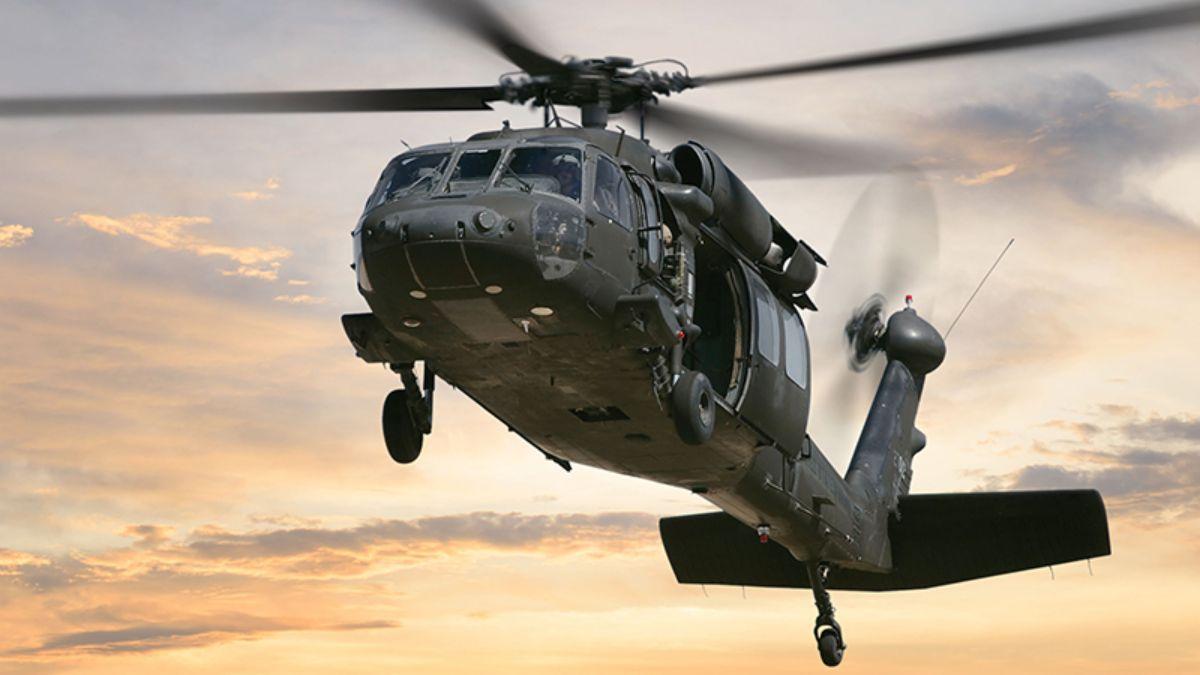
From the earliest flying machines imagined by Leonardo da Vinci to today’s advanced aircraft, discover the fascinating history, science, engineering, and remarkable capabilities of one of aviation’s most versatile inventions.
Imagine an aircraft that can take off without a runway, hover in midair, move sideways, fly backward, and land in a space barely larger than itself.
It sounds like something straight out of a science fiction movie, but this remarkable machine has been part of our world for decades.
It’s called a helicopter.
Unlike conventional airplanes, which need forward motion to generate lift, helicopters can rise almost straight into the air. That seemingly simple difference transformed aviation and opened up possibilities that once seemed impossible.
Today, helicopters rescue people from remote locations, transport critically ill patients, fight wildfires, support police operations, carry workers to offshore oil platforms, and perform military missions around the world.
But how can such a heavy machine stay airborne using nothing more than a set of spinning blades? Who came up with the idea? And how did that early concept evolve into the sophisticated aircraft we see today?
The story is fascinating. And to understand it, we need to travel back to a time long before the first helicopters actually left the ground.
1. The Origins of the Helicopter: An Ancient Dream of Flight
If We Only Had Wings | National Geographic
Leonardo da Vinci: The Mechanics of Genius, Science Museum | The Arts Desk
Del autogiro de Juan de la Cierva al primer vuelo en helicóptero
7
The desire to build a machine capable of rising straight into the sky is much older than aviation itself.
For centuries, inventors and thinkers studied birds, insects, and other natural phenomena, trying to understand how humans might create a flying machine without relying on conventional wings.
One of the most fascinating historical examples appears in the notebooks of Leonardo da Vinci around 1483.
Among his countless inventions and sketches was a design known as the Aerial Screw. The concept involved a large, screw-shaped structure that would spin and, in theory, generate enough force to lift the machine into the air.
Looking at the drawing today, it’s hard not to notice the resemblance to the basic principle behind modern helicopters.
There was just one problem: Leonardo never built a working aircraft based on the design. His idea remained a concept, and the technology available at the time simply couldn’t provide the lightweight power source needed to make it fly.
Even so, his work demonstrates that the idea of vertical flight had captured the human imagination centuries before it became reality.
The First Experiments
The history of vertical flight also includes small flying toys, experimental models, and machines powered by rather primitive mechanisms.
During the 18th century, European researchers developed small models with vertical propellers inspired by traditional Chinese flying toys. Some of these devices could rise into the air when their propellers were spun rapidly.
But turning those little experiments into aircraft capable of carrying people was an entirely different challenge.
Inventors needed to solve three major problems:
- Develop engines powerful enough to lift an aircraft without making it excessively heavy.
- Create rotor systems capable of generating sufficient lift.
- Find ways to control the aircraft in different directions while keeping it stable.
These challenges would occupy generations of inventors.
The 20th Century Changes Everything
Este francés fue la primera persona que voló en helicóptero
The Design Evolution of the VS-300 Helicopter – Igor I Sikorsky Historical Archives
7
By the beginning of the 20th century, advances in combustion engines and aeronautical engineering were bringing the dream of vertical flight closer to reality.
In 1907, French inventor Paul Cornu conducted one of the earliest known experiments involving a piloted rotorcraft. His machine managed to lift off the ground, although only briefly and without the practical control needed for a useful aircraft.
Other inventors were also experimenting with different rotor arrangements and flight-control systems.
But one name would become especially important in helicopter history: Igor Sikorsky.
Born in the Russian Empire, Sikorsky developed an interest in aviation at a young age. After emigrating to the United States, he continued working on aircraft designs and eventually became one of the most influential figures in the development of practical helicopters.
In 1939, he began testing the VS-300, an experimental helicopter that helped demonstrate the potential of a configuration that would become enormously influential: a large main rotor for lift and a smaller tail rotor to control the aircraft’s tendency to spin.
The VS-300 wasn’t the first helicopter ever built, but it represented a major breakthrough in making the machine practical and controllable.
By 1942, the development of the VS-300 had helped pave the way for the R-4, one of the first helicopters to enter series production and operational service.
From that point forward, vertical aviation entered an entirely new era.
2. How Does a Helicopter Actually Fly?
SGL Carbon, Airbus 헬리콥터 로터 블레이드용 복합 재료 공급
Finanzierungsleasing – Unsere Dienstleistung | IG Leasing AG
8
Here’s one of the most interesting things about helicopters: they don’t actually defy gravity. They use the same basic laws of physics that allow airplanes to fly, but they apply them in a very different way.
The biggest difference is the main rotor, the large spinning assembly above the cabin.
Think of each rotor blade as a long, narrow wing. As the blades spin rapidly, they move through the air and generate lift, allowing the helicopter to remain airborne.
Because the blades keep rotating even when the aircraft isn’t moving forward, a helicopter can hover almost motionless in the sky. NASA+1
That’s what makes this aircraft so extraordinary.
The Main Rotor: The Heart of the Machine
The main rotor consists of a central assembly and a set of blades that rotate above the helicopter.
It does much more than simply keep the aircraft in the air. It also plays a major role in controlling its movements.
When the pilot increases the lift generated by the rotor, the helicopter can climb. When that lift is reduced, the aircraft can begin descending.
By changing how the blades interact with the air during each rotation, the pilot can tilt the rotor system and move the helicopter in different directions.
And here’s an important detail: rotor blades aren’t just flat pieces of metal. They’re carefully engineered aerodynamic structures, shaped much like airplane wings to generate lift efficiently.
Why Doesn’t the Helicopter Spin Along With Its Blades?
Now imagine something interesting.
If the engine turns the main rotor in one direction, why doesn’t the helicopter’s body start spinning in the opposite direction?
This happens because of a physical effect known as torque.
In simple terms, when the engine applies force to rotate the main rotor, an opposite rotational force acts on the helicopter’s fuselage.
Traditional single-main-rotor helicopters solve this problem with a smaller rotor mounted at the tail.
The tail rotor produces a sideways force that helps prevent the fuselage from spinning uncontrollably. It also allows the pilot to control which direction the helicopter’s nose is pointing.
However, not all helicopters use this arrangement. Some have two main rotors that spin in opposite directions, while others use alternative systems to manage torque. Administração Federal de Aviação+1
How Does the Pilot Control the Direction?
Damper Assembly Helicopter at Lynda Tawney blog
8
Flying a helicopter is considerably more complicated than it might look from the outside.
The pilot must coordinate several controls to maintain balance, manage altitude, and choose the direction of flight.
The three main flight controls are:
- Cyclic: Works somewhat like a joystick. It tilts the rotor’s plane of rotation, allowing the helicopter to move forward, backward, or sideways.
- Collective: Changes the pitch angle of all the main rotor blades simultaneously, increasing or decreasing the lift they generate.
- Anti-torque pedals: Control the sideways force needed to manage the helicopter’s heading and compensate for the main rotor’s torque.
The pedals don’t work like the pedals in a car. They’re part of the aircraft’s directional control system and must be coordinated with the other flight controls.
The pilot also manages engine power and monitors instruments that provide information about altitude, speed, engine performance, and other important flight conditions. Administração Federal de Aviação+1
How Can a Helicopter Stay in One Place in Midair?
It’s snow game: rescuing skiers in trouble | AirMed&Rescue
This is probably one of the most impressive things a helicopter can do.
When hovering, the main rotor generates enough lift to balance the aircraft’s weight. The pilot continuously adjusts the controls to compensate for wind, small movements, and changes in the aircraft’s position.
The result is an aircraft capable of remaining almost perfectly still in the sky.
This ability is essential for rescue missions, cargo operations, aerial filming, and landing in tight spaces.
However, hovering in calm conditions is very different from hovering in strong winds or at high elevations. Under those circumstances, maintaining position becomes more demanding, and the helicopter may have less available lifting power.
Hovering is an extraordinary capability, but it always depends on weather, available engine power, altitude, and the aircraft’s operating limits.
3. Getting to Know the Main Parts of a Helicopter
Aircraft Maintenance Engineers (AME)
2026 GUIMBAL CABRI G2 | Aircraft.com
File:R44 tail rotor.jpg – Wikimedia Commons
10
A modern helicopter contains hundreds or even thousands of components that must work together.
Although designs vary considerably, several major parts are found on most helicopters.
Engine: Provides the power needed to operate the rotor system. Smaller helicopters may use piston engines, while many larger and more powerful models use gas turbine engines.
Transmission: Transfers power from the engine to the rotors and adjusts rotational speed to meet the system’s requirements.
Main rotor: Generates lift and allows the pilot to control many of the helicopter’s movements.
Tail rotor or alternative anti-torque system: Helps prevent unwanted rotation of the fuselage. Not every helicopter uses a conventional tail rotor.
Fuselage: The aircraft’s main structure, housing the cabin, passengers, equipment, and sometimes cargo.
Tail boom: Connects the rear section to the main fuselage and, in many designs, supports the tail rotor.
Landing gear: Allows the helicopter to rest on the ground. Depending on the design, it may use skids, wheels, or other arrangements.
Instruments and navigation systems: Provide information about altitude, speed, position, engine performance, and flight conditions.
All these components must be carefully designed to balance weight, strength, power, and reliability.
Every kilogram saved in the structure can make a difference in how many passengers or how much cargo the helicopter can carry.
That’s one reason helicopter engineering requires so much testing and attention to detail.
4. The Different Types of Helicopters
There isn’t just one kind of helicopter.
Over the decades, manufacturers have developed aircraft for such different purposes that some models seem to belong to entirely separate worlds.
Light Helicopters: Small, Agile, and Versatile
Hillsboro Creates New Heli Academy | Aviation International News
Light helicopters are commonly used for flight training, sightseeing, aerial photography, private transportation, and certain commercial activities.
One well-known example is the Robinson R44.
Compact compared with large transport helicopters, the R44 has become a familiar sight in general aviation.
These aircraft can operate from relatively small areas, provided the location is suitable and the operation is authorized.
That makes them particularly useful when direct access matters more than carrying large amounts of cargo.
Executive Helicopters
ACH160 – Airbus Corporate Helicopters | Airbus
Executive helicopters are designed to transport passengers comfortably and efficiently over routes where the flexibility of vertical flight offers a real advantage.
Depending on the model, they may feature luxurious cabins, advanced navigation systems, improved sound insulation, and modern communication equipment.
Although these aircraft are often associated with luxury, their greatest practical advantage is the ability to connect certain destinations without relying entirely on conventional airports and runways.
Of course, helicopters are still subject to weather conditions, airspace regulations, and the availability of appropriate landing sites.
Heavy-Lift Helicopters
Germany switches from Sikorsky to Boeing | TURDEF
When a mission requires transporting large amounts of equipment or substantial numbers of personnel, heavy-lift helicopters become essential.
The Boeing CH-47 Chinook is one of the best-known examples.
Its most distinctive feature is its tandem-rotor arrangement, with one main rotor at the front and another at the rear.
This configuration helps balance the aircraft without requiring a conventional tail rotor. It also allows the helicopter to use its available power efficiently to generate lift and carry heavy loads.
The Chinook has become an important aircraft for military transport and logistical operations, including missions in areas where building or using conventional runways would be difficult.
Attack Helicopters
Advertencia de Corea del Norte a EEUU: “Es una provocación temeraria” – AS.com
Attack helicopters are specialized military aircraft designed for combat-related missions.
They can carry weapons, advanced sensors, communication equipment, and systems that help them operate in challenging environments.
The AH-64 Apache is one of the most recognizable examples.
Its compact design, sensor systems, and specialized configuration reflect a different set of priorities from those of civilian helicopters.
Rather than focusing primarily on passenger comfort or cargo capacity, attack helicopters are designed around mobility, operational capability, protection, and integration with other military forces.
Search-and-Rescue Helicopters
AgustaWestland AW189 – G-MCGS – Coast Guard
Search-and-rescue helicopters are specially equipped to transport rescue teams, medical equipment, and devices used to recover people from dangerous locations.
During a rescue mission, the aircraft may hover while a trained crew member descends on a winch cable to reach someone stranded on a cliff, vessel, or flooded area.
These operations require careful planning, specialized training, and close coordination between pilots and rescue personnel.
Their ability to reach places that would be extremely difficult to access by road makes helicopters particularly valuable in emergencies.
Helicopters With Unusual Designs
Aircraft Photo of HB-XKA | Kamov Ka-32A11BC | Heliswiss International | AirHistory.net #614565
CH-53K King Stallion Passes Initial Operational Testing
Sikorsky X2 VS Eurocopter X3: à toute vitesse ! – Le Portail des Passionnés d’Aviation
7
Some helicopter designs attempt to overcome the limitations of traditional configurations.
Coaxial helicopters use two main rotors mounted one above the other, spinning in opposite directions. This arrangement helps compensate for torque without requiring a conventional tail rotor.
Other models use tandem rotors, like the Chinook, or combine main rotors with additional propellers to improve performance under certain flight conditions.
There are also tiltrotor aircraft, which can take off and land vertically but tilt their rotors to fly more like conventional airplanes during faster forward flight.
These designs demonstrate that helicopter development isn’t a straight line of progress. It’s an ongoing search for better combinations of speed, carrying capacity, stability, and efficiency.
5. The Most Famous Helicopters in the World
Some helicopters have become genuine aviation icons.
They appear in movies, documentaries, historical photographs, rescue operations, and military records.
A Gift Voucher for a 30 Minute Lesson in a Vintage Bell Helicopter
Bell 47 — The Civil Aviation Pioneer
One of the most recognizable helicopters in aviation history, especially because of its distinctive transparent bubble canopy. In 1946, it became the first helicopter to receive civil certification in the United States, helping open the door to commercial rotorcraft aviation. Coleções do Smithsonian+1
Bell UH-1 Huey — The Vietnam War Icon
Famous for transporting troops, evacuating wounded soldiers, and supporting military operations. Its distinctive sound and unmistakable silhouette became enduring symbols of the Vietnam War. Exército dos EUA+1
“100년 사용 가능” 블랙 호크 군용 헬리콥터 새로운 엔진 탑재!
Sikorsky UH-60 Black Hawk — The All-Rounder
Designed for military transport and support missions, the Black Hawk became one of the most widely used military helicopter platforms. Its family includes numerous versions adapted for different operational needs.
Chinook-transporthelikopter | Defensie.nl
Boeing CH-47 Chinook — The Heavy-Lift Giant
Its two main rotors are its unmistakable trademark. This aircraft can transport large loads and personnel during demanding logistical operations.
GE Aero z zamówieniem silników T700 dla polskich śmigłowców Apache – Rynek Lotniczy
AH-64 Apache — The Combat Machine
Combines advanced sensors, targeting systems, and weapons in an aircraft specifically developed for attack and military support missions.
Each of these helicopters represents a different solution to the same challenge: using vertical flight to perform tasks that would be much more difficult with conventional aircraft.
6. Helicopters in War: When the Sky Became a Highway
Grim reminders of a war in Vietnam, a generation later | KSL.com
Remembering Henri Gilles Huet, 1927-1971 — AP Photos
Vietnam War – Battle of Ngok Tavak & Kham Duc – CherriesWriter – Vietnam War website
10
The relationship between helicopters and military operations began gaining importance during World War II, but it was in later conflicts that their full potential became clear.
During the Korean War, between 1950 and 1953, helicopters began playing an important role in evacuating wounded soldiers from the battlefield.
Instead of relying entirely on ground vehicles, medical teams could transport casualties directly to hospitals and surgical facilities.
This helped change the way military forces organized medical evacuation and battlefield treatment. AMEDD Center of History & Heritage+1
The Vietnam War and the Rise of the Helicopter
If one conflict permanently shaped the public image of military helicopters, it was the Vietnam War.
The terrain included dense forests, flooded areas, mountains, and locations where moving ground vehicles could be extremely difficult.
In that environment, helicopters allowed troops, equipment, and supplies to be transported directly into remote areas.
The UH-1 Huey became one of the major aircraft of this transformation. Its versatility allowed it to perform different tasks, from troop transport to medical evacuation.
The U.S. Army also used attack helicopters such as the AH-1 Cobra, along with aircraft designed for heavy transport and reconnaissance. Exército dos EUA+1
This combination of capabilities helped establish the concept of air mobility: moving people and resources through the air to reach places where conventional transportation would be slower or more difficult.
Of course, helicopters also became military targets and faced considerable risks. Their operational importance didn’t make them invulnerable to gunfire, adverse weather, or the challenges of landing in hostile territory.
The military history of helicopters is therefore a story of both technological progress and significant human and strategic challenges.
A Combat Aircraft That Also Saves Lives
There’s an interesting contrast in this history.
The same technology that can carry weapons can also transport a medical team to someone who urgently needs help.
The ability to hover, land in small spaces, and reach inaccessible locations has made helicopters invaluable for evacuation and rescue missions.
Perhaps that’s one of the most important things about vertical aviation: its value isn’t simply in the machine itself, but in the possibilities it creates for people who need to reach places that would otherwise be difficult or impossible to access.
7. How Helicopters Help Society
Über uns | BG Klinikum Unfallkrankenhaus Berlin
Life on the line with an HM Coastguard winch paramedic :: Bristow Group Inc. (VTOL)
8
Outside the military environment, helicopters perform tasks that directly affect everyday life.
Medical Rescue: When Every Minute Counts
In certain emergencies, transporting a patient by road can take too long.
A helicopter can reach an isolated location, pick up an injured person, and transport them to an appropriate medical facility.
These operations can be especially useful in rural areas, mountains, islands, and locations with poor road access.
However, a helicopter isn’t automatically the best choice for every emergency. Distance, weather, landing conditions, available medical crews, and mobilization time all influence the decision.
When properly planned, air medical transport can significantly expand emergency response capabilities.
Fighting Wildfires
Helicopters equipped with tanks or suspended water buckets can carry water and release it over areas affected by wildfires.
This allows firefighters to reach locations where trucks and ground crews may have difficulty operating.
During certain missions, helicopters also transport firefighters, equipment, and supplies.
But there’s an important detail: dropping water from the sky doesn’t automatically put out a major wildfire.
The effectiveness of the operation depends on the firefighting strategy, vegetation, wind, fire intensity, and coordination with ground crews.
A helicopter is a powerful tool within a much larger firefighting effort.
Public Safety and Law Enforcement
Police helicopters can assist in searches for missing people, monitor incidents, observe large areas, and provide information to ground units.
An aerial view allows officers to understand what’s happening across a region in ways that wouldn’t be possible from the ground.
However, these capabilities also require clear operating rules and respect for privacy, particularly in densely populated urban areas.
Offshore Oil Platforms and Remote Locations
Certification of the Rig’N Fly automatic oil platform approach mode for the H225 | Airbus
In oil and gas operations, helicopters transport workers between airports and offshore platforms located far from the coast.
In these situations, the aircraft serves as a vital connection between land-based infrastructure and facilities that cannot be reached by road.
The same principle applies to certain mining operations, scientific research, vessel support, and the supply of isolated communities.
Agriculture, Filmmaking, and Construction
Helicopters have plenty of other uses.
They can be employed in aerial surveys, power-line inspections, authorized agricultural spraying, photography, filmmaking, and equipment transportation.
In construction projects, some helicopters can position heavy equipment in locations that would otherwise be difficult to reach.
Under certain circumstances, this can eliminate the need to build temporary roads or install heavy equipment on the ground.
Helicopters are especially valuable when the flexibility of direct access justifies their operating costs.
8. Helicopters vs. Airplanes: Which One Is Better?
Aviation Academy of Louisiana | Flight School – Fixed Wing in New Iberia, Louisiana
Commercial passenger plane flying above clouds
Helicopter is guided into landing area, mt summit
The answer depends entirely on the mission.
Airplanes and helicopters aren’t perfect competitors. They were developed to take advantage of different capabilities.
| Feature | Helicopter | Conventional Airplane |
|---|---|---|
| Vertical takeoff | Yes, in conventional helicopter designs | No |
| Hovering in place | Yes | No |
| Flying backward or sideways | Yes, within operating limits | Not as a normal flight capability |
| Runway required | Can operate from suitable areas without conventional runways | Generally requires a runway or prepared surface |
| Cruising speed | Generally lower | Generally higher |
| Long-distance efficiency | Usually lower | Usually higher |
| Typical applications | Rescue, restricted access, and external cargo transport | Long-distance travel and large passenger loads |
Performance differences depend on the model, weight, altitude, weather, and operating conditions. These are general tendencies rather than absolute rules. NASA+1
Why Are Airplanes Usually Faster?
A conventional airplane wing generates lift as the aircraft moves forward.
During cruising flight, this configuration is generally very efficient for covering long distances.
Helicopter rotor blades, on the other hand, must deal with complex aerodynamic effects. As speed increases, differences in airflow between the advancing and retreating blades make flight more demanding.
That’s why increasing the maximum speed of a helicopter is such an important engineering challenge.
Why Not Replace All Airplanes With Helicopters?
Because flexibility comes at a price.
Helicopters generally consume more energy per passenger or per distance traveled than comparable airplanes performing transportation missions.
They also have complex mechanical systems and require specialized maintenance.
For crossing continents or transporting hundreds of passengers, conventional airplanes remain the more suitable solution for virtually all standard operations.
Helicopters excel in a different situation: when reaching a specific destination directly matters more than covering the distance at the highest possible speed.
9. Safety: What Happens If a Helicopter Loses Engine Power?
The engineers keeping HEMS and SAR special missions flying | AirMed&Rescue
Aviation depends on strict procedures, proper maintenance, pilot training, and careful planning.
In helicopters, attention to detail is particularly important because the rotor system contains components that experience continuous mechanical stress.
Before a flight, the responsible crew must inspect the aircraft, check essential systems, and verify that all mission requirements can be met.
During the operation, pilots monitor instruments and consider factors such as weight, fuel, wind, and possible obstacles.
But there’s one question that fascinates many people:
If the engine stops, does the helicopter immediately fall out of the sky?
Not necessarily.
Autorotation: An Emergency Way to Land
Registration opens for Touchdown Autorotation Contest
Many helicopters have an emergency procedure known as autorotation.
Under suitable conditions, if the engine stops providing power, the pilot can perform a maneuver that allows the airflow moving through the rotor to keep the blades spinning during descent.
This helps preserve some of the energy needed to control the aircraft and reduce its vertical speed before landing.
The maneuver requires specialized training and a rapid response.
Its success depends on altitude, airspeed, rotor condition, helicopter design, and the amount of available landing space. Administração Federal de Aviação+1
It’s important not to interpret this capability as a guarantee of a safe landing under every circumstance.
Autorotation is an emergency technique with real limitations, and its successful execution depends on conditions that the pilot may not always be able to control.
The Importance of Maintenance
A helicopter is a complex machine.
The rotor, transmission, flight controls, and engine must all operate together.
That’s why periodic inspections, timely component replacement, and compliance with manufacturer procedures are essential.
Safety also depends on human decisions.
Poor weather conditions, excessive weight, obstacles, and inadequate operational planning can compromise a flight even when the aircraft is mechanically sound.
Technology reduces risks, but it never eliminates the need for preparation and sound judgment.
10. Amazing Helicopter Facts You Probably Didn’t Know
Sanatorio de Niños | Servicios
Conheça o MIL V-12, o maior Helicóptero do mundo – Instituto Brasileiro de Aviação
Defense Aircraft We Love | Aviation Week
8
Can a Helicopter Fly Backward?
Yes!
Unlike conventional airplanes, helicopters can move backward or sideways under appropriate flight conditions.
The pilot uses the controls to tilt the rotor system in the required direction.
Because lift and movement are controlled through the rotating blades, helicopters can perform movements that would be impractical for ordinary airplanes.
This capability is especially useful during positioning maneuvers, training, and certain specialized operations.
Why Are Helicopters So Noisy?
A large part of the noise comes from the interaction between the rotor blades and the surrounding air.
The moving blades create pressure variations and turbulence, while the engine, transmission, and other mechanical components also contribute to the sound.
The result can be quite loud, particularly when the aircraft is flying at low altitude.
Researchers and manufacturers are working on blade designs, propulsion systems, and aerodynamic improvements intended to reduce noise, especially in urban environments.
What Was the Largest Helicopter Ever Built?
Blast From the Past: Mil V-12, the Largest, Most Useless Helicopter Ever – autoevolution
One of the most extraordinary aircraft ever developed was the Soviet Mil V-12, an experimental heavy-lift helicopter.
It made its first flight on July 10, 1968, and was designed to carry exceptionally heavy loads.
According to Guinness World Records, its maximum takeoff weight was approximately 105 metric tons. Guinness World Records+1
The V-12 never entered mass production. The project remained experimental, but it demonstrated just how far engineers were willing to push the possibilities of vertical heavy-lift transportation.
What Is the Fastest Helicopter Ever Recorded?
Guinness World Records lists a speed of 400.87 km/h (249.09 mph), achieved on August 11, 1986, by a specially modified Westland Lynx demonstrator.
The aircraft was piloted by John Trevor Egginton, with Derek J. Clews serving as copilot. Guinness World Records+1
This was a recorded speed achievement, not the normal cruising speed of a transport helicopter.
That’s an important distinction: reaching an extraordinary speed under specific conditions doesn’t mean an aircraft can maintain it during an ordinary journey.
Can a Helicopter Land on Top of a Building?
Absolutely, provided the building has a suitable landing area and the operation meets all applicable safety and regulatory requirements.
Hospital and rooftop helipads are designed to accommodate specific aircraft, taking into account structural strength, available space, obstacles, and approach procedures.
The ability to land in restricted spaces is one of the helicopter’s greatest advantages, but it doesn’t mean that every rooftop is suitable.
How Can Helicopters Carry Loads Hanging Beneath Them?
U.S. Navy Awards Sikorsky Contract to Build Six More CH-53K Heavy Lift Helicopters – Oct 28, 2020
Some helicopters use cables and suspension systems to carry cargo outside the aircraft.
This allows them to transport oversized equipment, construction materials, and objects that wouldn’t fit inside the cabin.
These operations require careful weight calculations, route planning, load control, and wind assessment.
A suspended load changes the aircraft’s behavior, so this type of transportation requires specialized procedures and experienced crews.
11. The Future of Helicopters: Faster, Quieter, and Smarter
Lockheed Martin Corporation | Lockheed Martin
BELL V-280 VALOR MAKES FIRST EVER CRUISE MODE FLIGHT | Bell Newsroom
10
The story of helicopters is far from over.
Researchers and manufacturers continue looking for ways to improve speed, reduce energy consumption, and make operations safer.
One of the biggest goals is to overcome some of the limitations of traditional designs without losing the ability to take off and land vertically.
High-Speed Helicopters
One area of development combines conventional main rotors with additional propellers or other aerodynamic solutions to improve performance at higher speeds.
These experimental aircraft aim to overcome some of the limitations that appear when conventional helicopters attempt to fly faster.
The challenge is finding the right balance between speed, stability, efficiency, mechanical complexity, and cost.
Electric Vertical Takeoff and Landing Aircraft
Joby posts 2025 results showing strong cash position – AeroTime
Another important area of development is known as eVTOL, short for electric Vertical Takeoff and Landing.
These aircraft are designed to take off and land vertically using electric propulsion systems.
Some designs use multiple smaller rotors or distributed propulsion systems rather than copying the exact configuration of a traditional helicopter.
The goal is to create new possibilities for urban transportation, regional travel, and certain cargo operations.
NASA is researching technologies related to Advanced Air Mobility, including safety, airspace integration, infrastructure, and the effects of aircraft noise on communities. NASA+2
However, it’s important to distinguish between developing projects and commercial reality.
Range, payload capacity, battery costs, certification, infrastructure, and public acceptance remain decisive challenges for many of these aircraft.
The future won’t be determined simply by whether an aircraft can fly.
It will also depend on whether it can perform useful missions safely, reliably, and economically.
Artificial Intelligence in Vertical Aviation
Automated systems already help pilots monitor information, stabilize certain flight conditions, and manage complex tasks.
Advances in computing and sensors are creating opportunities for even more sophisticated navigation tools, collision-avoidance systems, and decision-support technologies.
This doesn’t mean artificial intelligence will automatically replace pilots.
In crewed aircraft, integrating new technology requires careful attention to safety standards, certification, reliability, and training.
The most important goal is to use automation to improve performance and reduce risks without overlooking the limitations of these systems.
12. The Legacy of One of Aviation’s Greatest Inventions
Air Methods | Culture & Values Hub
cultureandvalues423.changeenginelabs.co
The helicopter represents an achievement that took centuries to become reality.
The idea of rising vertically into the sky appeared in drawings and experiments long before the technology existed to make it practical.
When engines, materials, and control systems finally advanced far enough, inventors were able to transform that vision into a working machine.
Since then, helicopters have expanded the possibilities of transportation, rescue operations, research, logistics, and military missions.
Their greatest contribution may not be speed or the ability to carry enormous loads.
It’s the freedom to reach places where other aircraft cannot operate in the same way.
An airplane can travel enormous distances efficiently. A helicopter can reach a rescue site directly, approach a ship, transport a team into a remote region, or remain suspended in the air while someone is pulled from a dangerous location.
That combination of mobility and flexibility explains why helicopters remain indispensable in so many fields, despite their relatively high operating costs and technical limitations.
And the next generation of vertical aircraft shows that this story is still being written.
What began with drawings and small experiments has become one of the most versatile technologies in aviation.
As long as there are difficult places to reach and missions that require flying without relying on a conventional runway, there will be reasons to keep improving this extraordinary machine.
What the Evidence Tells Us — and What Remains Uncertain
Historical records show that the helicopter emerged from a long series of experiments rather than a single isolated invention. The work of Sikorsky and other pioneers was essential in transforming the concept of vertical flight into an operational technology.
It’s also well established that hovering, landing in restricted spaces, and reaching locations without conventional runways explain much of the helicopter’s value.
The future of the industry, however, is still taking shape.
Electric aircraft, high-speed designs, and new forms of automation offer exciting possibilities, but their costs, scalability, and impact on everyday transportation will depend on further technological development, certification, and economic viability.
Frequently Asked Questions About Helicopters
1. Who invented the helicopter?
There wasn’t just one inventor responsible for the entire technology. Leonardo da Vinci sketched a vertical-flight machine in the 15th century, while numerous pioneers conducted experiments in later centuries. Igor Sikorsky played a crucial role in developing practical helicopters.
2. How can a helicopter fly without moving forward?
The main rotor blades move through the air and generate lift even when the aircraft remains almost stationary relative to the ground.
3. Why do helicopters have a tail rotor?
In conventional single-main-rotor designs, the tail rotor helps compensate for the tendency of the fuselage to rotate because of the main rotor’s torque. It also allows the pilot to control the aircraft’s heading.
4. Can a helicopter fly if its engine stops?
Under certain conditions, the pilot can perform an autorotation maneuver, allowing airflow to keep the rotor spinning during descent. It’s an emergency procedure that requires training and doesn’t guarantee a safe landing in every situation.
5. What is the largest helicopter ever built?
The Soviet Mil V-12 is recognized by Guinness World Records as the largest helicopter ever constructed. It was an experimental heavy-lift aircraft with a maximum takeoff weight of approximately 105 metric tons. Guinness World Records+1
6. Will electric helicopters replace traditional helicopters?
There’s no evidence that this will happen completely. Electric vertical takeoff aircraft may serve certain missions, but conventional helicopters continue to offer important capabilities, particularly in specialized transportation, rescue, and operations requiring greater range or payload capacity.
Glossary: Understanding Helicopter Terminology
- Autorotation: An emergency procedure in which airflow keeps the rotor spinning during descent without engine power.
- Fuselage: The main body of an aircraft, housing the cabin and equipment.
- Helipad: A designated area for helicopter takeoffs and landings.
- Lift: The aerodynamic force that helps keep an aircraft airborne.
- Rotor: A rotating assembly of blades that generates lift or other forces required for flight.
- Torque: The rotational effect produced by a force applied to an axis.
- Transmission: The mechanical system that transfers engine power to the rotors.
- Tiltrotor: An aircraft with rotors that change orientation, combining vertical flight with airplane-like forward flight.
- eVTOL: An abbreviation for electric Vertical Takeoff and Landing aircraft.
Leave a comment