

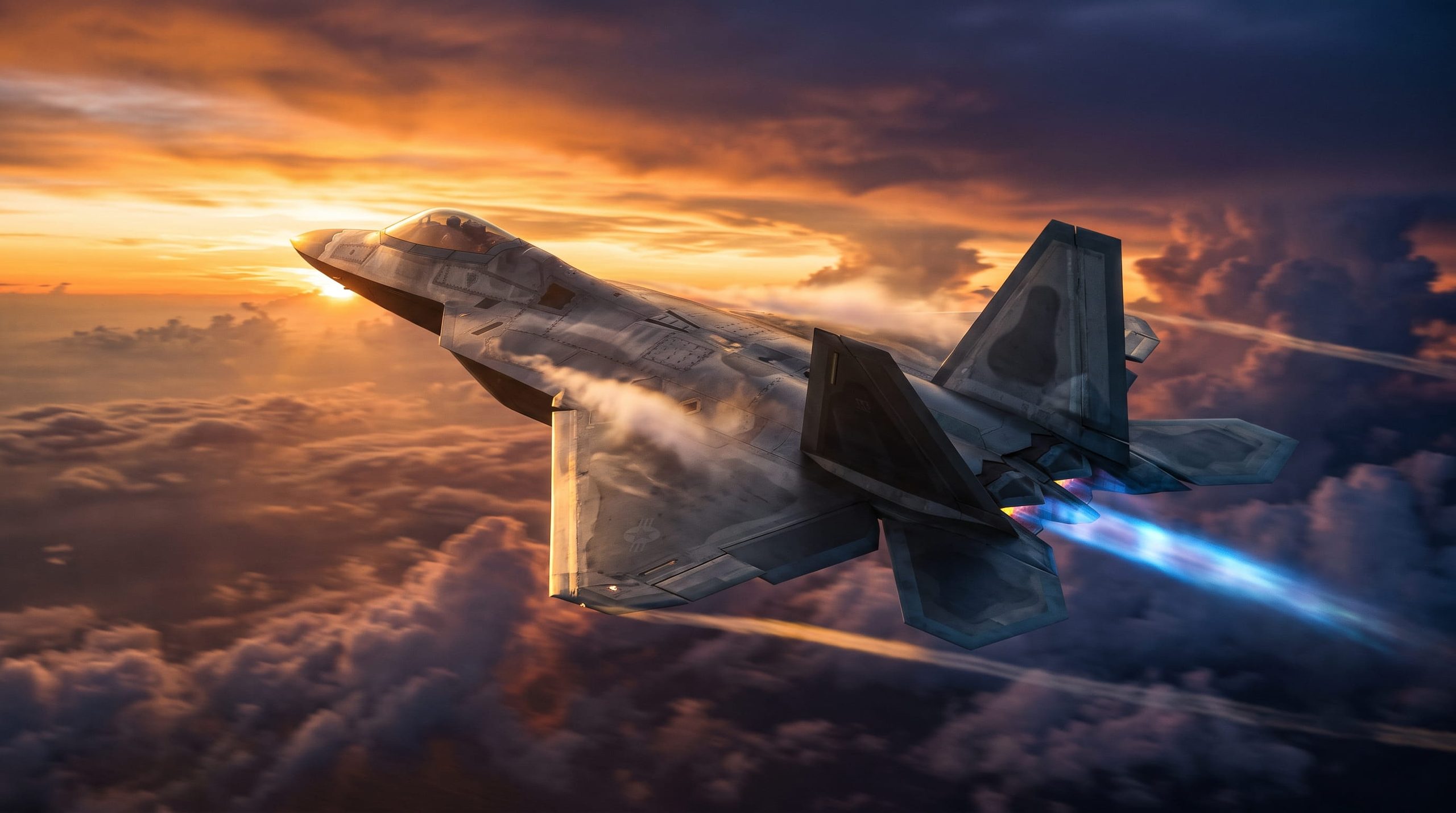
A fascinating journey through history, cutting-edge engineering, the physics of aerial combat, and the next revolution powered by Artificial Intelligence
2. Executive Summary
- Historical Evolution: Fighter aircraft originated in World War I as wooden biplanes retrofitted with synchronized machine guns and evolved into supersonic jet platforms capable of flying at more than twice the speed of sound.
- A Six-Generation Quantum Leap: From early jet propulsion in World War II to 5th-generation stealth fighters like the F-35 and upcoming 6th-generation concepts, combat aviation shifted from close-range dogfighting to network-centric sensor fusion.
- The Physics of Supersonic Flight and Stealth: Afterburning turbofans transform jet fuel into massive thrust, while stealth engineering shapes aircraft fuselages to scatter radar signals and dissipate heat signatures.
- Human Limits at 9G: Pilots endure extreme gravitational forces using specialized G-suits and head-mounted augmented reality visors worth hundreds of thousands of dollars to maintain situational awareness and control.
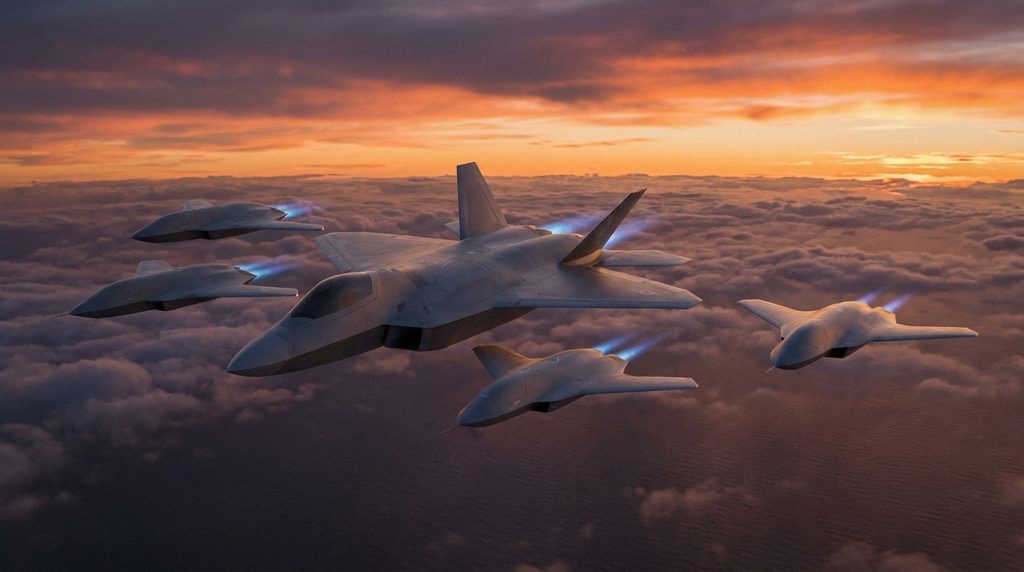
- The Autonomous Future: The 6th generation introduces “Loyal Wingmen”—uncrewed autonomous combat aircraft operating alongside crewed jets in AI-driven tactical networks.
3. Full Article
Imagine sitting inside a 20-ton metallic beast, accelerating to twice the speed of sound at 50,000 feet. Below you, clouds form a static blanket; above, the sky darkens into the deep blue edge of space. The engine roars with the force of dozens of Formula 1 cars combined, yet inside the cockpit, the steady rhythm of your own oxygen respirator is the loudest sound you hear. You are not merely flying a machine: you are operating the most complex, expensive, and technologically advanced vector of engineering ever devised by human civilization.
Fighter jets have always held a magnetic fascination. More than weapons of war, they represent the pinnacle of applied physics, materials science, and aerodynamics. They forced humanity to break the sound barrier, invent digital radars, master airborne computing, and create materials capable of deceiving electromagnetic waves. But how did we transition from fragile wood-and-canvas biplanes in World War I to stealth fighters guided by Artificial Intelligence?
This is the story of the kings of the sky: from their improvised genesis to a future where human minds and neural networks merge in the airspace.
1. The Propeller Synchronization Trick and the Rise of Steel Monsters
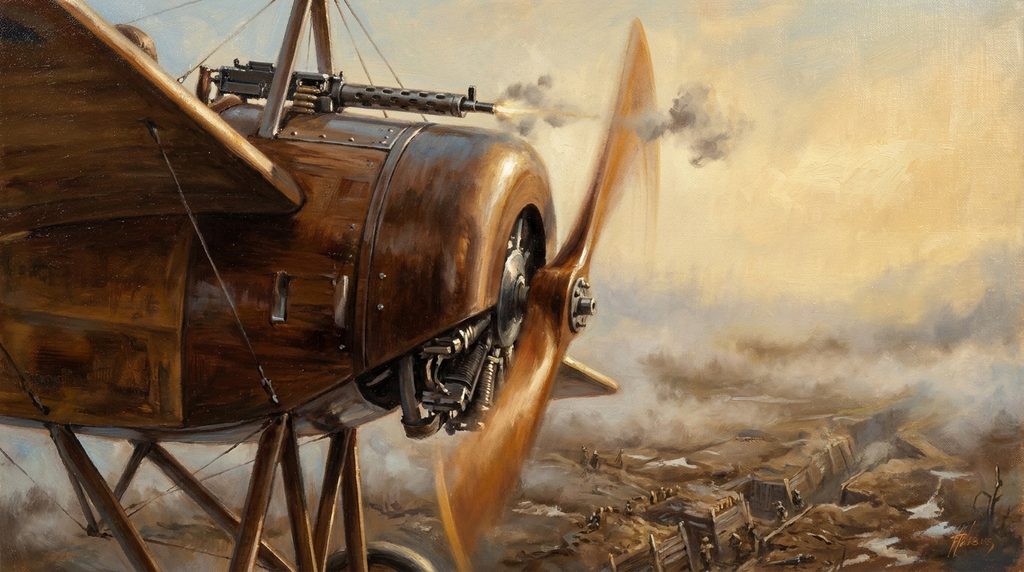
The First Aerial Duels of World War I
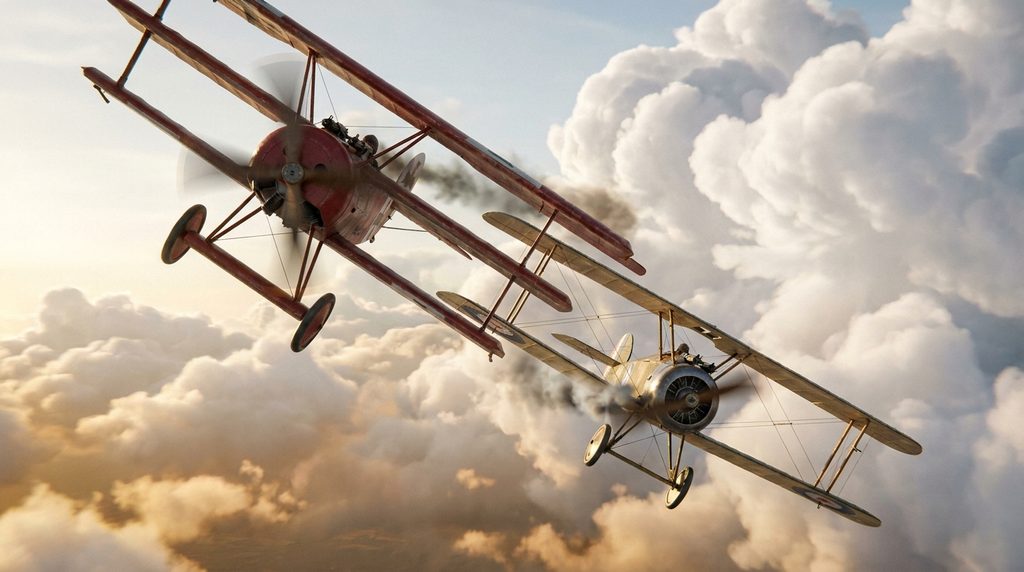
At the outbreak of World War I in 1914, airplanes were viewed primarily as “eyes in the sky.” Their main mission was to fly over enemy lines, map trench positions, and direct artillery fire. Pilots from opposing sides would occasionally wave to one another as they crossed paths in the clouds. However, this chivalrous atmosphere was short-lived.
Military commanders quickly realized that preventing enemy reconnaissance aircraft from observing their troop movements yielded a decisive tactical advantage. Aviators began taking bricks, ropes, pistols, and rifles into their cockpits to bring down opposing planes. The major engineering hurdle, however, was mounting a heavy machine gun on the front of the aircraft so the pilot could aim directly ahead. Mounting a machine gun behind the propeller meant bullets would shatter the wooden blades.
The breakthrough arrived when Dutch engineer Anthony Fokker, working for Germany, perfected the synchronization gear. This mechanical system interrupted the machine gun’s firing mechanism at the exact fraction of a second a propeller blade passed in front of the muzzle, enabling bullets to stream safely between the spinning blades.
This invention birthed the dedicated fighter pilot. Iconic biplanes and triplanes, such as the British Sopwith Camel and the German Fokker Dr.I—immortalized by Manfred von Richthofen, the “Red Baron”—transformed the skies into an arena of high-stakes dogfights.
Synchronization Mechanism (1915): Engine Shaft -> Interrupter Cam -> Trigger Disengagement -> Bullets Pass Cleanly Between Blades
The Messerschmitt Me 262 and the Leap into the Jet Age
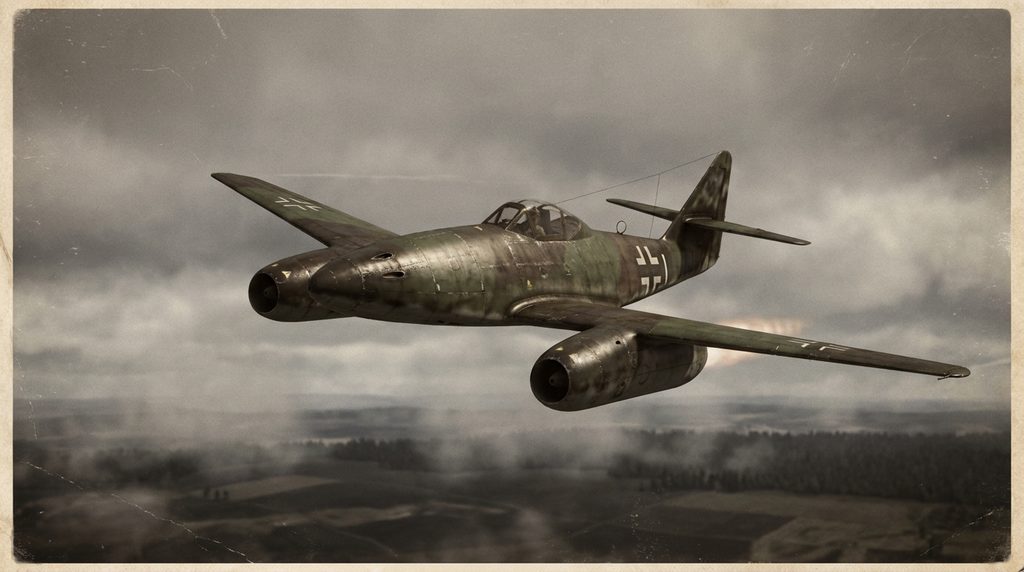
Two decades later, World War II pushed piston-engine propeller aircraft to their absolute physical limits. Fighters such as the American P-51 Mustang, the British Supermarine Spitfire, and the German Bf 109 achieved speeds approaching 450 mph (700 km/h). However, engineers encountered an unyielding aerodynamic wall: as propeller tips approached the speed of sound, shockwaves created severe drag and turbulence, choking engine performance.
Surpassing this barrier required eliminating the propeller altogether. In 1944, the German Luftwaffe deployed the Messerschmitt Me 262 Schwalbe, the world’s first operational jet fighter. Powered by twin Junkers Jumo 004 axial-flow turbojets, the Me 262 reached a speed of 540 mph (870 km/h)—nearly 120 mph faster than any Allied piston-driven fighter.
Although introduced too late to alter the outcome of the war, the Me 262 proved that the future of combat aviation belonged to jet propulsion.
2. Six Generations of Jet Fighters: From Raw Speed to Sensor Fusion
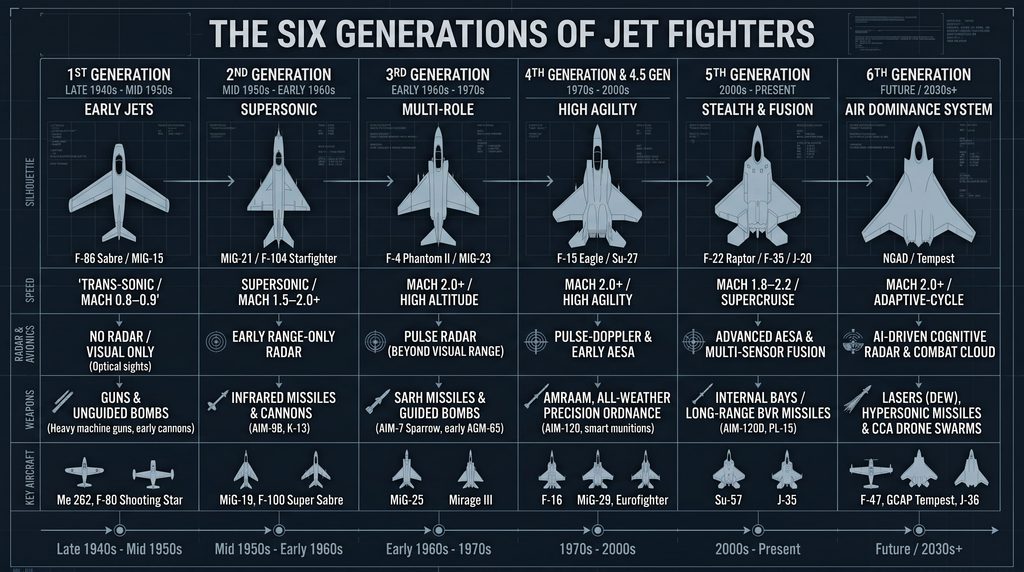
Aerospace historians and military engineers categorize jet fighters into six distinct generations. Each generation represents a fundamental shift in how combat aircraft fly, maneuver, detect targets, and communicate.
- 1st Generation (1944–1953): Early subsonic and transonic jet engines, swept-wing designs, relying on cannons and optical gunsights. Examples: Me 262, F-86 Sabre, MiG-15.
- 2nd Generation (1953–1960): Supersonic speed capabilities, introduction of afterburners, early radar systems, and first-generation infrared heat-seeking missiles. Examples: MiG-21, F-104 Starfighter, Mirage III.
- 3rd Generation (1960–1970): Multi-role combat platforms, Pulse-Doppler radars, beyond-visual-range (BVR) radar-guided missiles, and advanced turbofans. Examples: F-4 Phantom II, MiG-23, Mirage F1.
- 4th & 4.5 Generation (1970–Present): Fly-By-Wire control systems, extreme maneuverability, Active Electronically Scanned Array (AESA) radars, and digital glass cockpits. Examples: F-15, F-16, Su-27, Gripen E, Rafale.
- 5th Generation (2005–Present): Native stealth geometry, sensor fusion, internal weapons bays, supercruise capability, and network-centric warfare. Examples: F-22 Raptor, F-35 Lightning II, Chengdu J-20, Su-57.
- 6th Generation (In Development): Manned-Unmanned Teaming (MUM-T), autonomous “Loyal Wingmen” drones, variable-cycle engines, multi-spectral stealth, and AI co-pilots. Examples: NGAD (USA), GCAP (UK/Japan/Italy).
Generations 1 to 3: Breaking the Sound Barrier and Inventing Guided Missiles
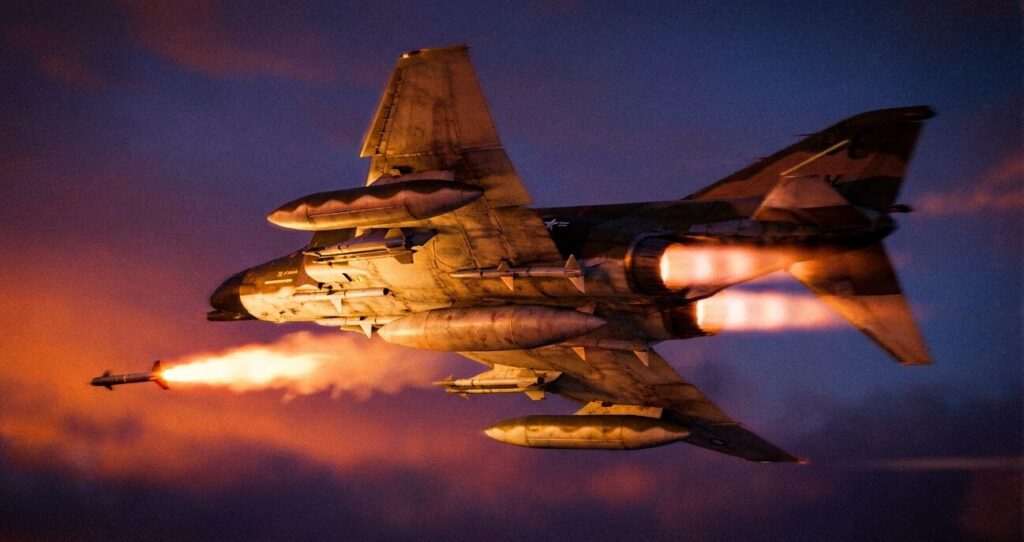
First-generation jets saw intense combat during the Korean War (1950–1953), where the American F-86 Sabre and the Soviet MiG-15 clashed over “MiG Alley.” These aircraft relied entirely on visual contact and nose-mounted cannons.
Second-generation fighters prioritized raw speed. Engineers embraced delta wings and afterburners to cross Mach 1 (the speed of sound) and push toward Mach 2. This era also introduced early infrared heat-seeking missiles like the AIM-9 Sidewinder, which tracked the hot jet exhaust of opposing aircraft.
Third-generation fighters expanded into true multi-role platforms. Aircraft such as the F-4 Phantom II could deliver heavy bomb loads on ground targets while simultaneously engaging enemy fighters dozens of miles away using radar-guided missiles, initiating the era of Beyond-Visual-Range (BVR) air combat.
Generation 4 and the Fly-by-Wire Computer Revolution
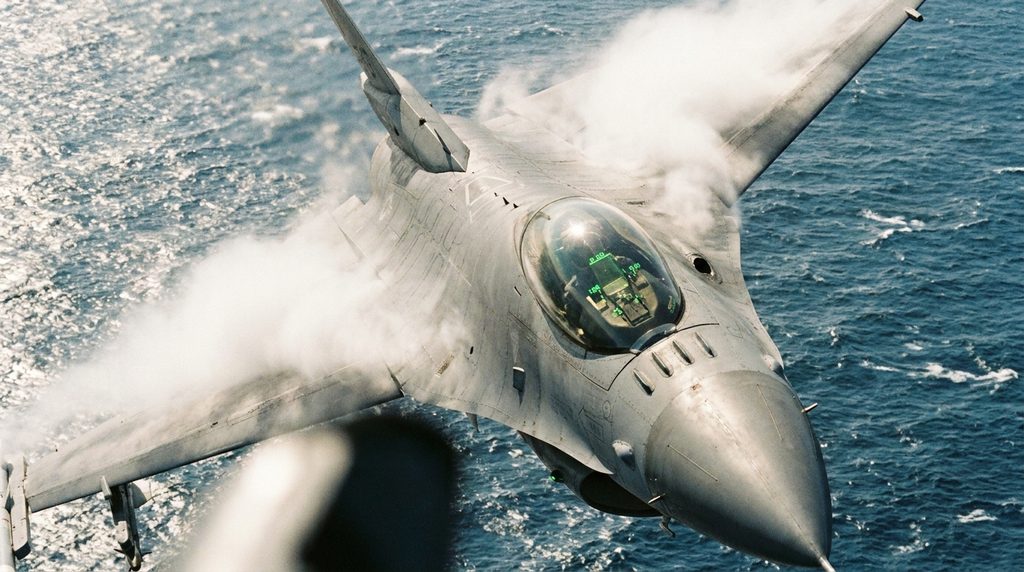
During the 1970s, military tacticians recognized that top speed alone was insufficient if an aircraft could not turn sharply enough to evade incoming missiles. This realization spurred the 4th Generation, defined by exceptional maneuverability and the introduction of Fly-by-Wire (FBW) control systems.
Before Fly-by-Wire, a pilot’s stick was mechanically connected to flight control surfaces via steel cables and hydraulics. FBW replaced mechanical linkages with digital flight-control computers. Engineers deliberately designed 4th-generation fighters to be aerodynamically unstable—making them extraordinarily agile—while computers performed thousands of micro-adjustments per second to maintain stability.
Aircraft like the F-15 Eagle, F-16 Fighting Falcon, and Soviet Sukhoi Su-27 dominated this era. Later upgrades featuring Active Electronically Scanned Array (AESA) radars and advanced glass cockpits produced the 4.5 Generation, represented by fighters such as the Dassault Rafale, Eurofighter Typhoon, and Saab Gripen E.
Control Shift: Mechanical Control: Pilot Stick -> Steel Cables -> Flight Surfaces Fly-by-Wire: Pilot Stick -> Electronic Signal -> Flight Computer -> Actuators -> Flight Surfaces
5th and 6th Generations: Absolute Stealth, AI, and Autonomous Swarms
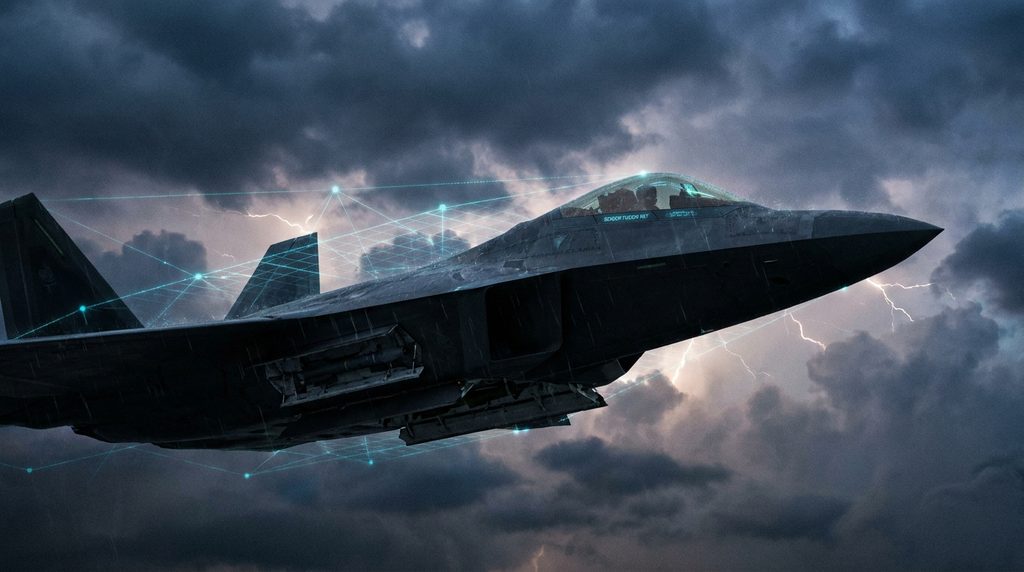
The 5th Generation redefined air power by placing Stealth Technology at the core of aircraft design. Rather than relying solely on speed or agility, 5th-generation platforms focus on avoiding radar detection. The American F-22 Raptor and F-35 Lightning II, along with China’s Chengdu J-20, are designed to identify, engage, and destroy targets long before enemy sensors detect their presence.
Today, defense consortiums are building the 6th Generation. Programs like the U.S. Air Force’s NGAD and the tri-national GCAP project aim to create networked systems of systems. These platforms will operate as flying command centers surrounded by autonomous drone escorts (“Loyal Wingmen”), powered by artificial intelligence and variable-cycle jet engines.
3. How a Fighter Jet Works: Aerodynamics, Engines, and the Illusion of Weight
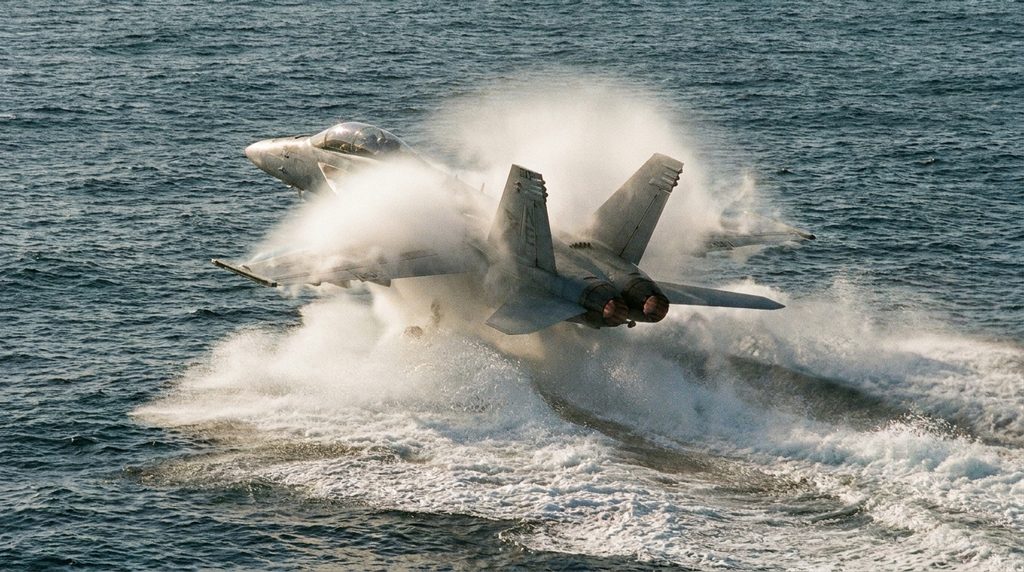
Afterburning Turbofans: Transforming Fire into Supersonic Thrust
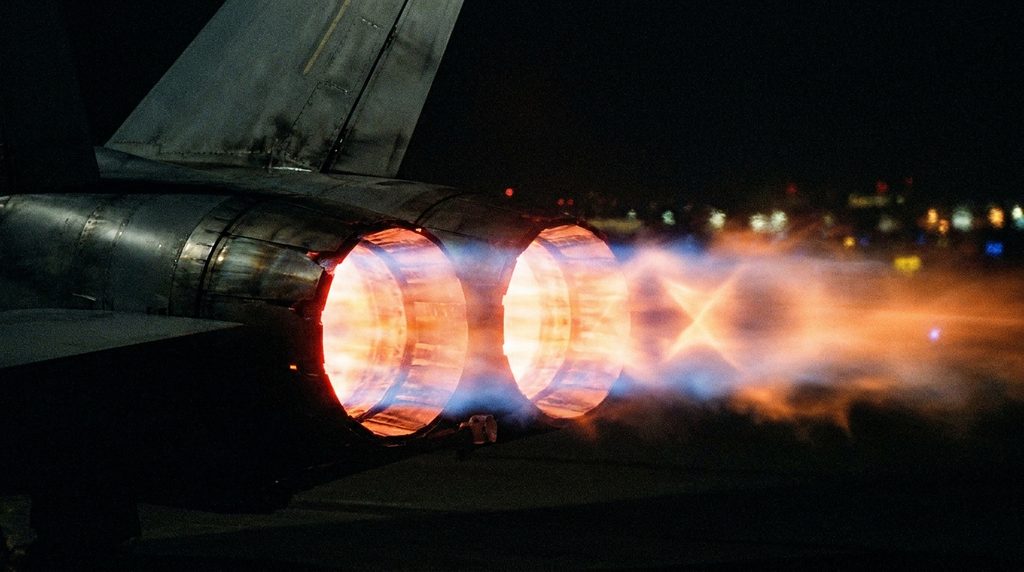
The heart of any modern fighter jet is its low-bypass turbofan engine, typically equipped with an afterburner.
A jet engine operates on Newton’s third law of motion (action and reaction):
- Intake: Massive volumes of atmospheric air are drawn into the front inlet.
- Compression: Rotating fan blades compress the air to high pressures.
- Combustion: Compressed air mixes with aviation kerosene (Jet-A1) and ignites, producing high-temperature, expanding gas.
- Turbine and Exhaust: Hot gas passes through a turbine (which drives the front compressor) and accelerates out the rear nozzle, propelling the aircraft forward.
When a pilot requires maximum acceleration to take off quickly or break away from an engagement, they engage the afterburner. This system sprays raw jet fuel directly into the hot exhaust stream behind the turbine. The fuel ignites instantly, producing a visible shock diamond flame and increasing total engine thrust by 50 percent or more. The tradeoff is extreme fuel consumption, capable of exhausting internal fuel tanks in minutes.
Engine Combustion Flow: Air Intake -> Compressor -> Combustion Chamber -> Turbine -> Afterburner Injectors -> Variable Nozzle
AESA Radars and Sensor Fusion: Seeing Through Clouds and Darkness
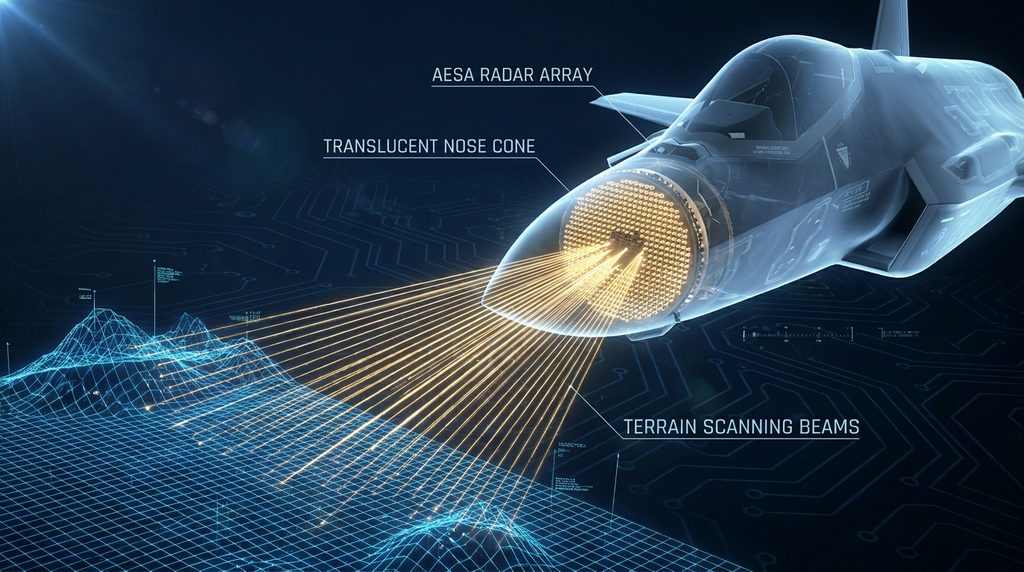
Modern fighters have abandoned traditional rotating parabolic radar antennas in favor of Active Electronically Scanned Array (AESA) radars.
An AESA radar antenna consists of a fixed face embedded with thousands of tiny solid-state transmit/receive modules. Each module emits its own computer-controlled micro-beam. By electronically shifting the phase of these signals, the radar beam can sweep across the sky instantly in any direction without moving mechanical parts.
This capability allows an AESA radar to track dozens of airborne and surface targets simultaneously while conducting electronic attack jamming.
Furthermore, modern aircraft utilize Sensor Fusion. The mission computer integrates data from the AESA radar, Infrared Search and Track (IRST) sensors, optical cameras, and encrypted tactical datalinks into a single, intuitive tactical map. The pilot does not need to cross-examine raw sensor feeds; the system presents an integrated picture showing target identities, vectors, and threat levels.
4. The Physics of Stealth: The Science of Invisibility
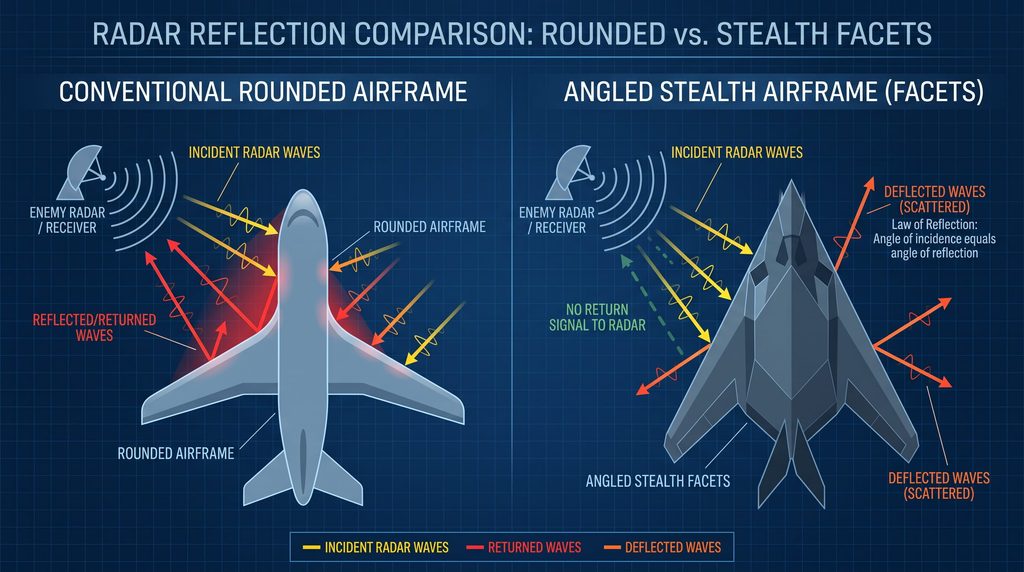
Deflecting Radar Waves Through Geometry
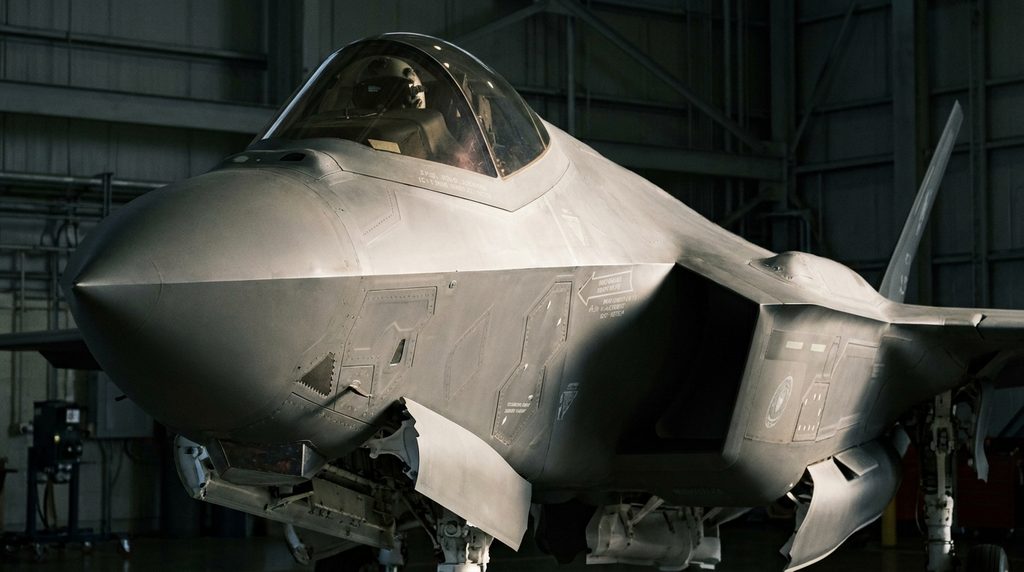
A common misconception is that stealth aircraft are invisible to the naked eye. In reality, stealth technology renders an aircraft difficult to detect on radar screens, not in optical space.
Radar systems function by emitting radio-frequency electromagnetic waves that bounce off an object and return to the receiver. Traditional fighters feature rounded fuselages, right-angle wing intersections, and exposed engine inlets, which act like corner reflectors that bounce radar waves directly back to the transmitter.
Stealth fighters employ geometric scattering:
- Fuselage surfaces are composed of flat, carefully angled facets or continuous planform alignments.
- Wing edges, tail surfaces, and panel seams are aligned to specific angles.
- Incoming radar waves strike the aircraft and are reflected away at oblique angles rather than returning to the radar dish.
As a result, a large stealth aircraft like the F-35 returns a radar cross-section (RCS) comparable to a small bird or golf ball on enemy radar displays.
Radar Reflection Comparison: Conventional Aircraft: Radar Wave -> Curved Surface -> Direct Reflection to Radar Receiver Stealth Aircraft: Radar Wave -> Angled Surface -> Deflected Away into Empty Space
Radar-Absorbing Materials and Hiding Engine Heat
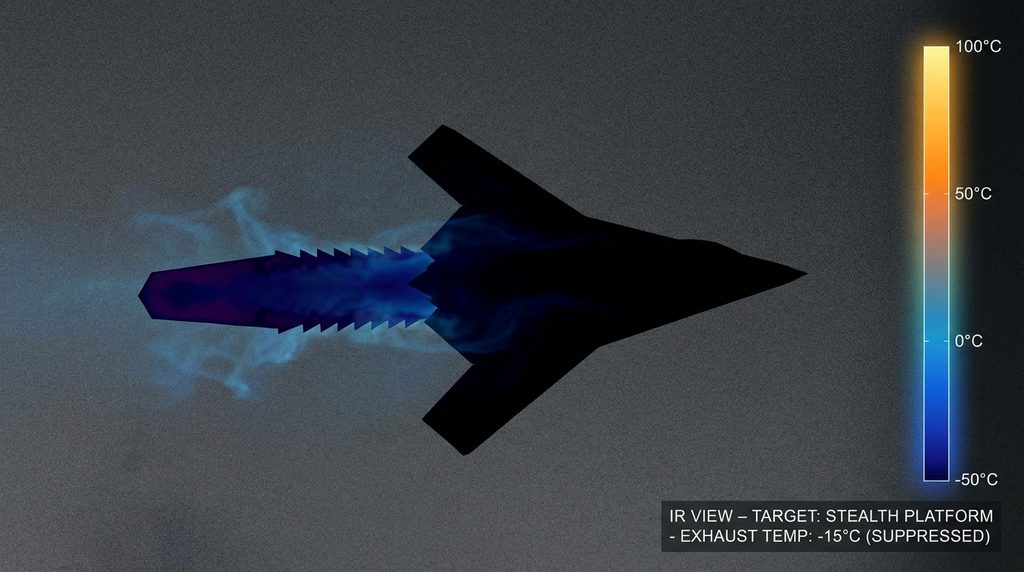
Geometric design is complemented by Radar-Absorbing Materials (RAM). The skin of 5th-generation aircraft is coated with composite materials containing microscopic metallic or carbon-based structures that absorb electromagnetic energy and convert it into low-level heat, diminishing the returned signal.
Suppressing radar signals is ineffective if thermal sensors can detect hot engine exhaust. Stealth engineers use serpentine “S-duct” air intakes to prevent radar waves from illuminating reflective engine compressor blades. Additionally, flattened or shielded exhaust nozzles mix ambient air with hot exhaust gases to rapidly cool the thermal plume.
5. From Dogfighting to BVR Combat: The Evolution of Sky Tactics
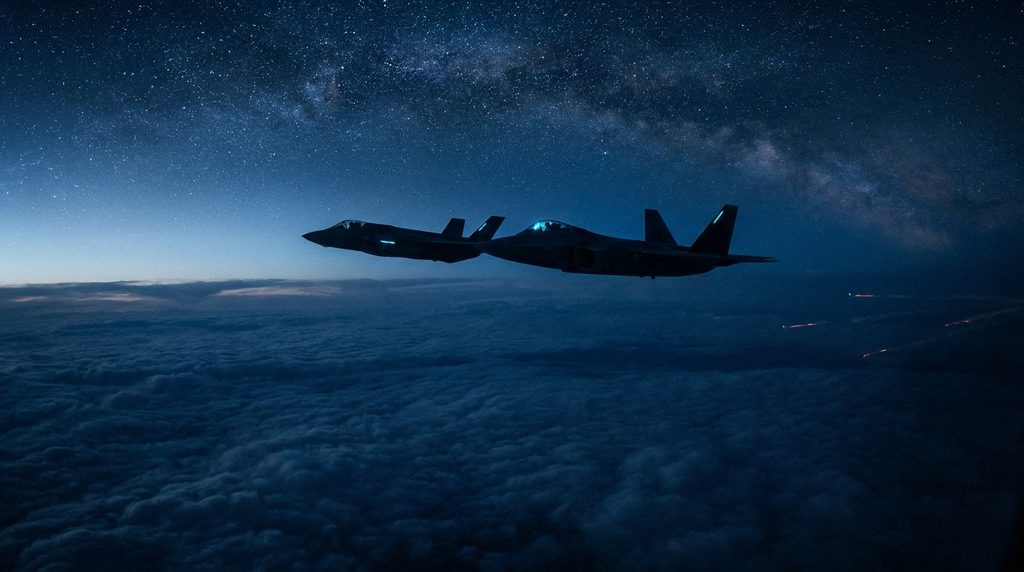
High-G Maneuvers and Close-Range Visual Combat
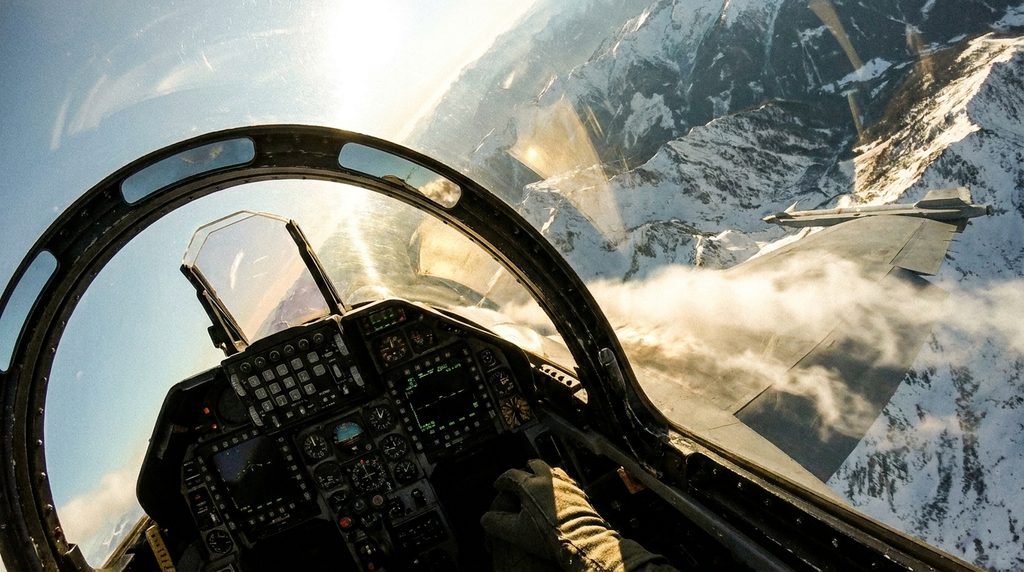
In popular culture, aerial combat is often depicted as a tight dogfight: two fighters maneuvering in close spirals, attempting to get behind one another to lock on with guns or heat-seeking missiles.
In visual-range maneuvering, extreme aerodynamic performance dominates. Technologies like Thrust Vectoring—where engine exhaust nozzles tilt to direct thrust—allow fighters like the Sukhoi Su-35 to execute post-stall maneuvers, such as the “Pugachev’s Cobra,” turning the aircraft’s nose toward a target without maintaining conventional forward flight speed.
However, modern air power doctrine considers close-range visual dogfighting a secondary backup contingency rather than the primary mode of combat.
Combat Engagement Distance: Close Dogfight: 0.5 to 6 miles (1 to 10 km) | Guns & Heat-Seeking Missiles BVR Engagement: 30 to 100+ miles (50 to 160+ km) | Active Radar Missiles
Beyond Visual Range (BVR): Winning Before You See the Enemy
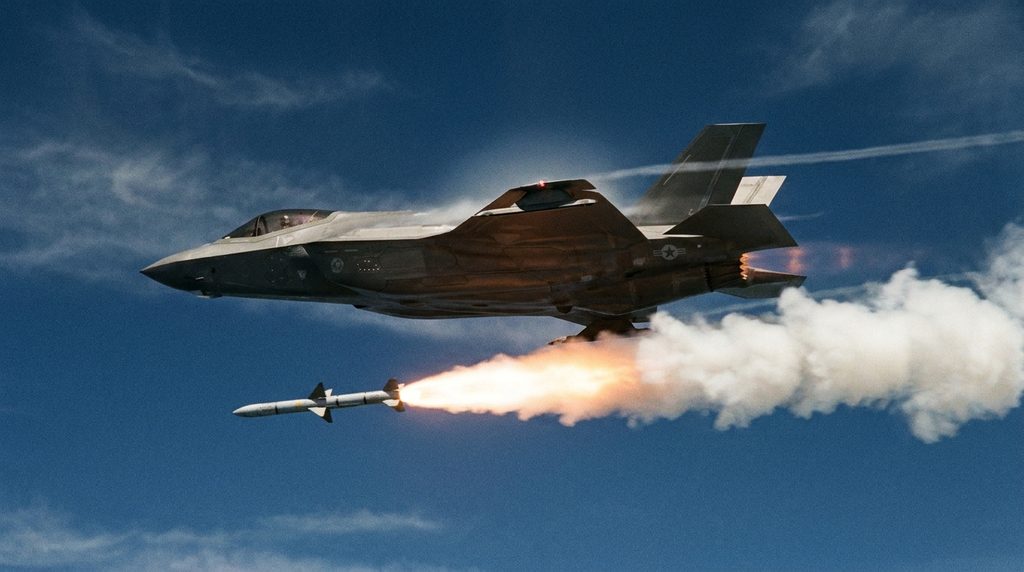
Contemporary air warfare is primarily fought Beyond Visual Range (BVR), at engagement distances spanning 30 to over 100 miles (50 to 160+ km).
In a typical BVR engagement sequence:
- An AESA radar or an off-board Airborne Warning and Control System (AWACS) aircraft detects an enemy contact.
- The mission computer calculates an optimal fire-control solution and launches a long-range radar-guided missile, such as the AIM-120 AMRAAM or European Meteor.
- The missile travels at speeds exceeding Mach 4 toward the target’s predicted coordinates.
- During its final approach phase, the missile activates its active onboard radar seeker to track and intercept the target before the opposing pilot achieves visual contact.
6. The Human Pilot and the Limits of Biology
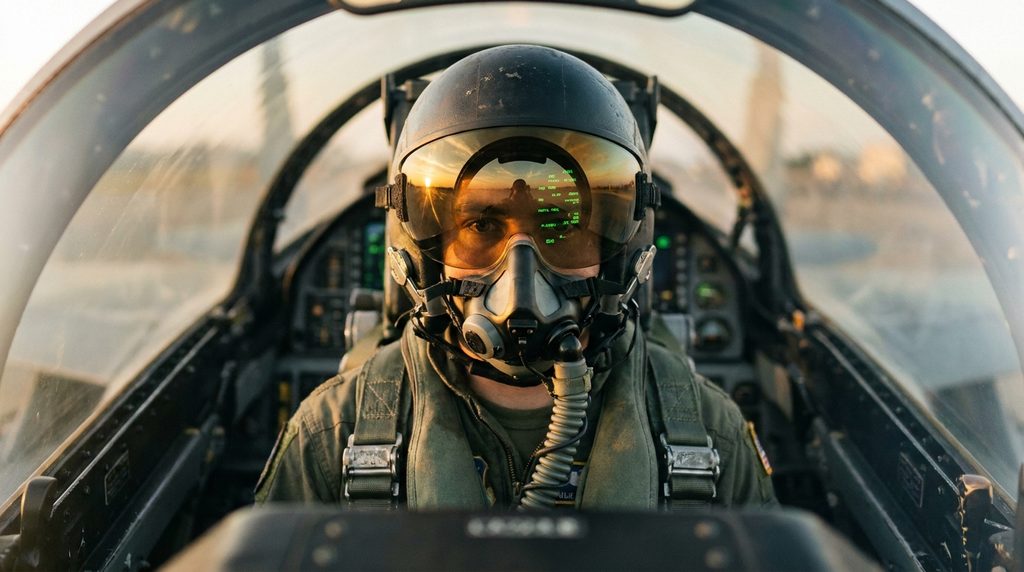
The Physics of G-Forces: Why the Human Body is the Weakest Link
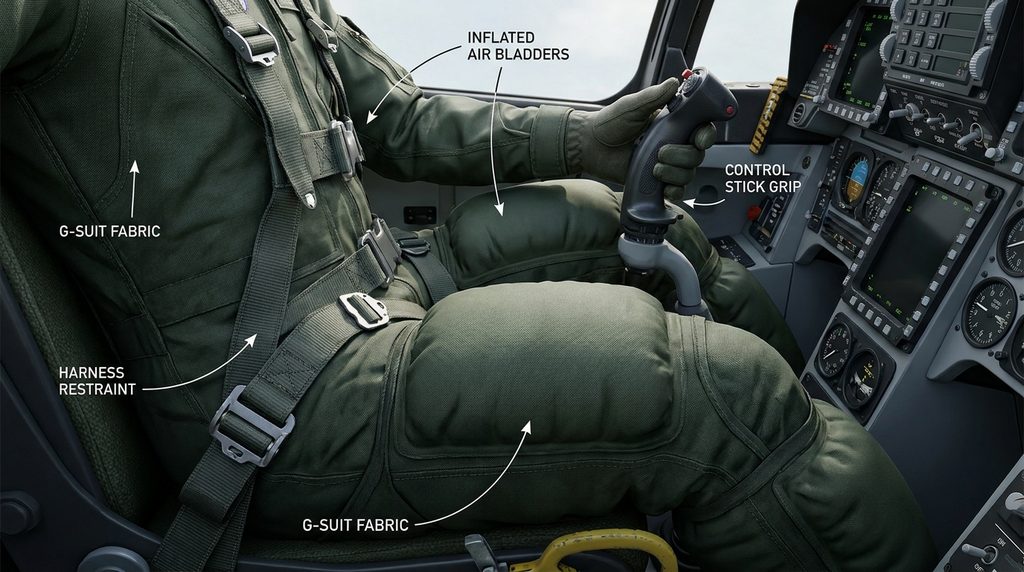
Modern 4th- and 5th-generation airframes are structurally engineered to endure extreme aerodynamic loads. However, the most vulnerable component inside the cockpit remains the human body.
When a jet executes a high-speed turn, the pilot experiences elevated Gravitational Forces (G-forces). At 1G, a person feels their normal body weight. At 9G—the operational limit for many fighter aircraft—the pilot’s effective body weight increases ninefold. Gravity pulls blood away from the brain toward the lower extremities.
Without protective measures, oxygen deprivation leads to tunnel vision (greyout), loss of color perception (blackout), and G-LOC (G-induced Loss of Consciousness).
To mitigate this risk, pilots wear specialized G-suits. When sensors detect high G-loads, air bladders inside the G-suit inflate automatically around the pilot’s legs and abdomen, compressing blood vessels to prevent pooling and maintain cerebral blood flow. Pilots also execute the Anti-G Straining Maneuver (AGSM), systematically tensing skeletal muscles to maintain blood pressure.
G-Force Physiological Progression: 1G: Normal Weight -> 5G: Peripheral Vision Loss -> 7G: Greyout -> 9G: Risk of Blackout / G-LOC
Smart Helmets and Augmented Reality Visors
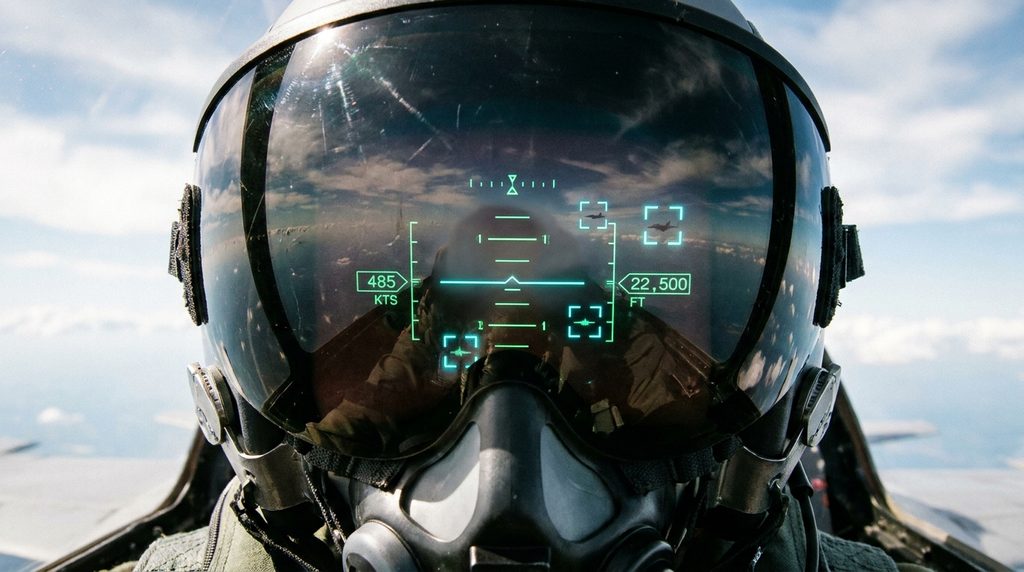
To process complex tactical data at speeds exceeding 1,500 mph, modern aviators rely on Helmet-Mounted Displays (HMD) rather than traditional cockpit instruments.
The F-35 Gen III Helmet Display System projects critical flight data, targeting cues, and night-vision imagery directly onto the helmet visor. Optical trackers monitor the pilot’s head movement. If the pilot looks down through the cockpit floor, distributed aperture infrared cameras mounted around the aircraft feed real-time imagery to the visor, allowing the pilot to “see through” the airframe.
Visors also allow pilots to designate targets for off-boresight missiles simply by looking at an enemy aircraft and pressing a control stick switch.
7. The Future of the Skies: AI Pilots and Loyal Wingmen
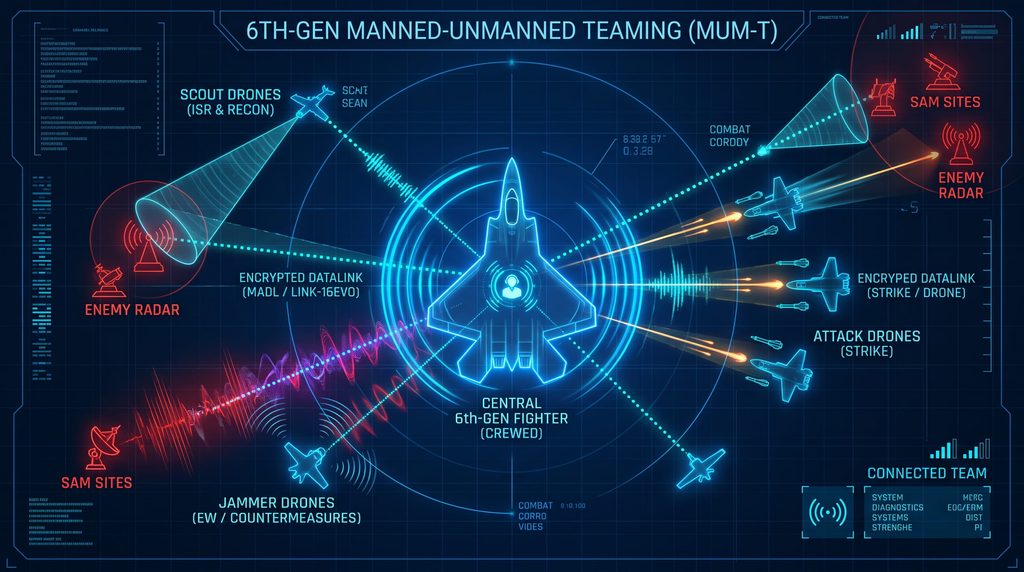
NGAD, GCAP, and Integrating Drone Swarms
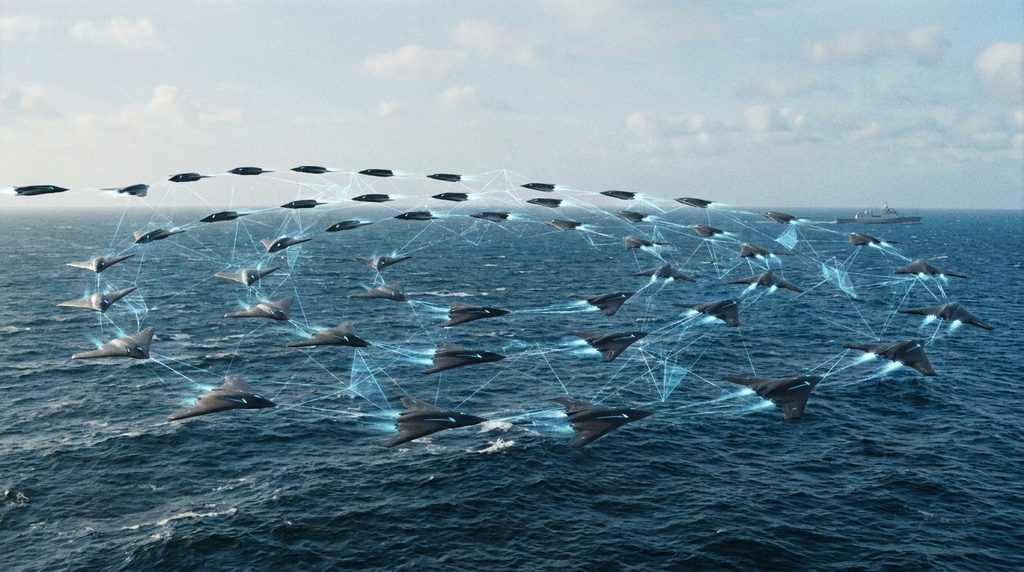
Air combat is undergoing its most profound transformation since the transition to jet propulsion. 6th-generation combat programs—including the U.S. Air Force’s NGAD and the multinational GCAP—are designed around a “Family of Systems” architecture.
At the core of this operational model is a crewed flagship jet surrounded by autonomous uncrewed platforms known as Collaborative Combat Aircraft (CCA) or “Loyal Wingmen.”
These uncrewed aircraft are powered by onboard artificial intelligence capable of executing flight routines, sensor sweeps, and tactical responses in real time.
6th Generation Tactical Network: Crewed Command Jet (Mission Commander) <–> AI Data Link <–> Autonomous CCA Drones (Sensors / Weapons Payload / Jamming)
Will Human Pilots Go Extinct or Become Autonomous Fleet Commanders?
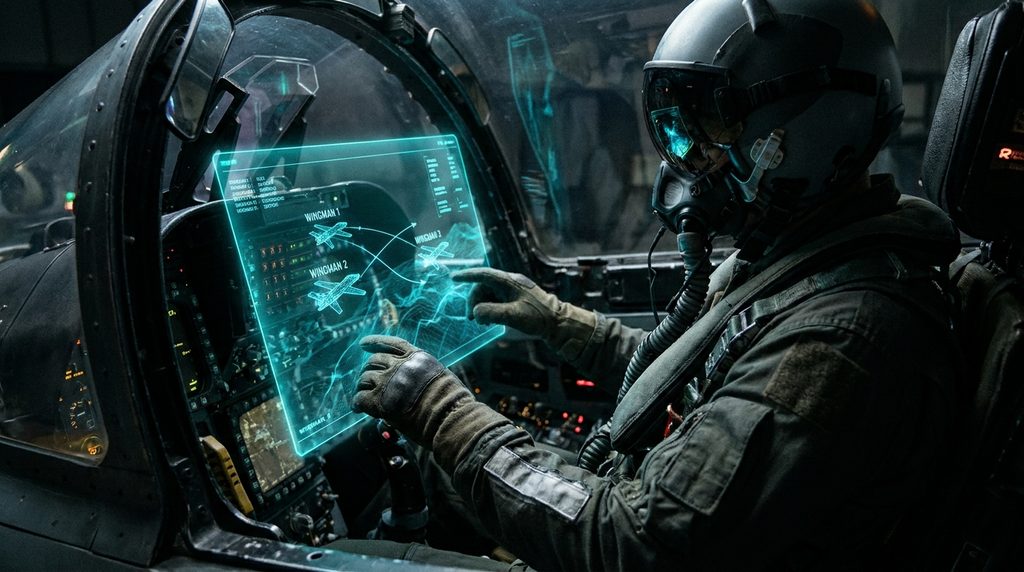
A central question in defense planning is whether 5th-generation platforms represent the final era of human-piloted combat jets.
The emerging consensus points toward Manned-Unmanned Teaming (MUM-T). While AI algorithms excel at high-speed data processing and sensor optimization, human commanders retain unique capabilities in moral judgment, strategic adaptation, and handling novel operational scenarios.
In future engagements, the human aviator’s role shifts from manual stick-and-rudder piloting to tactical battle management. From the cockpit, a pilot will command a network of specialized autonomous drones:
- Forward-scouting drones to illuminate targets and draw enemy fire.
- Payload drones carrying additional missiles.
- Electronic warfare drones deployed to jam adversary radar networks.
If an autonomous drone is lost, no human life is compromised, and uncrewed airframes can be produced at a fraction of the cost of complex crewed jets.
8. Conclusion: How Fighter Jets Impacted Everyday Science and Life
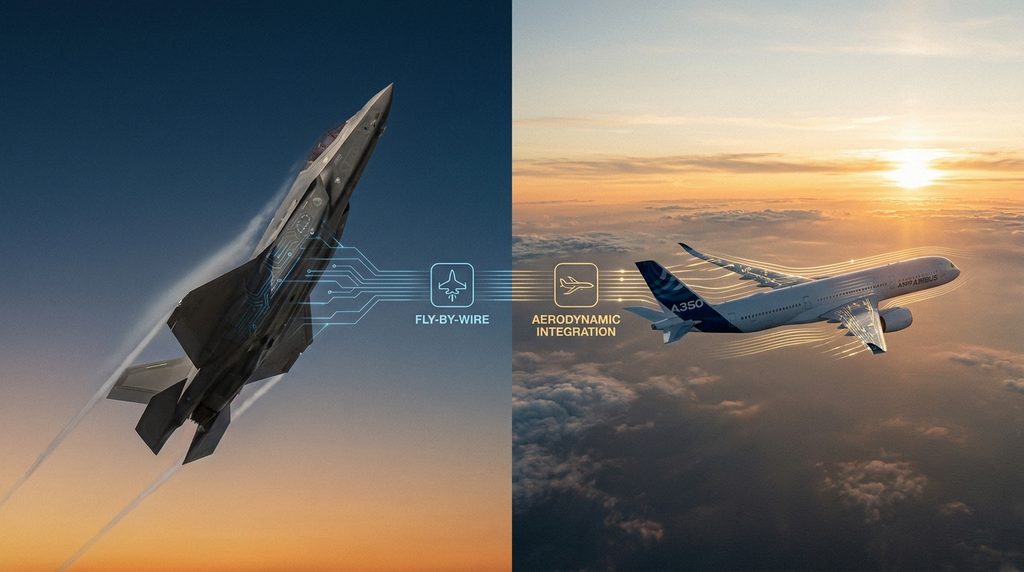
Fighter jets represent more than military hardware; they have served as primary incubators for technological breakthroughs that shape civilian society.
Engineers pushing the boundaries of flight performance generated innovations now embedded in everyday life:
- Fly-by-Wire Digital Controls: Adapted from military jets, digital flight control systems form the safety backbone of modern commercial airliners built by Airbus and Boeing.
- Advanced Composite Materials: Titanium alloys and carbon-fiber composites developed for high-stress airframes are now used in fuel-efficient commercial transport, electric vehicles, medical prosthetics, and sports equipment.
- Radar and Telecommunications: Advances in AESA radar, satellite GPS integration, and micro-electronics stemmed directly from defense research initiatives.
From mechanical propeller interrupters to autonomous neural networks, fighter aircraft reflect the outer limits of human engineering and physics—continuing their role as the undisputed kings of the sky.
4. What the Evidence Allows Us to Conclude
- Historical Shift Validated: Combat aviation transitioned definitively from visual-range maneuvering relying on pilot reflexes to network-centric BVR engagements enabled by radar and sensor integration.
- Stealth Engineering Consensus: Furtivity is achieved through geometric radar wave deflection combined with composite radar-absorbing materials and engine heat management.
- Physiological Thresholds Confirmed: Human acceleration tolerance (G-forces) remains the primary physical constraint on maneuvering performance in modern combat aircraft.
- Autonomous Future Trajectory: 6th-generation air power concepts are centered on Manned-Unmanned Teaming (MUM-T), integrating AI-driven autonomous combat aircraft alongside crewed command platforms.
- Areas of Ongoing Analysis: The long-term cost sustainability of 5th/6th-generation fleets and the exact operational boundaries between human command authorization and full AI autonomy remain under active military and political debate.
5. Frequently Asked Questions (FAQ)
1. What is the fastest fighter jet ever built?
The fastest operational jet fighter in history was the Soviet MiG-25 Foxbat, capable of reaching speeds over Mach 3.2 (approx. 2,400 mph / 3,900 km/h), though sustained flight at that speed risked engine damage. The SR-71 Blackbird, while faster at Mach 3.3+, operated strictly as a strategic reconnaissance aircraft rather than a armed fighter jet.
2. How do 4th-generation and 5th-generation fighters differ?
The primary difference lies in native stealth design and sensor fusion. 4th-generation fighters (like the F-16 or Su-27) prioritize speed and agility with externally mounted weapons. 5th-generation fighters (like the F-22 or F-35) feature radar-evading geometric shapes, internal weapons bays, and integrated sensor networks that merge multiple data feeds into a unified tactical display.
3. What does an afterburner do on a jet engine?
An afterburner injects raw jet fuel directly into the hot exhaust stream behind the engine’s turbine. The fuel ignites instantly, producing a massive boost in thrust (often 50% or more) for rapid takeoff, acceleration, or evasive maneuvering, at the cost of significantly higher fuel consumption.
4. Are visual dogfights still common in modern air warfare?
No. Modern air combat is dominated by Beyond-Visual-Range (BVR) tactics. Aircraft use AESA radars and datalinks to track and fire active radar-guided missiles at targets 30 to over 100 miles away, long before the opposing aircraft come within visual range.
5. Will Artificial Intelligence completely replace human fighter pilots?
In the foreseeable future, AI will complement rather than replace human pilots. Current 6th-generation doctrine relies on Manned-Unmanned Teaming (MUM-T), where human pilots act as mission directors managing autonomous drone swarms that handle high-risk tasks like scouting, electronic jamming, and weapons delivery.
7. Glossary
- AESA (Active Electronically Scanned Array): Advanced radar technology utilizing thousands of individual solid-state transmit/receive modules that electronically steer radar beams instantly without mechanical movement.
- Afterburner: An auxiliary combustion component in jet engines that sprays fuel into the exhaust duct to produce rapid additional thrust.
- BVR (Beyond Visual Range): Air combat engagements conducted using radar sensors and guided missiles at distances exceeding visual sight range (typically beyond 20 nautical miles / 37 km).
- CCA (Collaborative Combat Aircraft): Autonomous uncrewed aircraft designed to operate alongside crewed fighter platforms in military missions.
- Dogfight: Close-range visual aerial combat between fighter aircraft employing maneuvering tactics, cannons, or short-range heat-seeking missiles.
- Fly-by-Wire (FBW): A digital flight control system that replaces manual mechanical linkages with electronic signals controlled by computers to adjust flight surfaces.
- G-Force (Gravitational Force): The measurement of acceleration force expressed in multiples of standard Earth gravity. High G-forces during tight maneuvers force blood away from the brain.
- G-LOC (G-induced Loss of Consciousness): Temporary loss of consciousness occurring when extreme positive G-forces prevent adequate blood and oxygen flow to the brain.
- HMD (Helmet-Mounted Display): A helmet system that projects flight telemetry, weapon targeting data, and sensor imagery directly onto the pilot’s visor.
- MUM-T (Manned-Unmanned Teaming): Operational concept combining crewed combat platforms with autonomous uncrewed vehicles in coordinated missions.
- RAM (Radar-Absorbing Material): Specialized composite coatings applied to aircraft skins that absorb and dissipate electromagnetic radar waves.
- Sensor Fusion: The process of combining data from multiple sensors (radar, optical, IRST, datalinks) into a unified tactical display.
- Stealth Technology: Design methodologies involving geometry, materials, and heat management that minimize an aircraft’s radar, thermal, and electronic signatures.
8. Research References
- Air Force Historical Support Division (USAF)
- Historical Documentation on Fighter Generations, F-86, F-15, and F-22 Stealth Development
- https://fighterworld.com.au
- Royal Air Force Museum (UK)
- Historical Archives on WWI Aviation, Fokker Synchronization, and WWII Early Jet Development
- https://www.rafmuseum.org.uk
- IEEE Aerospace & Electronic Systems Society
- Technical Papers on AESA Radar Architectures, Radar Cross-Section (RCS) Reduction, and Sensor Fusion
- https://ieee-aess.org
- NASA Armstrong Flight Research Center
- Aerodynamic Research on Supersonic Flight, Variable-Cycle Turbofans, and Thrust Vectoring Controls
- https://www.nasa.gov/centers/armstrong
- Jane’s Defence Weekly / Janes All the World’s Aircraft
- Military Aviation Reports on 5th and 6th Generation Aircraft Development (NGAD, GCAP, F-35, J-20)
- https://www.janes.com
Leave a comment