

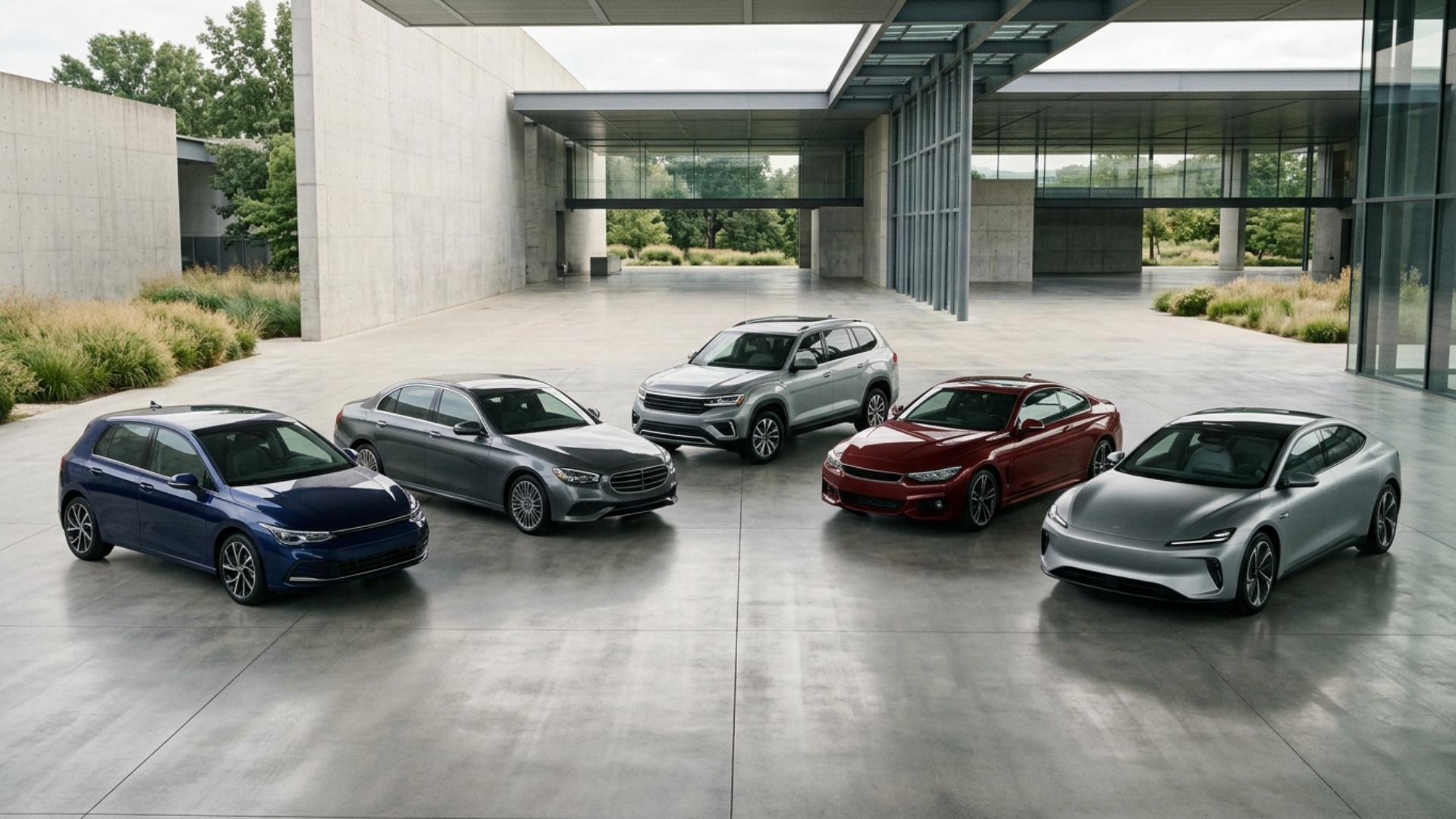
Types, Features, Technology, and the Evolution of Modern Automobiles
Quick Summary
Passenger cars are among the most important forms of transportation in modern society. Found in cities, on highways, and in rural communities, they allow millions of people to travel to work, attend school, take trips, and handle everyday activities.
But the world of passenger cars is much broader than it may seem. It includes compact vehicles designed for narrow city streets, sedans built for comfort, SUVs valued for their versatility, sports cars engineered for performance, and luxury models featuring some of the automotive industry’s most advanced technologies.
Beyond differences in body style, passenger cars also use a wide range of mechanical and energy systems. Gasoline and diesel engines share the market with hybrid systems, fully electric vehicles, and emerging propulsion technologies.
In this article, we’ll explore the history of passenger cars, learn how they are classified, discover how their main components work, and examine the technologies transforming the automotive industry.
Passenger Cars: Types, Features, Technology, and the Evolution of Modern Automobiles
1. What Are Passenger Cars?
Passenger cars are motor vehicles designed primarily to transport people. Unlike trucks, buses, and commercial vehicles, their main purpose is to provide individual or family transportation, typically for city driving, highway travel, and leisure trips.
Although most people picture a conventional four-door vehicle when they think of a car, the category includes an enormous variety of body styles, sizes, and configurations.
A small city car, an executive sedan, a family SUV, and a high-performance supercar may all belong to the same broad world of passenger automobiles, even though their features can be dramatically different.
Definition and Main Purpose
In general terms, a passenger car is a motor vehicle intended to carry people, with an enclosed passenger area, seats, safety systems, and the equipment needed for use on public roads.
An important international reference is vehicle category M1, used in European regulations and international technical documents. It covers vehicles designed to carry passengers with no more than eight seating positions in addition to the driver.
This definition provides a useful technical reference, although commercial and regulatory classifications may differ from one country to another.
Passenger cars are designed to meet a variety of needs:
- Daily travel between home and work.
- City driving and everyday activities.
- Family trips and long-distance travel.
- Individual transportation and recreation.
- Sports driving and high-performance experiences.
- Greater comfort, convenience, and refinement.
Passenger Cars vs. Commercial Vehicles
The main difference between passenger cars and commercial vehicles lies in their intended use and overall design.
A passenger car prioritizes the transportation of people. A commercial vehicle, on the other hand, is primarily designed to carry goods, equipment, or passengers as part of a professional operation.
A truck, for example, has a structure and payload capacity intended for transporting cargo. A commercial van may have an interior configured to carry tools, packages, or products.
However, some categories share characteristics. Passenger vans, family minivans, and utility vehicles may be classified in different ways depending on their construction and the regulations that apply.
Why Passenger Cars Matter
Automobiles have transformed the way people live and organize their daily activities.
They have made distant places more accessible, simplified travel between cities, and contributed to the growth of urban and suburban communities.
They have also reshaped entire areas of the economy, including tourism, construction, manufacturing, retail, fuel production, and road infrastructure.
Today, a car represents much more than a means of transportation. For many people, it is also associated with independence, convenience, recreation, and freedom of movement.
2. The History and Evolution of Passenger Cars
The history of automobiles began long before cars became a common sight on public roads.
The first experiments with motorized vehicles took place during the 19th century, when inventors and engineers began looking for ways to replace animal-powered transportation with mechanical systems capable of moving carriages.
The First Automobiles
One of the most important figures in this history was German engineer Carl Benz.
In 1885, Benz built a three-wheeled vehicle powered by an internal combustion engine. Known as the Benz Patent-Motorwagen, the invention received a patent in 1886.
His wife, Bertha Benz, also played a crucial role in introducing the invention to the public. In 1888, she completed a pioneering long-distance journey in the vehicle, demonstrating that the technology could work beyond experimental settings.
At the same time, other European inventors were developing their own solutions, contributing to improvements in engines, transmission systems, and vehicle structures.
The earliest automobiles were expensive, uncomfortable, and difficult to operate. Production was limited and relied heavily on handcrafted manufacturing methods.
The Rise of Mass Production
One of the industry’s greatest transformations took place in the early 20th century, with the spread of mass production.
Henry Ford played a decisive role in this process. In 1908, his company introduced the Model T, a car that became one of the defining symbols of popular motorization.
The introduction of the moving assembly line in 1913 significantly increased productivity and reduced the time required to build each vehicle.
Large-scale production helped lower manufacturing costs and made cars accessible to a much larger share of the population.
This manufacturing approach also influenced other industries around the world, establishing principles that remain central to modern production.
The Automobile Revolution of the 20th Century
Throughout the 20th century, automobiles underwent profound changes.
Engines became more powerful and reliable, body designs evolved, suspension systems improved, and manufacturers began offering different models for specific audiences.
Over the following decades, automakers placed greater emphasis on comfort, safety, and efficiency.
Developments such as seat belts, more effective braking systems, power steering, air conditioning, and automatic transmissions completely changed the driving experience.
The industry also began using lighter materials, automated manufacturing processes, and increasingly sophisticated electronic equipment.
The Digital and Electric Era
Beginning in the final decades of the 20th century, electronics became an increasingly important part of automobile design.
Electronic control units began managing functions such as fuel injection, engine operation, transmission behavior, and safety systems.
Later, digital displays, navigation systems, cameras, sensors, and connectivity expanded what vehicles could do.
In the 21st century, electrification has become one of the industry’s most important transformations.
Electric cars have taken on a growing role in the market, while manufacturers continue investing in batteries, electric motors, and intelligent energy management systems.
3. The Main Types of Passenger Cars
Passenger cars can be classified in several ways. One of the best-known methods is based on body style, meaning the vehicle’s exterior shape and overall body configuration.
Each body style offers different advantages in terms of space, practicality, performance, comfort, and appearance.
Hatchbacks
Hatchbacks are cars with a rear liftgate that typically includes the rear window and provides direct access to the cargo area.
They are especially common among compact and urban vehicles.
One of their main advantages is versatility. The rear seats can usually be folded down to create additional room for luggage and larger items.
Because they are relatively small, hatchbacks are often easy to park and maneuver in urban environments.
Sedans
Sedans traditionally have a three-box design: one section for the engine, one for the passenger cabin, and a separate trunk.
This configuration creates a physical separation between the passenger area and the luggage compartment.
Sedans come in compact, midsize, full-size, and luxury versions. Some are designed for affordability and everyday use, while others focus on comfort, performance, and refinement.
Coupes
Coupes are traditionally associated with two-door body styles and a sporty appearance.
However, the modern commercial definition is more flexible. Some automakers use the term for four-door vehicles with sloping rooflines.
The emphasis is generally on design, driving experience, and, in some models, performance.
Convertibles
Convertibles are vehicles with roofs that can be opened or removed, creating an open-air driving experience.
They may use fabric soft tops or retractable hardtops.
Some are designed primarily for leisure and comfort, while others have a distinctly sporty character.
Station Wagons
Also known as wagons or estate cars, station wagons combine the structure of a conventional passenger car with an extended rear cargo area.
They are particularly useful for families and people who need to carry luggage, equipment, or bulky items.
Their main advantage is the combination of generous cargo space and driving characteristics similar to those of a traditional car.
SUVs and Crossovers
SUVs, short for Sport Utility Vehicles, have become one of the most popular vehicle categories in the global market.
They typically feature a higher driving position, increased ground clearance, and a more rugged appearance.
Some models offer all-wheel drive and equipment intended for use beyond paved roads. Others are designed mainly for urban driving.
Crossovers, meanwhile, generally use platforms and structures derived from conventional passenger cars, combining car-like construction with the appearance and driving position of an SUV.
The distinction is not applied consistently by every manufacturer.
Minivans and MPVs
Minivans and MPVs, short for Multi-Purpose Vehicles, are designed to make the most of available interior space.
Many models offer three rows of seating, sliding rear doors, and flexible passenger configurations.
They are particularly useful for larger families and passenger transportation.
Sports Cars, Supercars, and Hypercars
Sports cars are designed to deliver a more engaging and dynamic driving experience.
They typically feature higher-performance engines, specially tuned suspensions, more precise steering, and distinctive aerodynamic characteristics.
Supercars represent a high-performance category, often combining sophisticated engineering with limited production.
Hypercars occupy an even more exclusive level, incorporating advanced technologies, extraordinary power, and high-performance materials.
These categories do not have universal regulatory definitions. They are commercial and cultural classifications used by the automotive industry and enthusiasts.
4. Passenger Cars by Size and Market Segment
In addition to body style, passenger cars are also classified by their dimensions and market positioning.
This system helps consumers compare vehicles with similar characteristics.
Microcars and City Cars
These are extremely compact vehicles designed for urban environments.
Their small dimensions make parking easier and help drivers navigate narrow streets.
Some models have room for only two passengers, while others accommodate four people in particularly compact configurations.
Subcompact and Compact Cars
Subcompact cars offer a balance of small dimensions, fuel economy, and passenger capacity.
Compact cars generally provide more interior space, more powerful engines, and additional equipment.
Both categories are popular with consumers looking for practical everyday transportation.
Midsize Cars
Midsize cars offer more room for passengers and luggage.
They often provide greater comfort on longer trips, more powerful engines, and additional convenience features.
Full-Size Cars
Full-size vehicles offer generous dimensions, spacious interiors, and, in many cases, larger engines.
They are especially common in markets where consumers have a strong preference for roomy automobiles.
Luxury and Premium Cars
Luxury cars are designed to deliver a more distinctive ownership and driving experience.
They may feature sophisticated materials, refined finishes, advanced sound insulation, entertainment systems, and driver-assistance technologies.
The premium category also reflects brand reputation, build quality, and market positioning.
5. How Passenger Cars Work
Despite differences in size, shape, and technology, most automobiles share a few fundamental operating principles.
A vehicle must generate energy, transfer that energy to the wheels, control its direction, and slow down when necessary.
These functions depend on the integration of different mechanical and electronic systems.
The Engine and Powertrain
In conventional automobiles, an internal combustion engine converts the chemical energy in fuel into mechanical energy.
That energy moves internal engine components, producing rotation that can be used to propel the vehicle.
In electric cars, energy stored in batteries is converted into mechanical energy by electric motors.
The group of components responsible for generating and transmitting motion is known as the powertrain.
The Transmission System
The transmission transfers power from the engine to the wheels while adjusting the relationship between speed and torque.
In vehicles with manual transmissions, the driver selects gears using a gearshift and clutch pedal.
In automatic transmissions, the system changes gear ratios without requiring the driver to perform this operation continuously.
Different technologies are available, including conventional automatic transmissions, continuously variable transmissions (CVTs), and dual-clutch systems.
Electric vehicles generally use single-speed transmissions, although exceptions exist.
Steering and Suspension
The steering system allows the driver to control the vehicle’s direction.
In modern cars, electric or hydraulic power assistance reduces the effort required to turn the steering wheel.
The suspension connects the wheels to the vehicle’s structure and helps absorb road irregularities.
It also plays a fundamental role in stability, comfort, and cornering behavior.
Braking Systems
The braking system reduces vehicle speed and brings the car to a stop.
Most automobiles use disc brakes on the front wheels and, depending on the design, either disc or drum brakes on the rear wheels.
The Anti-lock Braking System (ABS) helps prevent the wheels from locking up completely during certain braking situations, helping the driver maintain directional control.
Modern automobiles also use electronic systems that distribute braking force and assist with vehicle stability.
Wheels and Tires
Tires are the only parts of a car that remain in direct contact with the road surface.
They influence traction, stability, stopping distance, energy consumption, and ride comfort.
Their design involves different rubber compounds, internal structures, and tread patterns.
Choosing the right tires depends on the vehicle, weather conditions, and intended use.
The Electrical and Electronic Systems
Modern electrical systems do much more than power headlights and accessories.
They control important functions such as engine management, airbags, braking systems, sensors, climate control, and multimedia equipment.
In many vehicles, multiple electronic modules work continuously to monitor operation and identify potential problems.
6. Different Types of Car Engines and Powertrains
The way a car produces motion is one of the most important factors in understanding the differences between automotive technologies.
Today, consumers can choose from several propulsion systems.
Gasoline Engines
Gasoline engines burn a mixture of air and fuel inside their cylinders to generate motion.
They are widely used in passenger cars because of their versatility and the established refueling infrastructure available in many countries.
They come in different configurations, engine sizes, and levels of efficiency.
Diesel Engines
Diesel engines use a compression-ignition process.
Air is compressed until it reaches a high temperature, allowing injected fuel to ignite.
These engines typically deliver strong low-speed torque and good energy efficiency.
Although they are common in commercial vehicles, diesel engines are also used in passenger cars, particularly in certain European markets.
Hybrid Electric Vehicles
Hybrid vehicles combine an internal combustion engine with one or more electric motors.
This combination allows different energy sources to work together.
In conventional hybrids, the battery is recharged mainly by the engine and by recovering energy during braking.
The technology can reduce fuel consumption, especially in urban driving conditions.
Plug-In Hybrid Vehicles
Plug-in hybrids have larger batteries that can be recharged directly from an external electricity source.
This allows them to travel certain distances using electric power alone.
When the battery reaches a low charge level, the combustion engine can take over or operate together with the electric system.
Battery Electric Vehicles
Fully electric vehicles use rechargeable batteries and electric motors to produce motion.
They do not need to burn gasoline or diesel to operate and produce no tailpipe emissions while driving.
Their characteristics include immediate torque delivery, quiet operation, and fewer traditional mechanical components in the powertrain.
However, driving range, charging time, battery cost, and charging infrastructure remain important considerations for consumers.
Hydrogen Fuel Cell Vehicles
Fuel cell electric vehicles use hydrogen to generate electricity onboard.
Hydrogen reacts with oxygen in an electrochemical cell, producing electrical energy to power the motor.
The process produces water and heat as byproducts of the reaction.
This technology has interesting characteristics, including relatively quick refueling and potential applications in certain transportation segments.
Its wider adoption, however, depends on hydrogen availability, infrastructure, and production costs.
7. Performance and Driving Characteristics
A car’s performance depends on much more than engine power.
Weight, aerodynamics, transmission, tires, suspension, and weight distribution also influence how a vehicle behaves.
Horsepower and Torque
Power measures the rate at which work is performed.
Torque is the rotational force produced by an engine.
In practical terms, torque influences a vehicle’s ability to move and pull, while power is related to its ability to sustain performance across different speeds.
Both matter, and they are best understood together.
Acceleration and Top Speed
Acceleration describes how quickly a vehicle increases its speed over a given period.
It is often measured by the time required to reach 60 mph or 100 km/h.
Top speed is the maximum speed a vehicle can reach under specific conditions.
These figures depend on several factors, including power, aerodynamic drag, transmission, and electronic limitations.
Fuel Economy and Energy Efficiency
Energy efficiency indicates how much fuel or electricity a vehicle needs to travel a given distance.
For gasoline and diesel vehicles, it may be expressed in miles per gallon or kilometers per liter.
For electric vehicles, common measurements include kilowatt-hours per 100 miles or per 100 kilometers.
Vehicle weight, driving style, speed, and road conditions directly affect these results.
Front-Wheel, Rear-Wheel, and All-Wheel Drive
Front-wheel drive sends engine power to the front wheels.
It is widely used in compact and midsize cars, mainly because it makes efficient use of interior space and can reduce manufacturing costs.
In rear-wheel-drive vehicles, power is delivered to the rear wheels. This layout is common in certain luxury sedans and sports cars.
All-wheel drive distributes power between both axles, helping the vehicle adapt to different traction conditions.
Manual and Automatic Transmissions
Manual transmissions give drivers more direct control over gear selection.
Automatic transmissions prioritize convenience by changing gears independently.
The choice depends on driver preferences, vehicle design, and intended use.
8. Safety Features in Modern Passenger Cars
Automotive safety has advanced considerably over the past several decades.
Modern vehicles combine structures designed to absorb crash energy, occupant protection equipment, and electronic systems that can help prevent accidents.
Seat Belts and Airbags
Seat belts remain among the most important safety features in a vehicle.
They help keep occupants properly positioned during a collision and work together with airbags.
Airbags are inflatable cushions that deploy rapidly in certain crash situations, reducing the risk of occupants striking hard surfaces inside the vehicle.
Different configurations are available, including front, side, and curtain airbags.
ABS and Electronic Stability Control
ABS, or Anti-lock Braking System, helps prevent the wheels from locking during hard braking.
This can allow drivers to maintain greater steering control in emergency situations.
Electronic Stability Control monitors information such as wheel speed, steering input, and vehicle rotation.
When it detects a possible loss of stability, it can apply the brakes to individual wheels and reduce engine power.
Advanced Driver Assistance Systems
Advanced Driver Assistance Systems, commonly known as ADAS, use cameras, radar, and other sensors to monitor the area around a vehicle.
Available features include:
- Automatic emergency braking.
- Blind-spot monitoring.
- Lane departure warnings.
- Lane-keeping assistance.
- Adaptive cruise control.
- Traffic sign recognition.
- Parking cameras.
These systems can help reduce certain risks, but they do not replace driver attention and responsibility.
Crash Tests and Vehicle Safety Ratings
Crash tests evaluate how automobiles behave in different types of collisions.
Organizations such as the National Highway Traffic Safety Administration (NHTSA) and the Insurance Institute for Highway Safety (IIHS) in the United States conduct safety assessments that help consumers compare vehicles.
In Europe, Euro NCAP performs a similar role.
These evaluations consider factors such as occupant protection, pedestrian safety, and the performance of certain driver-assistance systems.
9. Comfort, Convenience, and Interior Technology
Comfort is one of the factors that most strongly influences the everyday experience of owning and using a car.
Modern vehicles aim to do more than transport people. They also seek to provide a pleasant, functional environment adapted to the needs of their occupants.
Seating, Ergonomics, and Cabin Space
Seat design, driving position, and control placement directly influence comfort.
Larger automobiles generally provide more room for legs, shoulders, and luggage.
Some models feature power-adjustable seats, heating, ventilation, and memory functions.
Air Conditioning and Climate Control
Air conditioning has become essential equipment in many markets.
In addition to cooling the cabin, modern systems can automatically manage temperature, airflow direction, and fan speed.
Some vehicles offer separate climate settings for different areas of the cabin.
Infotainment and Connectivity
Infotainment systems combine audio, navigation, communication, and connectivity features.
Touchscreens, voice controls, and smartphone integration have become common.
In certain models, passengers can also use wireless connections, apps, and digital services.
Driver Assistance and Smart Features
Modern cars may include features such as automated parking, voice-command recognition, keyless entry, and software updates.
Some vehicles also support remote monitoring through smartphone apps, allowing owners to check information such as vehicle location, driving range, and battery charge status.
10. The Economic Side of Owning a Car
Buying a car involves much more than paying its initial purchase price.
Owning a vehicle includes recurring expenses and costs that can vary considerably depending on the model, age, and how it is used.
Purchase Price and Financing
The purchase price depends on factors such as manufacturer, vehicle category, equipment, powertrain, and market.
Many consumers use financing to purchase a car.
In that case, it is important to consider not only the monthly payments but also the interest rate, loan term, and total cost of financing.
Fuel and Energy Costs
Fuel or electricity consumption is one of the main operating expenses.
More efficient vehicles can deliver significant savings over several years.
For electric cars, charging costs depend on electricity prices, vehicle efficiency, and where the vehicle is charged.
Maintenance and Repairs
Every automobile requires maintenance.
In conventional vehicles, items such as engine oil, filters, spark plugs, belts, and fluids must be inspected and replaced according to the manufacturer’s recommendations.
Electric vehicles have fewer mechanical components in their powertrains, but they still require attention to tires, brakes, suspension, electrical systems, and batteries.
Insurance and Taxes
Auto insurance protects owners against certain financial losses, depending on the coverage they purchase.
Premiums depend on factors such as vehicle model, location, driving habits, and claims history.
Taxes and fees also vary according to the laws of each country or region.
Depreciation and Resale Value
Depreciation is the loss of a vehicle’s value over time.
It depends on factors such as age, mileage, condition, the model’s reputation, and demand in the used-car market.
Some vehicles retain their resale value better than others.
For this reason, the true cost of ownership should also take into account how much the car may be worth when it is sold.
11. Passenger Cars and the Environment
The automotive industry faces the challenge of reducing the environmental impacts associated with manufacturing and operating vehicles.
The issue involves not only exhaust emissions but also the production of materials, fuels, electricity, and batteries.
Air Pollution and Greenhouse Gas Emissions
Cars with combustion engines produce emissions when fuel is burned.
These include carbon dioxide, nitrogen oxides, and other compounds that can contribute to environmental problems and poor air quality.
Carbon dioxide is particularly important because of its contribution to global warming.
Fuel Efficiency and Emission Standards
Environmental regulations establish emissions limits and energy-efficiency requirements.
These standards encourage automakers to develop more efficient engines, improve aerodynamics, and use technologies that control pollutants.
Requirements vary between countries and are updated according to each region’s environmental and technological goals.
Electric Cars and Environmental Impact
Electric cars produce no tailpipe emissions while being driven.
However, their overall environmental impact depends on factors such as battery manufacturing, the source of the electricity they use, and industrial production processes.
When electricity comes from low-emission sources, the climate benefits tend to be greater.
It is important to evaluate a vehicle’s entire life cycle rather than looking only at what happens while it is being driven.
Batteries, Recycling, and Vehicle Life Cycles
Automotive batteries use materials such as lithium, nickel, manganese, and other elements, depending on the technology.
Producing them requires mining, industrial processing, and energy.
Recycling processes can recover some of these materials and reduce the need for new raw materials.
Researchers are also exploring ways to reuse batteries in stationary energy storage systems.
12. The Global Automotive Industry
The automotive industry is one of the world’s largest and most complex industrial sectors.
Its supply chain includes automakers, suppliers, technology companies, material producers, distributors, and specialized service providers.
Major Automobile Manufacturers
Some of the best-known international automakers include Toyota, Volkswagen, Hyundai, General Motors, Ford, Honda, Nissan, BMW, Mercedes-Benz, Stellantis, and Tesla.
Each company has its own market strategies, technologies, and commercial positioning.
Some focus on affordable and family-oriented vehicles. Others prioritize premium cars, sports cars, or electric vehicles.
How Passenger Cars Are Designed and Manufactured
Developing a car begins long before manufacturing starts.
Teams of engineers, designers, safety specialists, and marketing professionals work together to define the vehicle’s dimensions, performance, equipment, and characteristics.
After the design stage, prototypes are built and tested to evaluate durability, operation, and safety.
Manufacturing involves processes such as sheet-metal stamping, welding, painting, assembly, and quality inspection.
Many of these operations use industrial robots and automated systems.
Global Automotive Markets
The automotive market differs considerably from one region to another.
In North America, SUVs and pickup trucks have a strong commercial presence.
In Europe, compact cars, hatchbacks, and efficient models account for a significant share of the market.
Across several Asian markets, local manufacturers offer a wide range of vehicles, from affordable models to luxury cars and high-tech automobiles.
The expansion of electric vehicles is also changing international competition.
Consumer Preferences and Market Trends
Consumer preferences change according to income, infrastructure, cultural habits, and economic conditions.
The growth of SUVs shows how factors such as driving position, interior space, and appearance can influence purchasing decisions.
At the same time, concerns about fuel consumption, maintenance costs, and environmental impact are encouraging the development of new technologies.
13. The Future of Passenger Cars
The future of automobiles will be shaped by the integration of electrification, computing, artificial intelligence, and new mobility solutions.
Although combustion engines remain important, the automotive industry is already undergoing a significant technological transformation.
Electrification and New Battery Technologies
Battery development is one of the industry’s most important areas of research.
Researchers and manufacturers are working to increase energy density, reduce costs, improve durability, and shorten charging times.
Solid-state batteries, for example, are receiving considerable research and development attention.
They use solid electrolytes instead of the liquid electrolytes found in conventional batteries and may offer advantages in certain performance and safety characteristics.
However, large-scale production still faces technical and industrial challenges.
Autonomous Driving
Autonomous vehicles use sensors, cameras, radar, and computer systems to interpret their surroundings and control certain driving functions.
Automation is classified into levels, ranging from basic driver-assistance systems to vehicles capable of performing all driving tasks under specific conditions.
It is important to distinguish advanced driver assistance from full driving automation.
Many vehicles currently on the market offer only partial automation features, meaning the driver must remain attentive and responsible for operating the vehicle.
Artificial Intelligence and Connected Vehicles
Artificial intelligence could transform how automobiles interpret information and interact with their occupants.
Intelligent systems can analyze driving patterns, identify risks, and help manage safety features.
Connectivity also allows communication between vehicles, road infrastructure, and digital services.
These technologies may help improve traffic flow and reduce certain risks.
New Materials and Lightweight Construction
Reducing vehicle weight is an important goal in automotive development.
Materials such as aluminum, advanced steels, and composites can help reduce vehicle mass while meeting certain structural requirements.
Depending on the design and driving conditions, lighter vehicles may use less fuel or electricity.
The Future of Personal Mobility
Automobiles will continue to evolve in response to society’s needs.
Some cities may expand public transportation and reduce their dependence on individually owned vehicles.
At the same time, private cars will continue to play an important role in areas where public transportation infrastructure is limited.
The broader trend is toward vehicles that are more connected, efficient, and integrated with different mobility systems.
14. Why Passenger Cars Remain Important
Even as alternatives such as public transportation, bicycles, and shared mobility services grow, passenger cars continue to play an important role in modern life.
They offer flexible schedules, allow people to carry passengers and luggage, and make it easier to reach places that may not be served by other forms of transportation.
For families, professionals, and people living far from major urban centers, this flexibility can be a significant advantage.
The automotive industry also continues to drive progress in engineering, electronics, materials, energy, and industrial manufacturing.
Automotive development influences other sectors as well, including infrastructure, information technology, battery production, and the development of new energy sources.
The challenge for the coming decades will be to balance mobility, safety, economic efficiency, and environmental responsibility.
15. Conclusion
Passenger cars have undergone an extraordinary transformation since the first motorized vehicles appeared in the 19th century.
What began as an experimental technology became one of the world’s main forms of personal transportation.
Today, there is an enormous variety of automobiles, from small city cars to family SUVs, luxury sedans, and high-performance sports machines.
Behind this diversity are decades of progress in mechanics, engineering, safety, and technology.
The industry is now entering another period of transformation, driven by electrification, connectivity, and artificial intelligence.
Regardless of their body style or propulsion technology, automobiles will continue to reflect society’s needs, challenges, and possibilities.
Understanding passenger cars means learning about more than machines. It also means exploring an important part of engineering history and modern life.
What the Evidence Allows Us to Conclude
An examination of historical, technical, and institutional information supports several important conclusions.
What Is Well Established
- Passenger cars form a broad category that includes different body configurations and powertrains.
- Mass production played a decisive role in making automobiles widely available.
- Electronic systems have significantly expanded vehicle safety, control, and comfort features.
- Hybrid and electric vehicles are distinct technologies with different characteristics.
- Electric vehicles produce no tailpipe emissions while being driven.
- Energy efficiency and emissions depend on both vehicle technology and operating conditions.
What Depends on Specific Conditions
- The fuel savings provided by a hybrid vehicle depend on the route, traffic, and system design.
- The environmental benefits of electric vehicles vary according to electricity sources and manufacturing processes.
- Vehicle range depends on speed, temperature, weight, terrain, and driving style.
- Resale value depends on economic conditions and consumer preferences in each market.
What Is Still Being Developed
- The large-scale commercial viability of solid-state batteries.
- The expansion of autonomous driving under different traffic conditions.
- The economic competitiveness of hydrogen-powered vehicles for personal transportation.
- Full integration between vehicles, infrastructure, and intelligent transportation systems.
FAQ — Frequently Asked Questions
1. What is a passenger car?
A passenger car is a motor vehicle designed primarily to transport people, usually for individual or family travel.
2. What are the main types of passenger cars?
The main types include hatchbacks, sedans, coupes, convertibles, station wagons, SUVs, crossovers, minivans, and sports cars.
3. What is the difference between a sedan and a hatchback?
A traditional sedan has a separate trunk, while a hatchback has a rear liftgate that provides direct access to the cargo area.
4. What is the difference between an SUV and a crossover?
SUV is a broad category of sport utility vehicles. Crossovers generally use platforms derived from conventional passenger cars, combining car-like construction with SUV characteristics.
5. Are electric cars considered passenger cars?
Yes. An electric vehicle can belong to the passenger car category as long as it meets the applicable classification criteria.
6. What is the difference between hybrid and electric cars?
Hybrid cars combine a combustion engine with an electric motor. Fully electric vehicles use electric motors powered by rechargeable batteries.
7. What makes a car fuel-efficient?
Vehicle weight, aerodynamics, engine efficiency, transmission, tires, and driving conditions all influence fuel consumption.
8. What is the safest type of passenger car?
There is no universally safest body style. Safety depends on structural design, available equipment, and crash-test results.
9. What is the most popular type of passenger car?
Popularity varies by country and over time. SUVs and crossovers have a significant market presence in many regions.
10. Are passenger cars becoming more environmentally friendly?
The industry is developing more efficient vehicles, electric powertrains, and manufacturing processes with lower environmental impacts. However, environmental performance should be evaluated across the vehicle’s entire life cycle.
11. What is an autonomous car?
An autonomous car is equipped with systems that can perform certain driving tasks automatically. Its level of automation depends on the technology used.
12. Will electric cars replace gasoline cars?
Electrification is growing, but the pace of replacement depends on costs, infrastructure, regulations, energy availability, and consumer preferences.
Glossary
| Term | Meaning |
|---|---|
| ABS | Anti-lock Braking System, which helps prevent wheel lockup during braking. |
| ADAS | Advanced Driver Assistance Systems. |
| Aerodynamics | The study of how air moves around a vehicle. |
| AWD | All-wheel drive, a system that can deliver power to all four wheels. |
| BEV | Battery Electric Vehicle. |
| Crossover | A vehicle that combines characteristics of passenger cars and SUVs. |
| Depreciation | The loss of a vehicle’s value over time. |
| Drivetrain | The group of components that transfers power to the wheels. |
| FCEV | Fuel Cell Electric Vehicle. |
| HEV | Conventional Hybrid Electric Vehicle. |
| Horsepower | A unit used to express power. |
| MPV | Multi-Purpose Vehicle, designed to carry passengers with flexible interior space. |
| PHEV | Plug-In Hybrid Electric Vehicle. |
| Powertrain | The components responsible for generating and transmitting motion. |
| Torque | A rotational force that causes an object to turn. |
| Transmission | The system that transfers and adjusts engine power. |
References
- United Nations Economic Commission for Europe (UNECE). International vehicle regulations and classifications.
- European Commission. European vehicle category regulations.
- Smithsonian Institution. History of the automotive industry and mass production.
- International Energy Agency (IEA). Global EV Outlook 2025.
- U.S. Energy Information Administration (EIA). Information on energy and transportation.
- National Highway Traffic Safety Administration (NHTSA). Vehicle safety and automotive technologies.
- Insurance Institute for Highway Safety (IIHS). Crash tests and vehicle safety ratings.
- U.S. Environmental Protection Agency (EPA). Automotive Trends Report 2025.
Editorial Audit Note
Faithfulness to the approved plan: The 15-section structure approved during AG1 has been preserved.
Coverage: The article addresses the main passenger car categories, mechanical systems, propulsion technologies, safety, economics, environmental impact, and future developments.
Factual consistency: Classifications and explanations follow widely used technical concepts. Some commercial categories, including SUVs, crossovers, supercars, and hypercars, are presented as market categories rather than universal regulatory classifications.
Language: The article is written for general readers and avoids unnecessarily technical explanations.
Points to watch: Information about global sales, regulations, emerging technologies, and market trends should be updated before future revisions.
Editorial limitation: This article provides a broad global introduction. It is not intended to replace automotive engineering manuals or establish a single commercial classification valid in every country.
Editorial result: The article has been adapted for an international audience and is ready for publication review.
Leave a comment